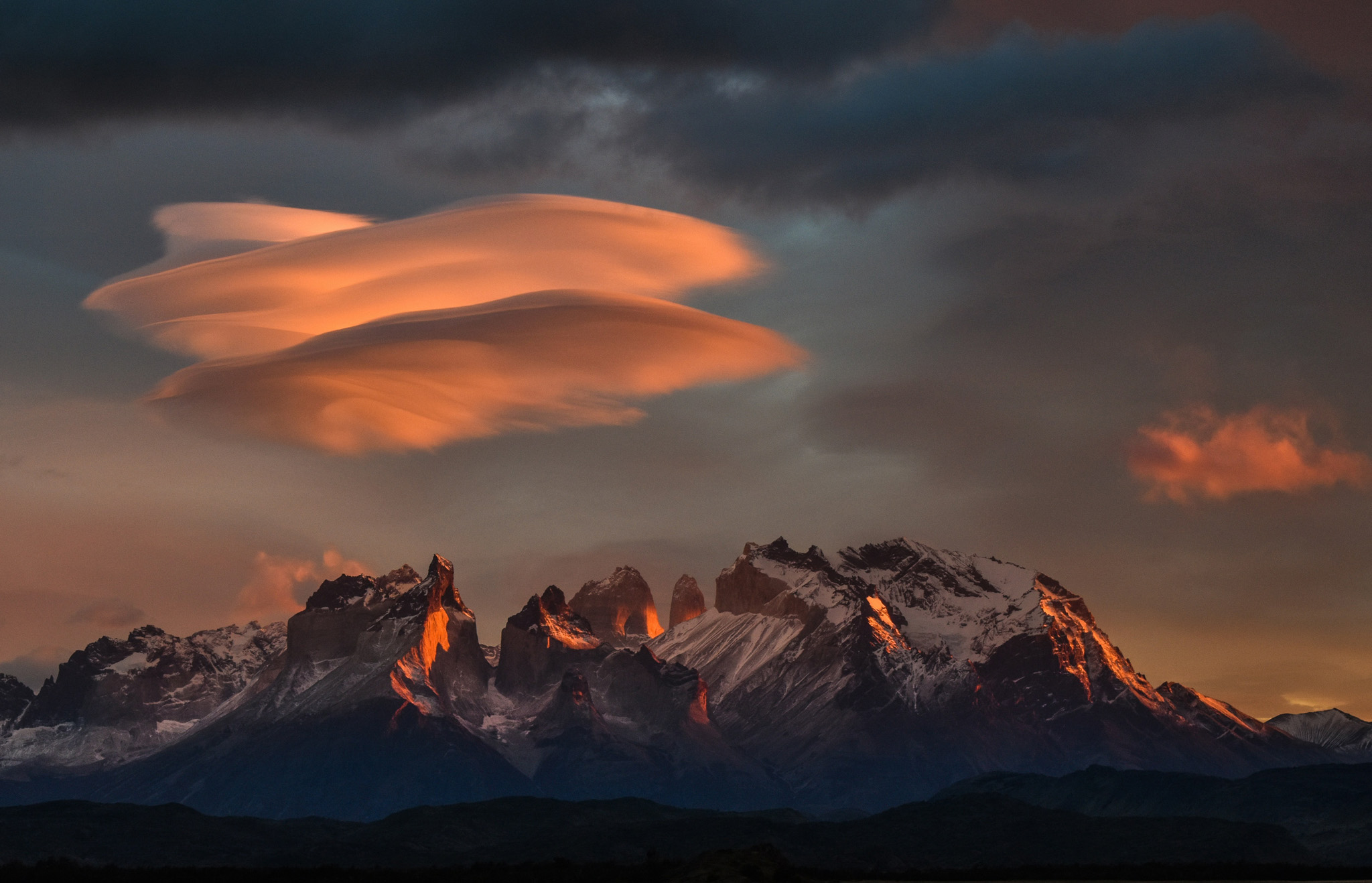
Argentina – Destination Guide
Argentina is a country of staggering contrasts – a land where the Andes rise vertically from bone-dry desert in the north, vast grasslands called the Pampas roll endlessly across the heartland, and the world’s most dramatic glaciers calve thunderously into turquoise lakes at the far southern tip of the continent. It is a place shaped by passion: in the music of the tango, in the religion of football, in the fierce pride people carry for their food, their wine, and their history.
From the electric capital Buenos Aires – a city of grand boulevards, late-night steakhouses, and a cultural life that rivals any in Latin America – to the impossibly photogenic peaks of Patagonia and the wine country of Mendoza, Argentina rewards travellers who come with curiosity and time. It is a country that does not rush, and neither should you. Long dinners begin at 9pm, conversations linger past midnight, and entire neighbourhoods come alive only when the sun goes down.
To travel Argentina is to experience a place still discovering its own potential – economically turbulent at times, but culturally abundant, naturally extraordinary, and extraordinarily warm to visitors. Few countries leave quite the same impression.
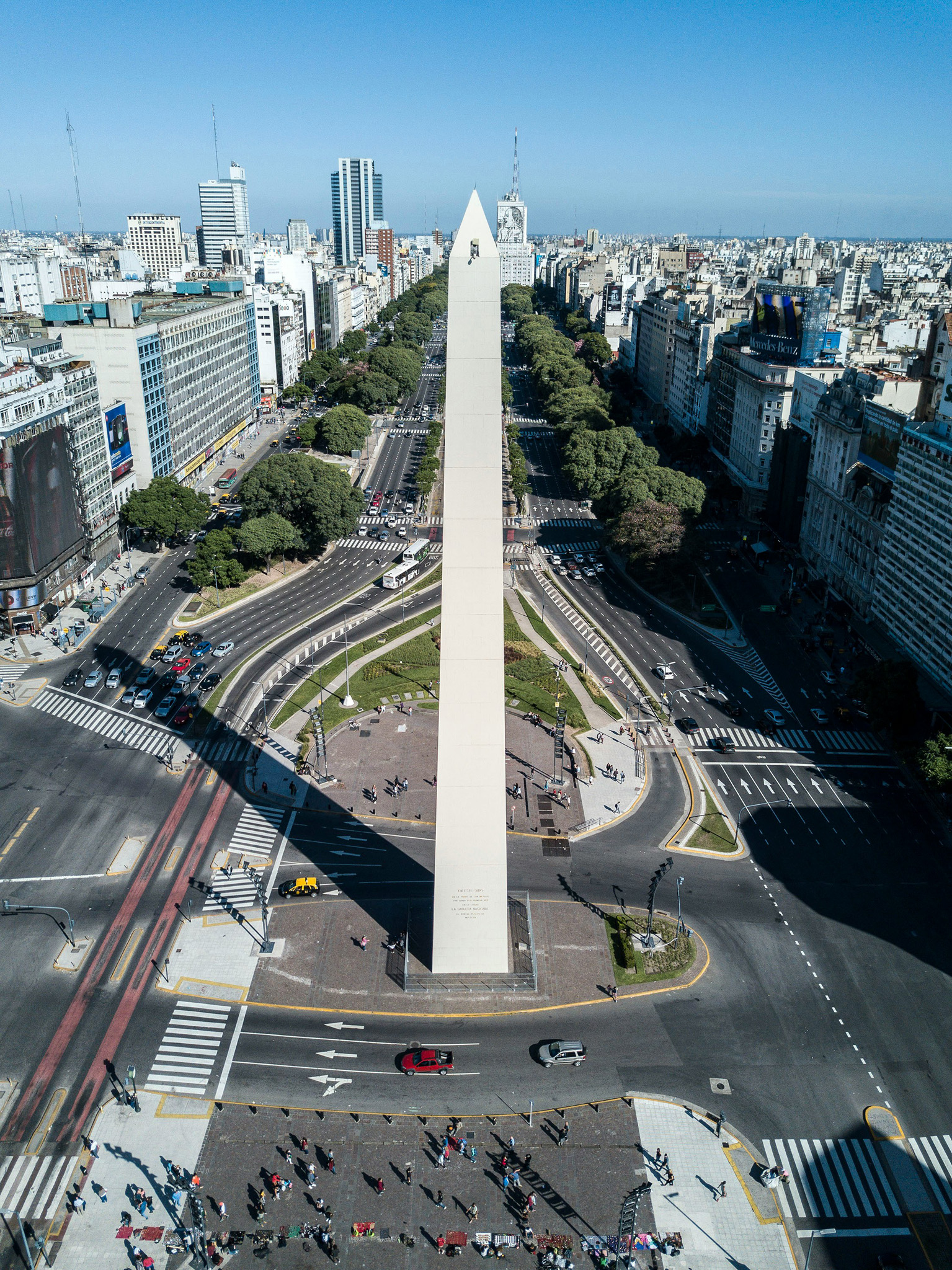
🗺️ Regions to Explore
Buenos Aires
The capital and cultural heartbeat of Argentina, one of the world’s great cities.
- Explore the elegant streets and book fairs of Recoleta
- Take a tango lesson or watch a milonga in San Telmo
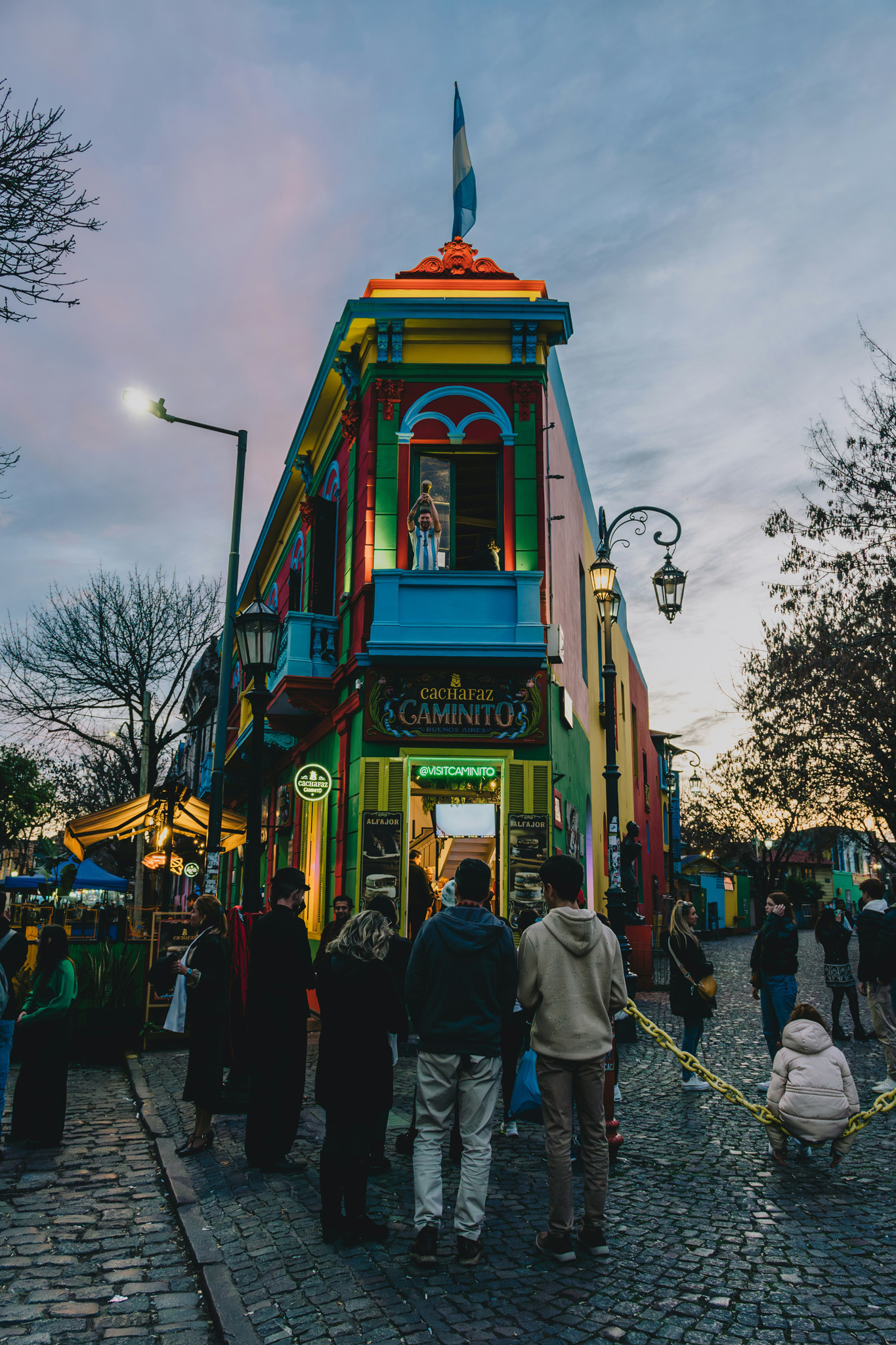
- Wander the colourful Caminito laneway in La Boca
- Discover the boutiques and restaurants of Palermo
- Visit the MALBA modern art museum and Teatro Colón opera house
- Take a day trip to the Tigre Delta for boat rides through waterways
Patagonia
A vast and wind-swept region of glaciers, lakes, and granite peaks at the southern end of the continent.
- Trek the world-famous W Circuit in Torres del Paine (Chile side) from a base at Puerto Natales
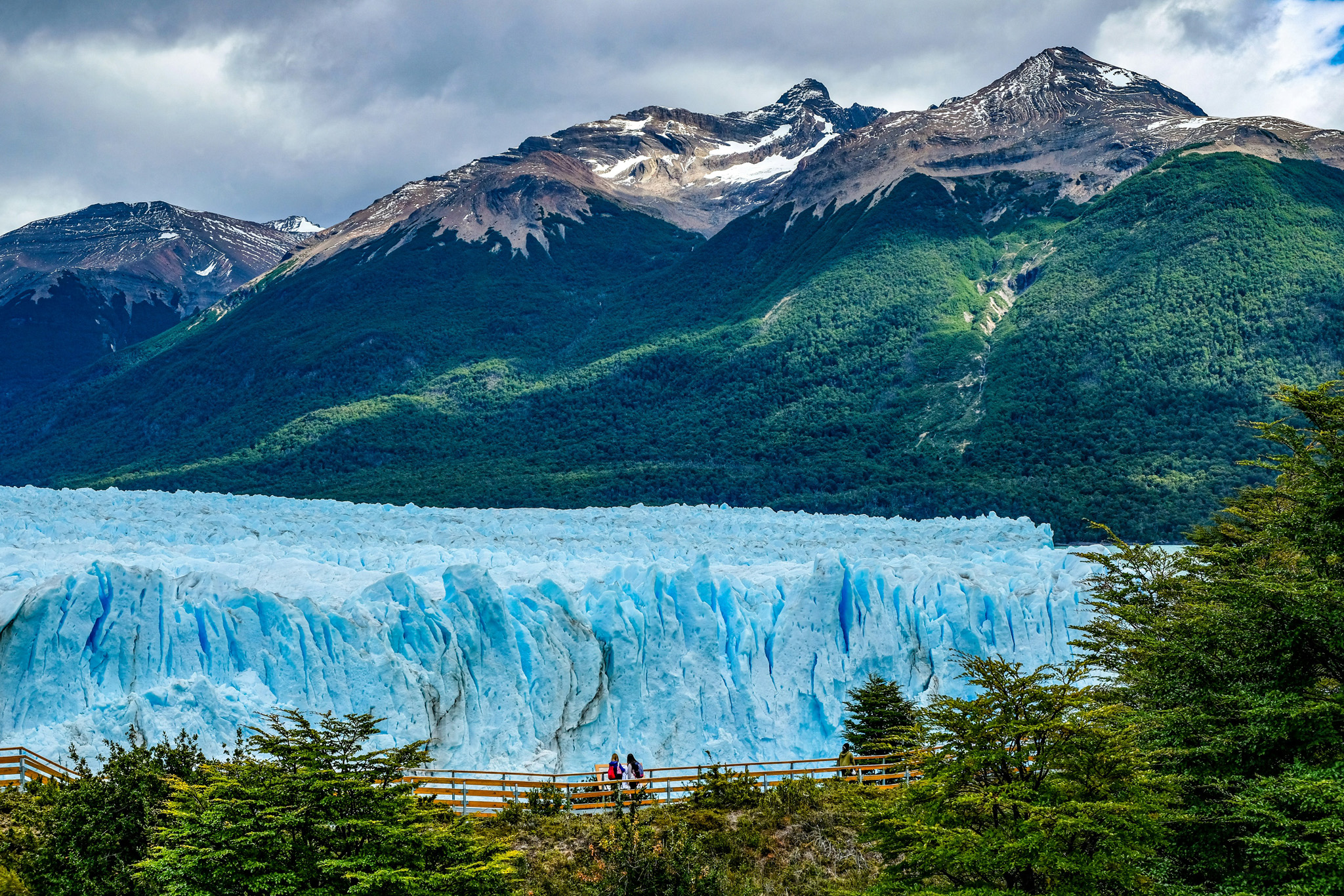
- Visit Perito Moreno Glacier near El Calafate – a moving, calving wall of ice
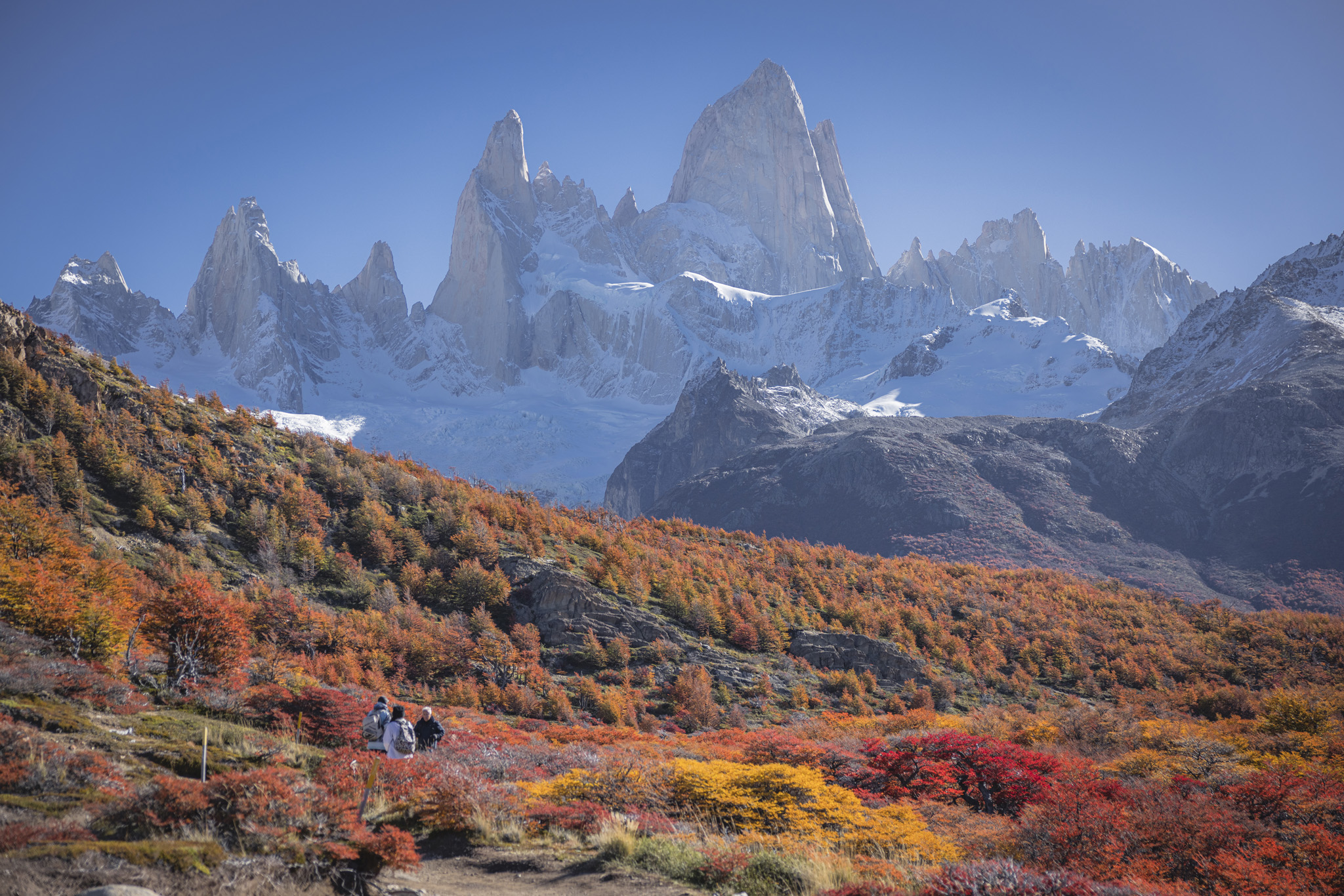
- Hike in Los Glaciares National Park and Fitz Roy massif near El Chaltén
- Spot Magellanic penguins and orcas at Península Valdés
- Explore Bariloche and the Lake District for hiking, skiing, and chocolate
Mendoza and the Wine Regions
Argentina’s premier wine country, producing some of the world’s finest Malbec.
- Tour the bodegas (wineries) of the Luján de Cuyo and Maipú valleys
- Cycle between vineyards on the outskirts of Mendoza city
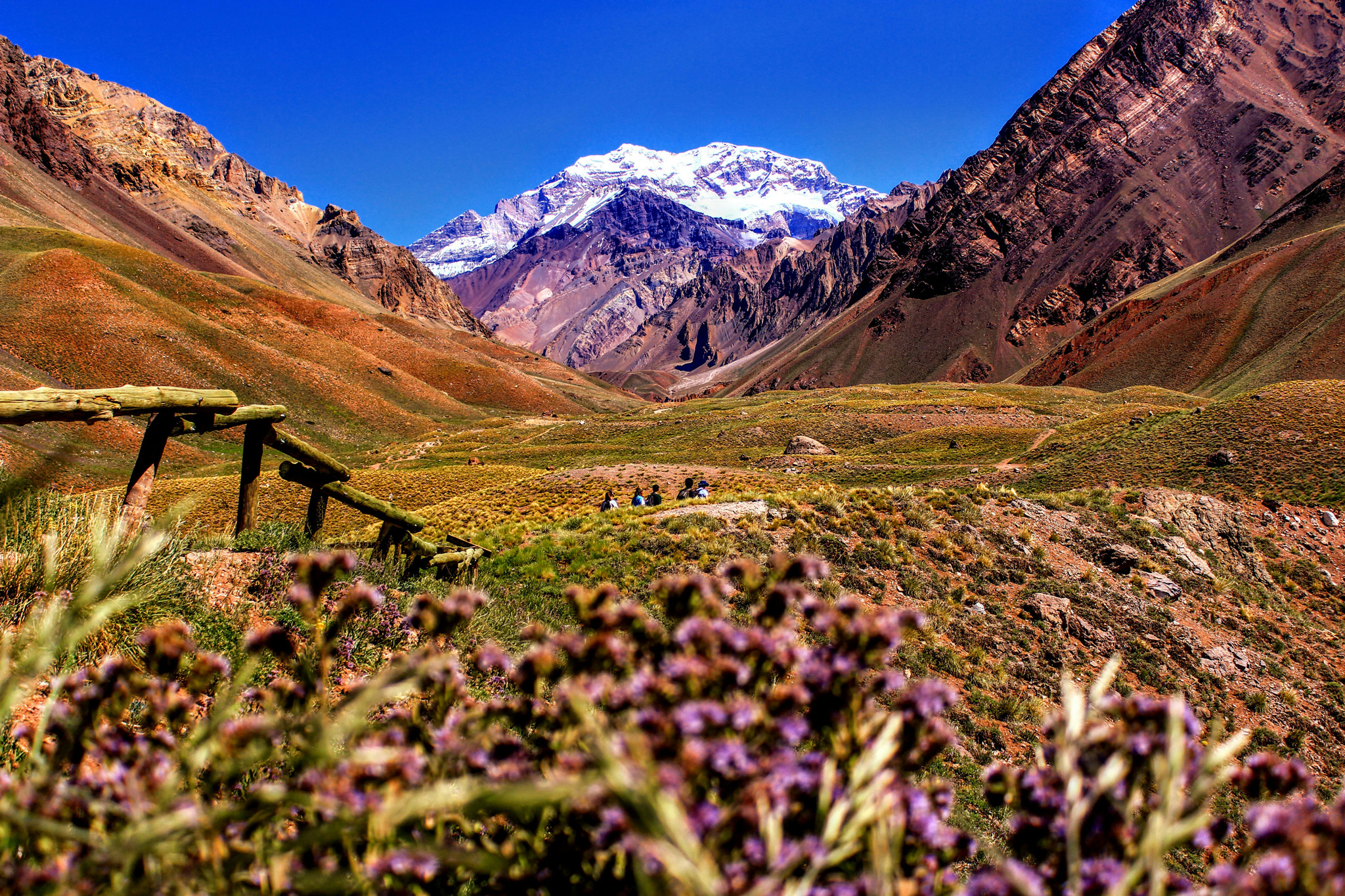
- Take a high-altitude wine tour to the Uco Valley with Andean backdrops
- Cross into Chile via the spectacular Paso Los Libertadores mountain pass
- Enjoy excellent Argentine steakhouses paired with regional wines
Salta and the Northwest
A region of colonial cities, indigenous cultures, and otherworldly landscapes in the Andean north.
- Ride the Tren a las Nubes (Train to the Clouds) across dramatic viaducts
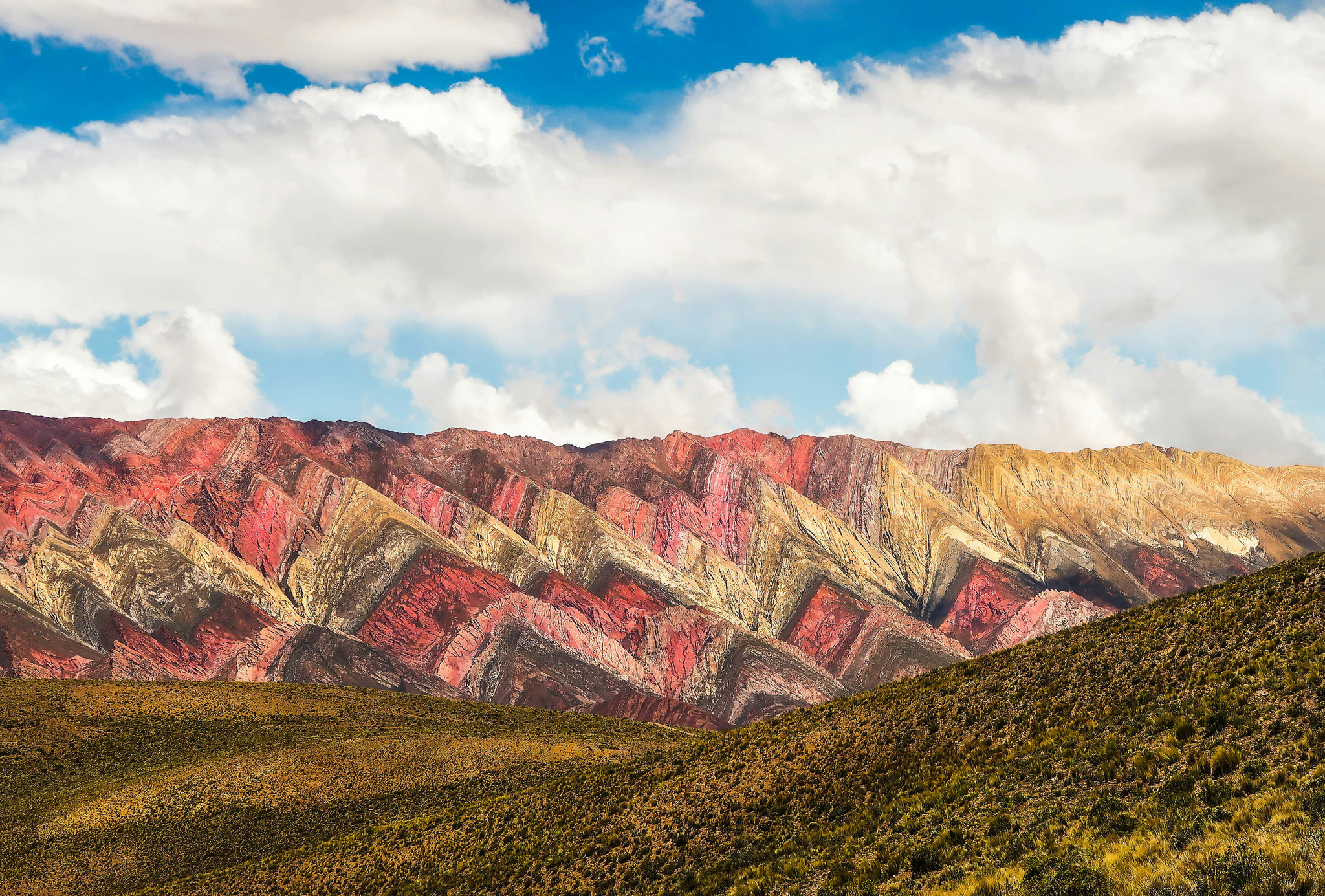
- Visit the Quebrada de Humahuaca, a UNESCO-listed painted valley
- Explore the salt flats and multicoloured hills of the Puna plateau
- Discover the cobblestone streets and baroque churches of Salta city
- Visit the village of Tilcara and surrounding archaeological sites
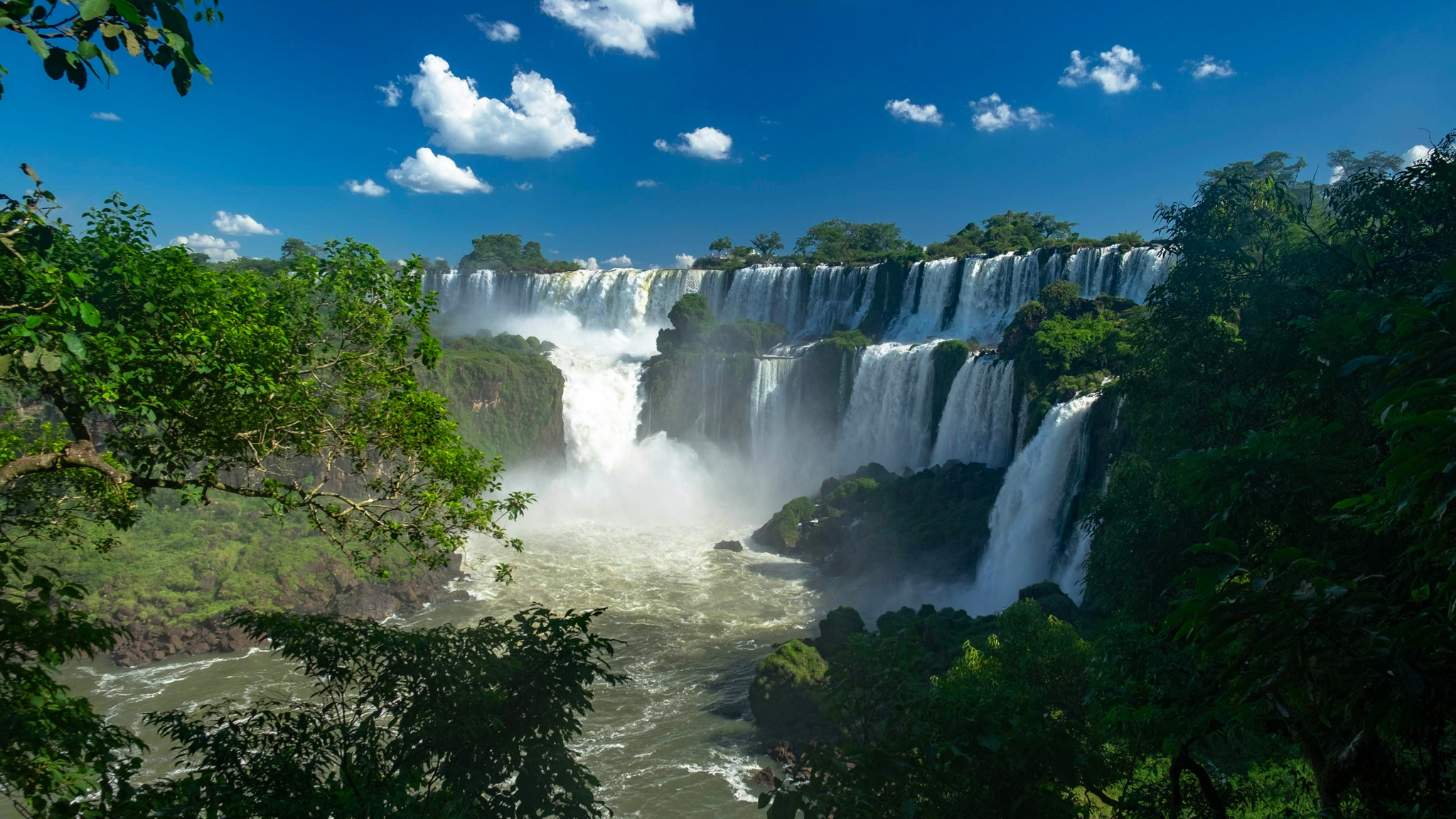
Iguazú Falls and the Litoral
The northeast of Argentina is dominated by the extraordinary power of one of the world’s great waterfalls.
- Walk the Upper and Lower Circuit boardwalks within Iguazú National Park
- Stand on the Garganta del Diablo (Devil’s Throat) walkway above the falls
- Take a jungle boat tour to get soaked at the base of the cascades
- Cross into Brazil for a different panoramic perspective of the falls
- Spot toucans, coatis, and butterflies in the surrounding Atlantic Forest
The Pampas and Estancia Country
Argentina’s vast agricultural heartland, where gaucho culture survives in the farms and cattle ranches.
- Stay on a working estancia for horse riding, asado, and gaucho demonstrations
- Visit the town of San Antonio de Areco, a beautifully preserved gaucho village
- Watch polo matches in the autumn season outside Buenos Aires
- Explore the open grassland landscape by horseback or bicycle
🎒 Things To Do
- Watch or attend a live football match at La Bombonera (Boca Juniors) or El Monumental (River Plate) in Buenos Aires
- Hike the trails around Fitz Roy and Cerro Torre in El Chaltén, Patagonia’s trekking capital
- See Perito Moreno Glacier advance and calve from the boardwalk platforms at close range
- Take a tango lesson and then attend a real milonga late at night in San Telmo
- Spend time at a traditional estancia experiencing asado, horse riding, and Pampas life
- Wine tasting and cycling through the Mendoza and Maipú valleys
- Explore the UNESCO-listed Quebrada de Humahuaca by local bus and on foot
- Visit Peninsula Valdés for whale watching (June – December) and penguin colonies
- Walk the boardwalks of Iguazú Falls from both the Argentine and Brazilian sides
- Explore the colonial neighbourhood of San Telmo and attend the Sunday antique market
- Visit the ESMA memorial site or Parque de la Memoria in Buenos Aires to engage with the country’s complex history
🍽️ Food & Drink
Argentine cuisine is built on the asado – a slow, ritual barbecue over wood and coals that is less a meal than a social institution. Beef is central to the table, but the country also produces outstanding wine, empanadas, and the mate tea culture that defines daily life.
- Asado and parrilla (grilled meats) – beef cuts such as bife de chorizo and costillas are staples
- Empanadas – baked or fried pastries stuffed with beef, chicken, cheese, or humita (corn)
- Milanesa – crumbed and fried meat cutlet, eaten everywhere from homes to cafes
- Locro – a hearty Andean stew of corn, beans, and meat, popular in the northwest
- Alfajores – sandwich biscuits filled with dulce de leche (caramel), sold everywhere
- Malbec from Mendoza – Argentina’s flagship red wine, produced at altitude in the Andean foothills
- Mate – a caffeinated herbal drink shared communally from a gourd, deeply embedded in daily culture
- Fernet con Coca – a bitter herbal liqueur mixed with Coke, the unofficial drink of young Argentines

🌦️ Weather
Argentina spans an extraordinary range of latitudes – from subtropical jungle in the north to sub-Antarctic conditions in Patagonia – so climate varies enormously by region. There is no single season to visit all of Argentina at once; planning by region is essential.
- Buenos Aires has a temperate climate: hot and humid summers (December – February, 28-35°C) and mild winters (June – August, 8-15°C)
- Patagonia is best visited in summer (November – March) when days are long, though wind is constant and weather can change hour to hour
- The northwest (Salta, Jujuy) has a dry winter season (April – October) ideal for travel, and a rainy summer that can close roads
- Mendoza is a year-round destination, with hot summers, mild springs and autumns ideal for harvest season, and cold Andean winters
- Iguazú Falls can be visited year-round, though summer (December – February) brings heavy rain and high humidity; the falls are most dramatic after rain
- Patagonia can experience all four seasons in a single day – layered clothing is essential at all times of year
📅 Best Time To Visit
November – February (Summer – Patagonia Peak)
The ideal window for Patagonia trekking, with the longest days and most accessible trails.
- Peak season for Torres del Paine, Fitz Roy, and Los Glaciares National Park
- Advance booking essential for trails, huts, and accommodation
- Buenos Aires is hot and humid – best explored in the morning or evening
- Penguin colonies at Peninsula Valdés are active and accessible
March – May (Autumn – Wine Harvest and Buenos Aires)
The most pleasant season in Buenos Aires, with warm days, cooler evenings, and stunning autumn colours in the wine regions.
- Mendoza’s Vendimia harvest festival takes place in early March – a celebrated annual event
- Patagonia begins to wind down but remains accessible into April
- Fewer crowds and more reasonable prices than peak summer
- Ideal temperatures for walking and sightseeing in Buenos Aires (15-22°C)
June – August (Winter – Bariloche Skiing and the Northwest)
Argentina’s quietest travel season, though specific regions come into their own.
- Ski season in Bariloche and Las Leñas (July – September)
- Northwest Argentina (Salta, Quebrada de Humahuaca) is dry, clear, and beautiful in winter
- Whale watching season at Peninsula Valdés begins in June
- Buenos Aires winter is mild and pleasant, with no snow; city tourism is comfortable year-round
🎒 Packing List
- Lightweight layers for Buenos Aires – temperatures shift significantly between day and evening
- Warm, windproof jacket and fleece for Patagonia – wind is constant and cold year-round
- Waterproof outer shell – essential for Patagonia and Iguazú
- Sturdy walking shoes or trail boots for trekking regions
- Sunscreen (high SPF) – the Andean altitude intensifies UV exposure
- Insect repellent for Iguazú and the northeastern jungle regions
- Sun hat and polarised sunglasses
- Plug adaptor (Type I – the same three-pronged angled plug as used in Australia)
- Power bank for multi-day treks away from power sources
- Comprehensive medical kit including blister plasters, antihistamines, and altitude tablets if visiting the northwest
- Oral rehydration electrolytes – dehydration is common at altitude in the Andes
- Printed or digital proof of travel insurance (required for entry under Argentine law – see the mandatory insurance section below)
🛂 Visas & Entry Requirements
Argentina is visa-free for most Western nationalities for stays of up to 90 days for tourism.
- Citizens of Australia, New Zealand, the UK, USA, Canada, the EU, and most of South America do not require a visa for tourist visits of up to 90 days
- Passport must be valid for the duration of your stay (6 months validity is broadly recommended)
- Proof of onward or return travel may be requested at check-in or immigration
- Travel health insurance is a mandatory entry requirement under Decree 366/2025 – see the dedicated section below for full details
- A sworn declaration of travel purpose may be requested at entry points
- Longer stays, work, study, or the Digital Nomad visa require a formal application through the Argentine consulate in your home country
- Official information: https://www.migraciones.gov.ar
🛡️ Mandatory Inbound Travel Insurance
Argentina introduced a mandatory travel health insurance requirement under Decree 366/2025, effective July 1, 2025. Unlike country-specific schemes that require you to purchase a government-issued policy, Argentina’s requirement is that you carry your own valid comprehensive travel insurance from any recognised provider – there is no Argentine government portal to purchase through. Your existing travel insurance policy may already satisfy the requirement, provided it meets the minimum coverage thresholds.
This requirement is separate from and in addition to the Best In Travel recommendation to hold comprehensive personal travel insurance. Travellers who arrive without compliant cover may be denied boarding by airlines or refused entry at Argentine immigration checkpoints, including airports, land borders, and maritime ports.
Coverage Requirements (Decree 366/2025)
- Policy must be valid for the entire duration of your stay in Argentina
- Must include: emergency medical care, hospitalisation, medical evacuation, and repatriation
- The minimum recommended medical coverage threshold cited by most insurers and experts is approximately USD 20,000 – 25,000 per person; note that Argentina’s government has not published an official dollar minimum, so verify the current requirement with your insurer and check the official source below close to departure
- Policy documentation (printed or digital) listing your name, coverage dates, and benefits must be available to present on request at check-in or arrival
- Public hospitals in Argentina will only treat foreign visitors in genuine emergencies without insurance; non-emergency treatment requires either proof of qualifying cover or upfront prepayment
Important notes
- This mandatory insurance requirement does not replace comprehensive personal travel insurance – hold a full policy covering trip cancellation, baggage, personal liability, and other personal risks in addition to the medical minimum required by law
- Proof requirements and enforcement details may change – check the official Argentine immigration website close to your departure date
- Best In Travel trip leaders cannot purchase this insurance on behalf of guests – it is an individual traveller obligation
- Official information: https://www.migraciones.gov.ar
💰 Money
- Currency is the Argentine Peso (ARS); exchange rates have fluctuated significantly in recent years due to economic instability – verify current rates before travel
- USD is widely accepted in tourist contexts and at many accommodation providers; carrying some USD cash is strongly recommended
- Argentina has historically operated multiple exchange rates; the gap between official and informal rates has narrowed significantly under recent economic reforms but the situation remains fluid – verify current conditions before you travel
- ATMs dispense local pesos and may have daily withdrawal limits; international transaction fees can be high
- Credit cards (Visa and Mastercard) are widely accepted in Buenos Aires, restaurants, hotels, and major tourist areas; cash is more important in regional areas and markets
- Tipping is customary in restaurants at approximately 10%; not expected but appreciated for other services
💸 Hotel & Tourist Taxes
Argentina does not operate a national tourist tax scheme, but individual provinces and municipalities may apply local accommodation levies.
- Buenos Aires city applies a small accommodation tax – typically included in quoted hotel rates or collected at check-in; confirm with your accommodation
- Provincial rates vary: Patagonian regions including Bariloche and Mendoza may apply local levies at different rates; verify directly with your accommodation before arrival
- No standard national nightly rate applies – each province sets its own conditions
- Argentina charges a small airport departure tax on international flights, though this is typically included in airline ticket prices
🌈 LGBTQIA+ Travellers
Argentina is one of the most progressive countries in Latin America for LGBTQIA+ travellers and was among the first in the world to legalise same-sex marriage.
- Same-sex marriage has been legal in Argentina since 2010, and gender identity laws are among the most progressive globally
- Buenos Aires is a welcoming and vibrant destination with a significant LGBTQIA+ scene, particularly in the Palermo and San Telmo neighbourhoods
- The Buenos Aires Pride march (Marcha del Orgullo) takes place annually in November and is one of the largest in Latin America
- Attitudes are generally more conservative in rural areas, smaller towns, and parts of the northwest, where discretion may be advisable
- Overall, Buenos Aires and major tourist cities are considered very safe and openly welcoming destinations for LGBTQIA+ travellers
⚠️ Traveller Safety
Argentina is generally a safe destination for tourists, though petty crime and scams in urban areas require vigilance.
- Petty theft – bag snatching, phone theft, and pickpocketing – is the primary risk in Buenos Aires, particularly in crowded areas, transport hubs, and tourist markets; keep valuables secured and out of sight
- Express kidnapping and more serious crime, while rare, has affected tourists in Buenos Aires; avoid flagging unofficial taxis and use approved apps (Cabify, Uber) or hotel-arranged transport
- Patagonia, Mendoza, Salta, and regional areas are generally considered very safe for travellers
- Always use a registered guide for trekking in remote areas of Patagonia – weather can change rapidly and routes require preparation
- Iguazú can be hot and disorienting in summer heat – carry water and take care on wet boardwalks near the falls
- Emergency number is 911
💉 Vaccinations & Health
No vaccinations are mandatory for entry to Argentina for most travellers, but several are recommended depending on your itinerary.
- Routine vaccinations should be up to date: MMR, tetanus-diphtheria-pertussis, chickenpox, polio, and annual flu shot
- Hepatitis A and Typhoid are recommended for all travellers, particularly those visiting rural areas or trying street food
- Yellow fever vaccination is recommended (and may be required for onward travel to some countries) if visiting the northeastern jungle regions of Argentina, including around Iguazú
- Altitude sickness is a genuine risk when visiting the Andean northwest (Jujuy, Salta, Mendoza high-altitude areas) – allow time to acclimatise and consult a doctor before travel if you have underlying health conditions
- Dengue fever is present in northern Argentina and risk increases in summer months – use insect repellent diligently in the northeast
- Official information: https://www.who.int/travel-advice
🚗 Getting Around
- Domestic flights are the most practical way to cover Argentina’s vast distances – Aerolíneas Argentinas and LATAM operate routes between Buenos Aires, Bariloche, Iguazú, Mendoza, Salta, and El Calafate
- Long-distance buses are a well-developed and often very comfortable option – cama (sleeper) and semi-cama buses connect most major cities overnight at low cost
- Buenos Aires has an extensive metro (Subte) system, bus network, and abundant rideshare coverage via Uber and Cabify
- Car hire is available and useful for exploring Mendoza wine country, the Lake District, or the northwest at your own pace; road quality varies significantly outside major routes
- Patagonia’s trekking areas (El Chaltén, Torres del Paine) require advance logistical planning – transfers between gateways and trailheads operate on schedules during the season
- Taxis should be booked through apps (Cabify, Uber, BA Taxi) rather than hailed on the street in Buenos Aires to avoid overcharging or safety risks
✈️ Airports
Aeropuerto Internacional Ministro Pistarini – Ezeiza (EZE)
- Argentina’s main international gateway, located approximately 35 km south of central Buenos Aires; handles the majority of long-haul international arrivals
Aeroparque Jorge Newbery (AEP)
- Buenos Aires’ city airport, located close to the Palermo neighbourhood; handles most domestic routes and some regional international flights to neighbouring South American countries
Aeropuerto Internacional El Plumerillo – Mendoza (MDZ)
- The gateway for the Mendoza wine region; served by domestic flights from Buenos Aires and a limited number of international connections
Aeropuerto Internacional Malvinas Argentinas – Ushuaia (USH)
- The world’s southernmost commercial airport and the key gateway for Patagonia, Antarctic cruise departures, and end-of-the-world wilderness
🗣️ Language
Spanish is the official language of Argentina and is spoken universally. Argentine Spanish has its own distinctive character – the voseo (use of “vos” in place of “tú”) and the musical intonation influenced by Italian immigration give it an unmistakable flavour compared to other Latin American varieties. English is spoken in tourist areas, major hotels, and Buenos Aires, but outside of major cities it becomes less common and some basic Spanish is strongly recommended.
Common Phrases
- Hello – Hola (OH-lah)
- Goodbye – Chau (chow) – the Italian-influenced informal farewell
- Please – Por favor (por fah-VOR)
- Thank you – Gracias (GRAH-see-ahs)
- Yes – Sí (see)
- No – No (no)
- Excuse me – Disculpe (dees-KOOL-peh)
- Sorry – Perdón (pehr-DON)
- Do you speak English? – ¿Habla inglés? (AH-blah een-GLAYS?)
- How much does it cost? – ¿Cuánto cuesta? (KWAHN-toh KWES-tah?)
- Where is…? – ¿Dónde está…? (DON-deh es-TAH?)
- Help! – ¡Ayuda! (ah-YOO-dah)
- Cheers! – ¡Salud! (sah-LOOD)
- I would like a table for two – Quisiera una mesa para dos (kee-SYEH-rah OO-nah MEH-sah PAH-rah dos)
- The bill, please – La cuenta, por favor (lah KWEN-tah, por fah-VOR)
ℹ️ Practical Info
Electricity
- Type I plugs (three angled flat pins – the same as Australia and New Zealand); voltage is 220V at 50Hz; travellers from the USA and UK will need an adaptor
Internet & WiFi
- WiFi is widely available in hotels, hostels, cafes, and restaurants in Buenos Aires and major cities; speeds are generally adequate for streaming and work
- Mobile data coverage is good in urban areas; rural and Patagonian coverage can be limited or absent in remote trekking areas
Water
- Tap water in Buenos Aires and major cities is considered safe to drink; in rural areas, smaller towns, and particularly in the Andean northwest, bottled or filtered water is recommended
Travel Insurance
- Comprehensive personal travel insurance is strongly recommended for all travellers to Argentina, covering trip cancellation, baggage, personal liability, emergency medical expenses, and evacuation
- Note that Argentina also has a mandatory minimum health insurance requirement for all foreign visitors under Decree 366/2025 – your existing comprehensive policy may satisfy this requirement if it meets the minimum medical coverage thresholds; see the dedicated mandatory insurance section above for full details
Connectivity SIM / eSIM
- Local SIM cards from providers such as Personal, Claro, and Movistar are available at major airports and phone stores; bring your passport to register
- Using an eSIM is our recommended choice while travelling anywhere in the world, and our recommended provider is Holafly. For more information on eSIMs, check out this blog.

❤️ Why Visit Argentina
Argentina is a country that gets under your skin. It is big enough to fill a lifetime of travel and rich enough in culture, landscape, and food that every visit uncovers something new. Whether you are trekking towards the ice-blue towers of Patagonia, raising a glass of Malbec in a Mendoza bodega at golden hour, or sitting down to a four-hour asado with a family in the Pampas, the experience of Argentina tends to be vivid, generous, and long-remembered.
What sets Argentina apart from other South American destinations is the depth of its urban life alongside its natural wonders. Buenos Aires alone could occupy a week – it is a city of bookshops, theatres, Sunday markets, late-night restaurants, and some of the most passionate sporting culture on earth. The tango was born here, and you can still find it performed with complete seriousness in the same neighbourhood milongas that have been running for decades.
For travellers who want both the grandeur of untouched wilderness and the texture of a sophisticated, warm-hearted urban culture, Argentina delivers both without compromise. It is not the easiest destination logistically – the distances are vast and the exchange rate requires research before you arrive – but the rewards are in exact proportion to the effort. Argentina does not disappoint.