Belgium – Destination Guide
Compact yet endlessly layered, Belgium packs cobblestone medieval cities, world-class art, dense forests and a coastline of wide sandy beaches into a country you can cross in a couple of hours by train. It is a place of canalside guildhalls and grand market squares, of Art Nouveau facades and brutalist landmarks, where each region carries its own language, character and quiet pride.
This is a country that rewards slowing down. Linger over a long lunch in Brussels, lose an afternoon among the lace shops and quiet backwaters of Bruges, chase contemporary fashion through Antwerp, or follow forest trails through the rolling Ardennes. Belgium also happens to be a serious food and drink destination, home to some of the finest beer, chocolate, fries and waffles you will find anywhere.
For all its small size, Belgium delivers an outsized travel experience – cultured, walkable, deeply historic and genuinely delicious. It is the kind of place that surprises travellers who arrive with low expectations and leave already planning a return.
🗺️ Regions to Explore
Brussels
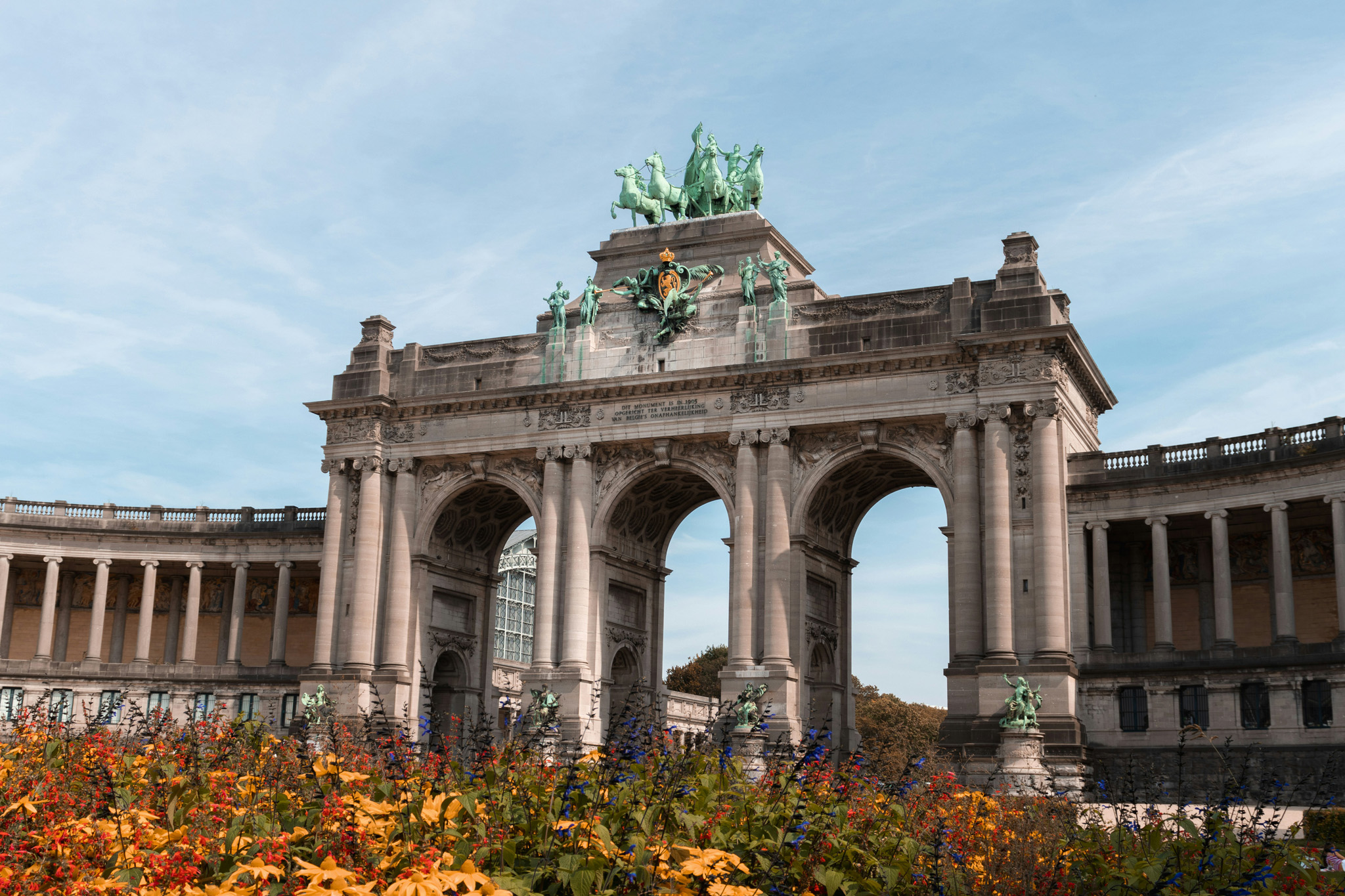
The bilingual capital blends grand history with a sharp contemporary edge and a famously good food scene.
- Marvel at the Grand Place and its gilded guildhalls
- Hunt down Art Nouveau masterpieces by Victor Horta
- Explore the comic strip murals scattered across the centre
- Visit the Atomium and surrounding Heysel district
- Browse the elegant Galeries Royales Saint-Hubert
- Sample chocolate, beer and frites across the old town
Flanders
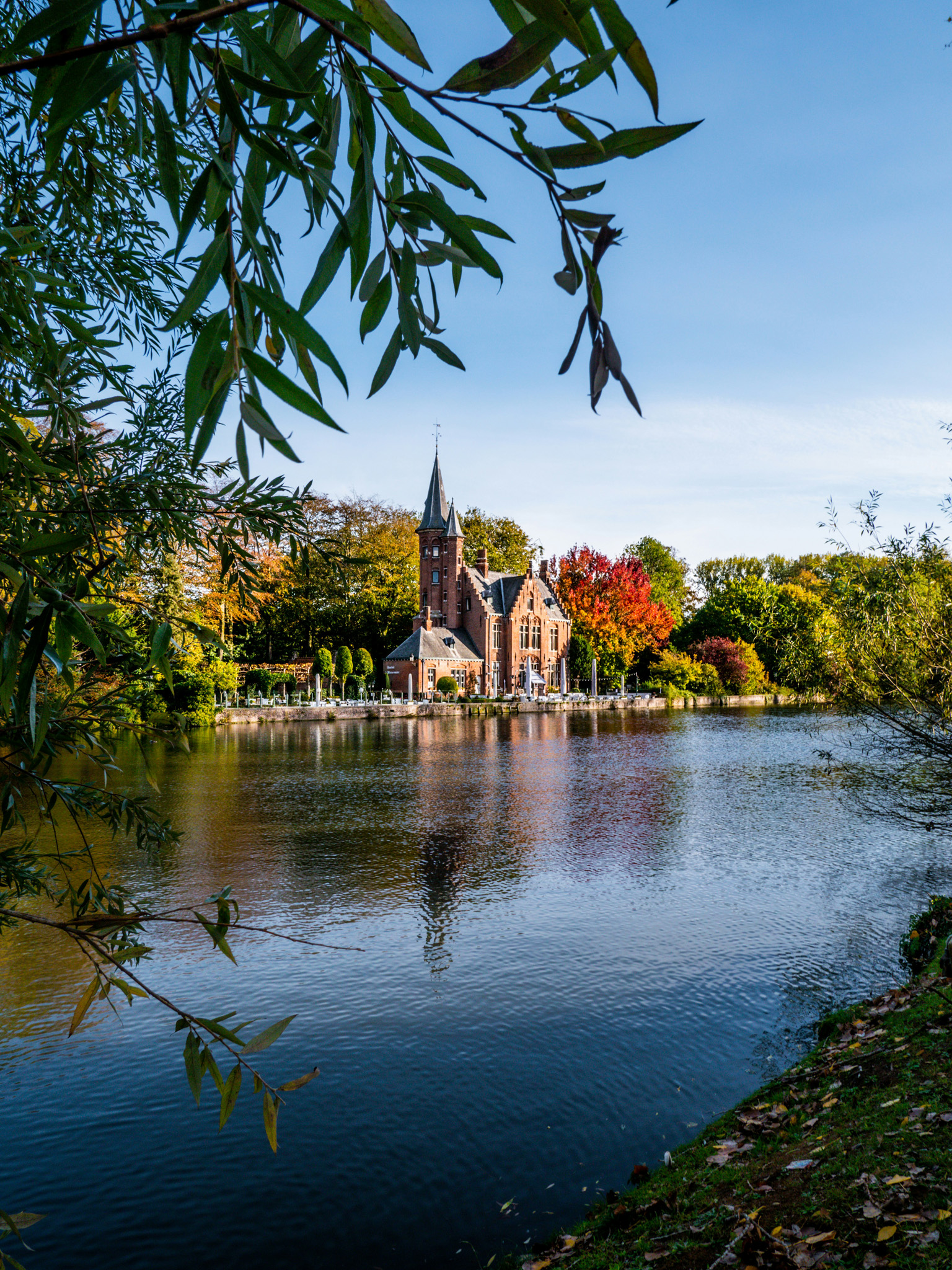
The Dutch-speaking north is home to Belgium’s most picturesque historic cities and flat, cycle-friendly countryside.
- Wander the canals and squares of Bruges
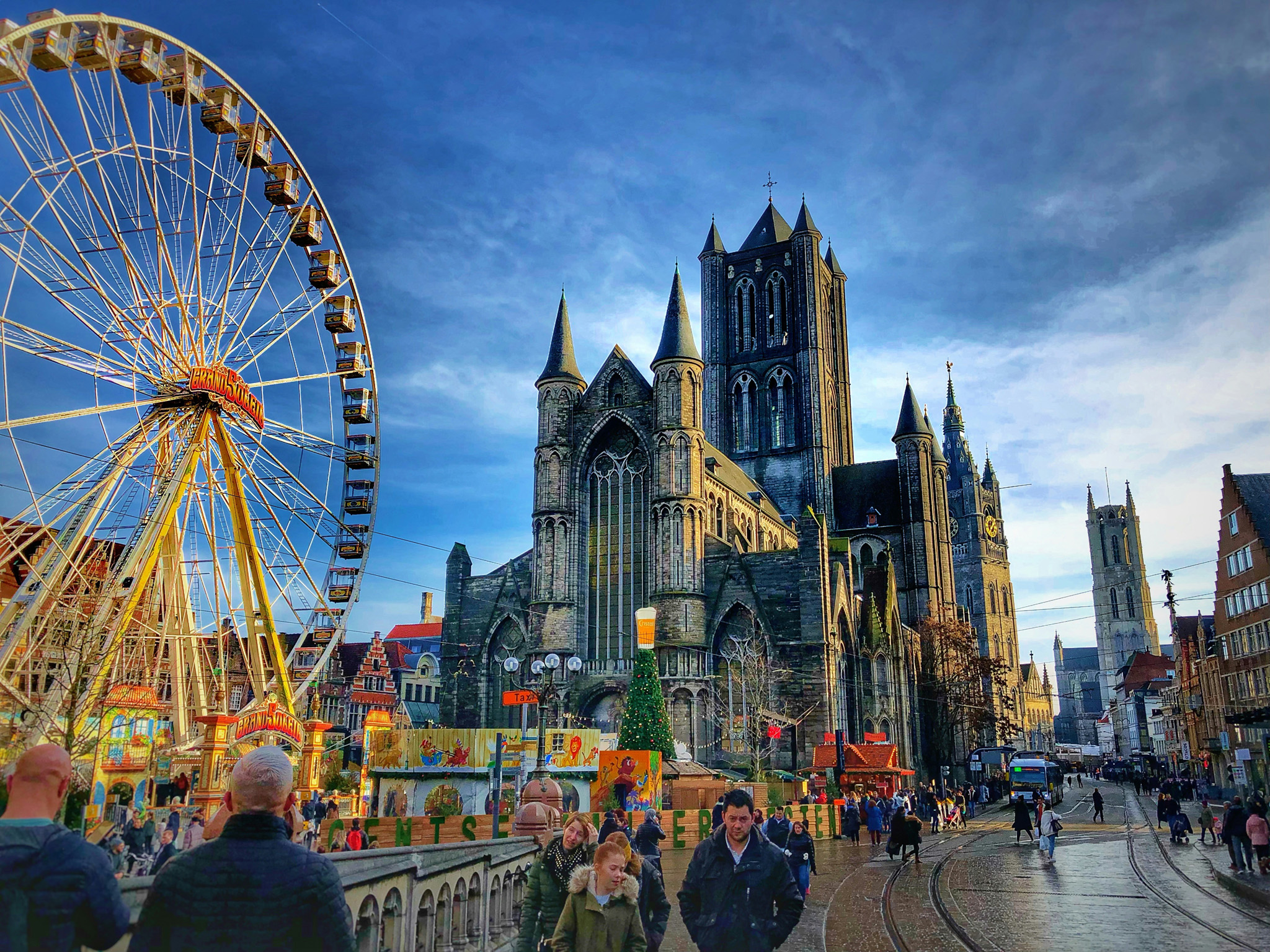
- Discover the student energy and architecture of Ghent
- Explore Antwerp’s fashion, diamonds and riverside docks
- Stand among the poignant battlefields and memorials of Ypres
- Cycle quiet polder lanes between medieval towns
- Visit the Flemish coast for wide beaches and seafood
Wallonia and the Ardennes
The French-speaking south rolls into deep forests, river valleys, caves and castles.
- Hike forest trails through the rolling Ardennes
- Tour the fortified citadels of Namur and Dinant
- Explore the dramatic caves at Han-sur-Lesse
- Follow the Meuse River through scenic valley towns
- Visit historic abbeys still brewing Trappist beer
- Discover the cultural revival of post-industrial Liège
The Belgian Coast
A 65 kilometre stretch of North Sea coastline strung with resort towns and a famous tram line.
- Stroll the long sandy beaches and promenades
- Ride the Kusttram, one of the world’s longest tram lines
- Explore the art scene and dunes around Ostend
- Sample fresh shrimp croquettes and North Sea catch
- Visit elegant Knokke-Heist for galleries and dining
- Walk the nature reserves of the coastal dunes
Leuven and the Hageland
A historic university belt east of Brussels, rich in beer heritage and gentle countryside.
- Soak up the medieval grandeur of Leuven’s town hall
- Visit the historic home of the world’s largest brewer
- Explore vineyards across the rolling Hageland hills
- Wander Leuven’s lively student-filled squares
- Tour the beguinages, a network of historic courtyards
- Cycle quiet lanes between orchards and villages

🎒 Things To Do
- Stand in awe of Brussels’ Grand Place, one of Europe’s finest squares
- Cruise or walk the canals of Bruges at golden hour
- Climb the belfries of Ghent and Bruges for sweeping rooftop views
- Tour world-class art museums, from the Flemish Primitives to Magritte
- Take a guided chocolate or beer tasting in any major city
- Walk the WWI battlefields and memorials around Ypres
- Hike or kayak through the forests and rivers of the Ardennes
- Explore Antwerp’s fashion district and the Museum aan de Stroom
- Ride the full length of the coastal Kusttram
- Browse weekend markets for antiques, flowers and food
🍽️ Food & Drink
Belgian cuisine is hearty, generous and far more refined than its humble reputation suggests. Expect rich stews, exceptional seafood, and a national obsession with chocolate, beer and the perfect portion of fries.
- Frites served twice-fried in a paper cone with thick mayonnaise
- Moules-frites, mussels steamed with white wine and herbs
- Carbonnade flamande, a slow beef and beer stew
- Waffles, from the light Brussels style to the dense Liège style
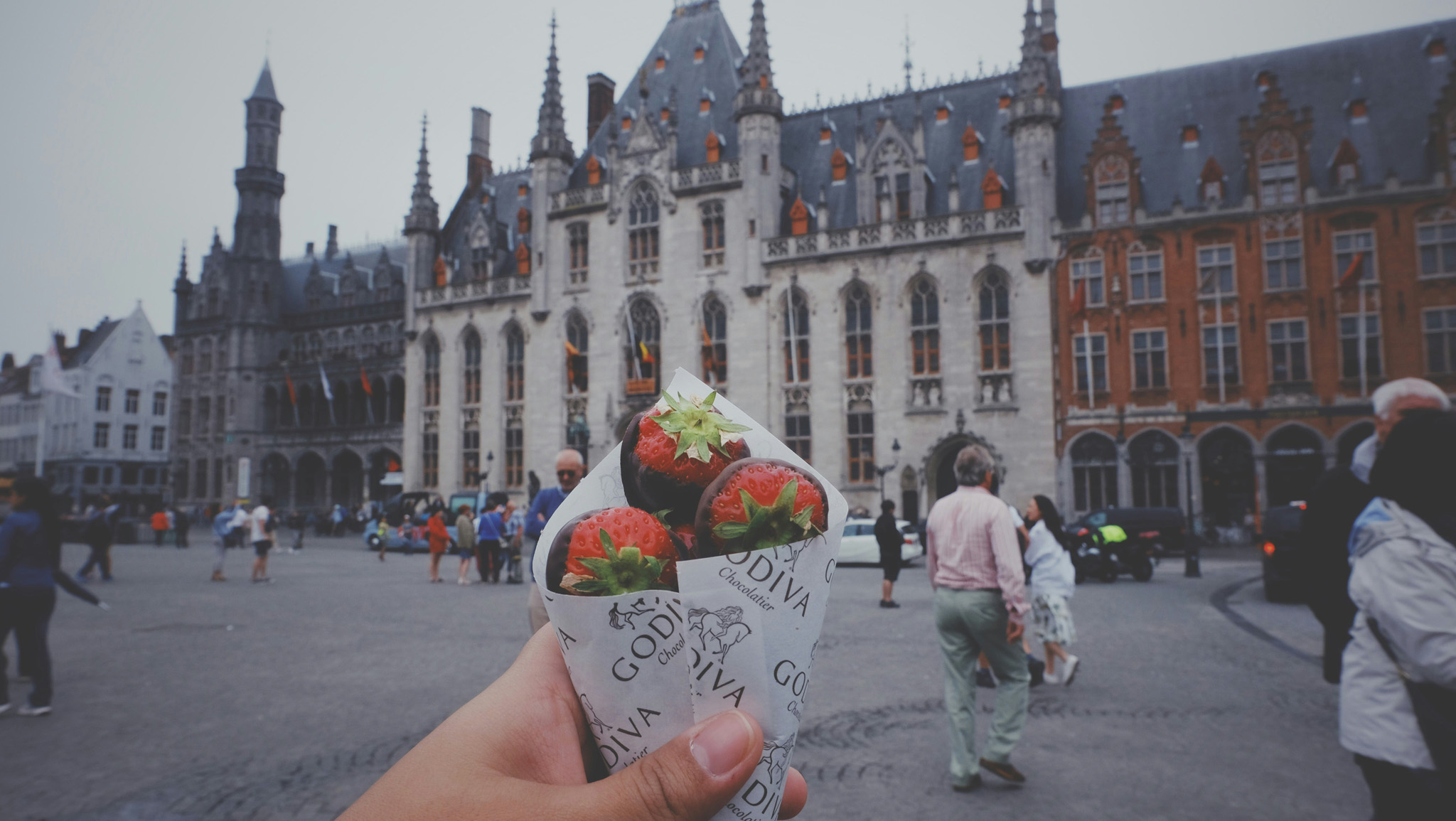
- Belgian chocolate, from grand chocolatiers to corner shops
- Trappist and abbey beers, plus tart lambics and fruit gueuze
🌦️ Weather
Belgium has a mild, temperate maritime climate with changeable, often grey skies and rain possible in any season. Summers are pleasant rather than hot, and winters are cool and damp rather than severe.
- Summer (June – August) ranges from 17-25°C, occasionally warmer
- Winter (December – February) hovers around 0-7°C
- Spring and autumn are mild but unpredictable, with 8-16°C typical
- Rain is frequent year-round, so waterproofs are essential
- The Ardennes are noticeably cooler and can see winter snow
- The coast is breezy and several degrees fresher than inland
📅 Best Time To Visit
May – September (Peak Season)
- Warmest, longest days and the liveliest atmosphere
- Outdoor cafes, festivals and events in full swing
- Expect larger crowds and higher prices in Bruges and Brussels
April and October (Shoulder Season)
- Mild conditions with thinner crowds and easier bookings
- Spring blossom or autumn colour across parks and countryside
- A good balance for sightseeing without peak congestion
November – March (Off Season)
- Cold, damp and dark, but cities feel calm and authentic
- December brings magical Christmas markets across the country
- Lowest prices outside the festive period, with cosy indoor culture
🎒 Packing List
- Waterproof jacket and a compact travel umbrella
- Layers that work across cool mornings and milder afternoons
- Comfortable, broken-in walking shoes for cobbled streets
- A warm jumper or fleece, even in summer evenings
- Lightweight scarf and hat for cooler or windy days
- Sun protection for bright summer days
- Insect repellent for forest and riverside areas
- Universal power adapter for Type E plugs
- Small medical kit with personal medication and plasters
- Electrolytes or rehydration sachets for long sightseeing days
- A daypack for city walking and train travel
- Reusable water bottle, as tap water is safe to drink
🛂 Visas & Entry Requirements
Belgium is part of the Schengen Area, and entry requirements depend on your nationality.
- Many nationalities, including Australians, can enter visa-free for up to 90 days in any 180-day period
- Travellers from visa-required countries must obtain a Schengen visa in advance
- Your passport should be valid for at least three months beyond your planned departure
- Proof of onward travel, accommodation and sufficient funds may be requested
- The EU’s ETIAS travel authorisation is being introduced for visa-exempt visitors, so check current status before you travel
- Official information: https://dofi.ibz.be/en
💰 Money
- The currency is the euro (EUR)
- Cards are widely accepted, including for small purchases
- Contactless payment is standard across cities and transport
- ATMs are plentiful in towns and cities
- Tipping is not expected, as service is included, though rounding up is appreciated
- Carry a little cash for small markets, rural areas and some cafes
💸 Hotel & Tourist Taxes
Belgium has no national tourist tax – each municipality sets and collects its own accommodation levy, so rates vary noticeably between cities.
- City taxes are typically charged per room or per person, per night, and added at check-in or check-out
- Brussels moved to a flat rate from January 2026, around €5 per room per night for standard accommodation and €4 for homestays and campsites
- Other cities such as Bruges, Ghent and Antwerp set their own rates, commonly in the range of €1-4 per person or per room, per night
- The tax may be included in your total when booking through platforms like Booking.com, or charged separately on arrival
- Separately, national VAT on hotel and campsite stays rose from 6% to 12% in March 2026, which is built into room rates rather than charged as a tourist tax
🌈 LGBTQIA+ Travellers
Belgium is one of the most progressive countries in the world for LGBTQIA+ travellers, with strong legal protections and broadly accepting attitudes.
- Same-sex marriage has been legal since 2003, among the earliest in the world
- Comprehensive anti-discrimination laws protect against discrimination
- Brussels, Antwerp and Ghent have visible LGBTQIA+ scenes and venues
- Public acceptance is high, particularly in cities, with Pride events well attended
- Attitudes are generally welcoming everywhere, though smaller rural areas can be more conservative
⚠️ Traveller Safety
Belgium is a safe destination for travellers, with crime levels comparable to other Western European countries.
- Petty crime such as pickpocketing occurs in tourist areas, busy stations and on public transport
- Keep valuables secure and stay aware in crowded squares and markets
- Cities are generally safe to walk at night, with normal urban caution advised
- Outdoor activities in the Ardennes are low-risk with sensible preparation
- Emergency number is 112
💉 Vaccinations & Health
No special vaccinations are required to enter Belgium, and the country has excellent healthcare facilities.
- Ensure routine vaccinations are up to date, including measles, tetanus and diphtheria
- No malaria or tropical disease risk is present in Belgium
- Pharmacies are widespread and staff are well trained to advise on minor ailments
- EU citizens should carry an EHIC or GHIC card for healthcare access
- Official information: https://www.health.belgium.be/en
🚗 Getting Around
- Belgium’s rail network is dense, affordable and connects nearly every town
- Trains are the easiest way to move between major cities
- City public transport includes trams, buses and metro, with simple ticketing
- The coastal Kusttram links resort towns along the entire coast
- Roads are excellent and well signed, making car hire easy for the Ardennes
- Cities are flat and very cycle-friendly, with extensive bike lanes and rental schemes
✈️ Airports
Brussels Airport (BRU)
- The main international gateway, located in Zaventem northeast of the capital
Brussels South Charleroi Airport (CRL)
- A budget-airline hub around 50 kilometres south of Brussels
Antwerp International Airport (ANR)
- A small regional airport serving the Antwerp area with limited routes
Liège Airport (LGG)
- Primarily a cargo hub with some passenger and charter services in Wallonia
🗣️ Language
Belgium has three official languages – Dutch, spoken in Flanders to the north, French, spoken in Wallonia to the south, and German, spoken in a small eastern region. Brussels is officially bilingual in Dutch and French. English is very widely spoken, especially in cities, tourist areas and among younger people, so travellers rarely face a language barrier. The phrases below are given in French, the language most useful across Brussels and the south.
Common Phrases
- Hello – Bonjour (bon-zhoor)
- Goodbye – Au revoir (oh ruh-vwar)
- Please – S’il vous plaît (seel voo pleh)
- Thank you – Merci (mair-see)
- Yes – Oui (wee)
- No – Non (nohn)
- Excuse me – Excusez-moi (ex-koo-zay mwah)
- Sorry – Pardon (par-dohn)
- Do you speak English? – Parlez-vous anglais? (par-lay voo on-gleh)
- How much is it? – Combien ça coûte? (kom-byan sa koot)
- Where is…? – Où est…? (oo eh)
- Help – Au secours (oh suh-koor)
- Cheers – Santé (son-tay)
- One, two, three – Un, deux, trois (uhn, duh, twah)
- Enjoy your meal – Bon appétit (bon ah-pay-tee)
ℹ️ Practical Info
Electricity
- Belgium uses Type E plugs with a standard voltage of 230V
Internet & WiFi
- WiFi is widely available in hotels, cafes and public spaces, and mobile data coverage is excellent across the country
Water
- Tap water is safe to drink throughout Belgium
Travel Insurance
- Comprehensive personal travel insurance is strongly recommended, covering medical care, cancellations and any active pursuits such as hiking or cycling in the Ardennes
Connectivity SIM / eSIM
- Local SIM cards are easy to buy from network providers and convenience stores in cities and at the airport
- Using an eSIM is our recommended choice while travelling anywhere in the world, and our recommended provider is Holafly. For more information on eSIMs, check out this blog.

❤️ Why Visit Belgium
Belgium is a country that fits an extraordinary amount into a small space. In a single trip you can stand in a perfectly preserved medieval square, walk WWI battlefields, hike a quiet Ardennes forest and spend the evening over a Trappist beer that monks have been brewing for centuries. Few destinations offer this much variety with so little distance to cover.
It is also a country built for the senses. The chocolate, the beer, the fries, the waffles and the long unhurried meals are not clichés but genuine pleasures, woven into daily life. Add a deep cultural heritage of art, architecture and music, spread across three distinct linguistic regions, and Belgium reveals itself as far richer and more characterful than its modest reputation suggests.
Best of all, Belgium is welcoming, walkable and effortlessly easy to travel. Trains link every corner, English is widely spoken, and the cities are compact enough to explore on foot. It is a destination that quietly exceeds expectations – and one that leaves most travellers wishing they had given it more time.