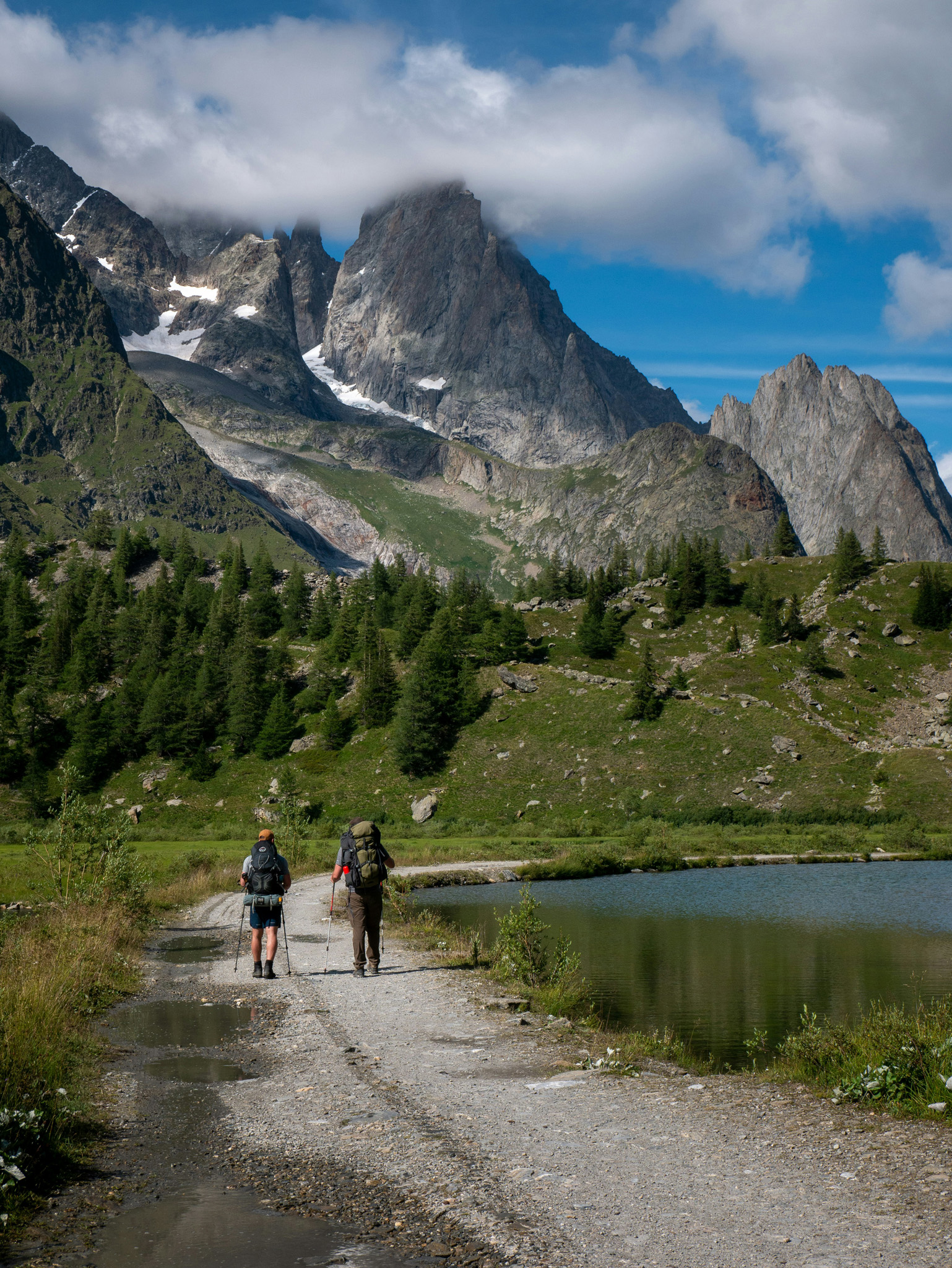
Mont Blanc – Destination Guide
Rising 4,807 metres above the borders of France, Italy, and Switzerland, Mont Blanc is the crowned summit of the Alps and the beating heart of one of the world’s great mountain regions. The massif gathers glaciers, granite spires, and deep green valleys into a single dramatic skyline, with the snowy dome of the mountain itself visible from villages, ridgelines, and cable car platforms across three countries. This is a landscape that has drawn climbers, painters, and wanderers for more than two centuries, and it still feels just as electrifying on arrival.
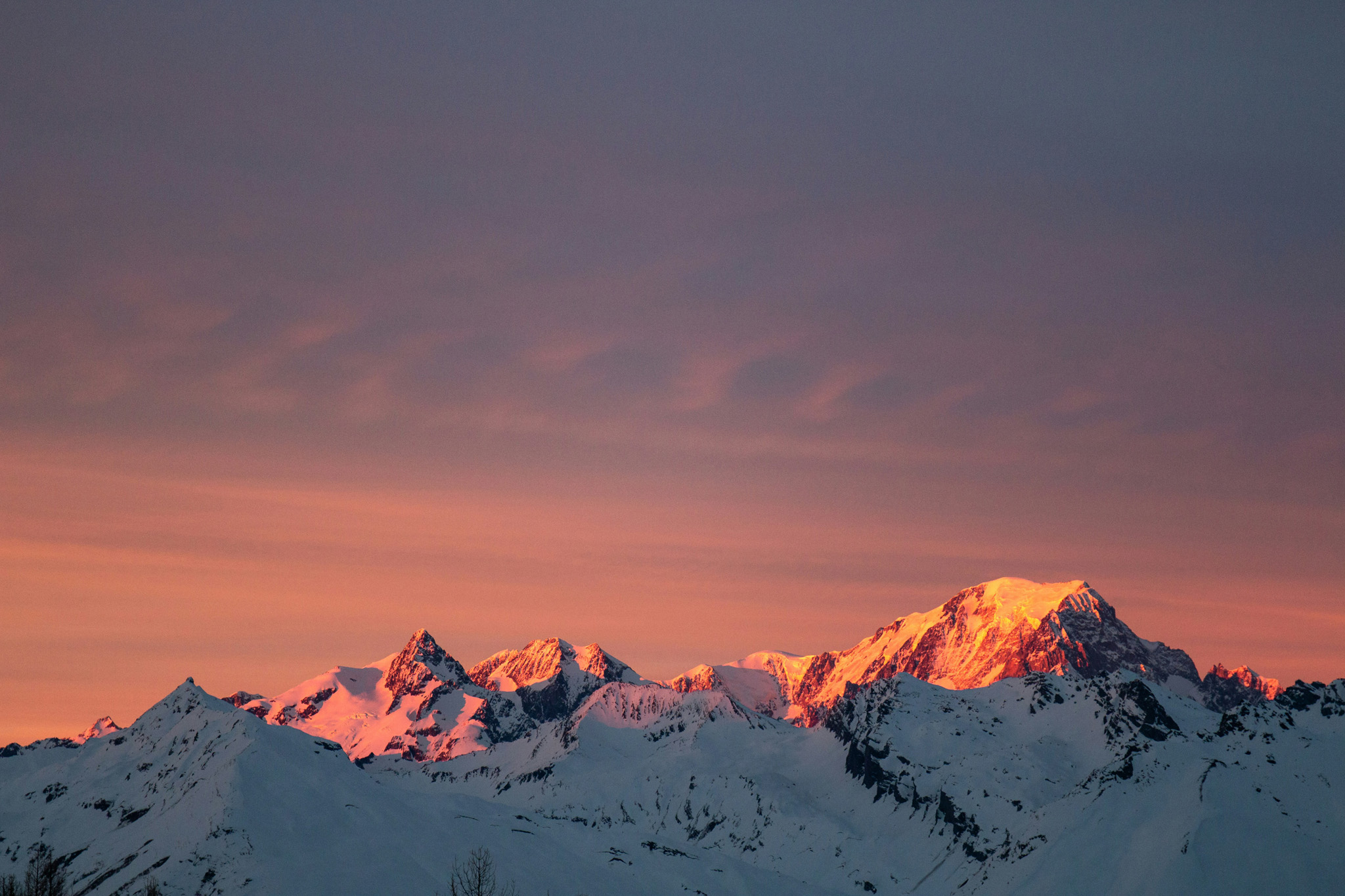
The region rewards every kind of traveller. Adrenaline seekers ride lifts to dizzying viewing platforms, lace up boots for the famous Tour du Mont Blanc trek, or carve through legendary off-piste terrain in winter. Slower travellers find their own rhythm in alpine villages where church bells echo across meadows, terraces serve fondue and espresso in equal measure, and the mountains glow pink at sunset. Each of the three national gateways – Chamonix in France, Courmayeur in Italy, and the Swiss valleys to the north – brings its own language, food, and character.
What makes Mont Blanc unforgettable is the sheer scale of it all. Few places let you stand so close to such towering, living mountains while still being looked after by charming towns and an extraordinary network of lifts, trains, and trails. It is wild and welcoming at once, and it leaves a lasting mark on anyone who visits.

🗺️ Regions to Explore
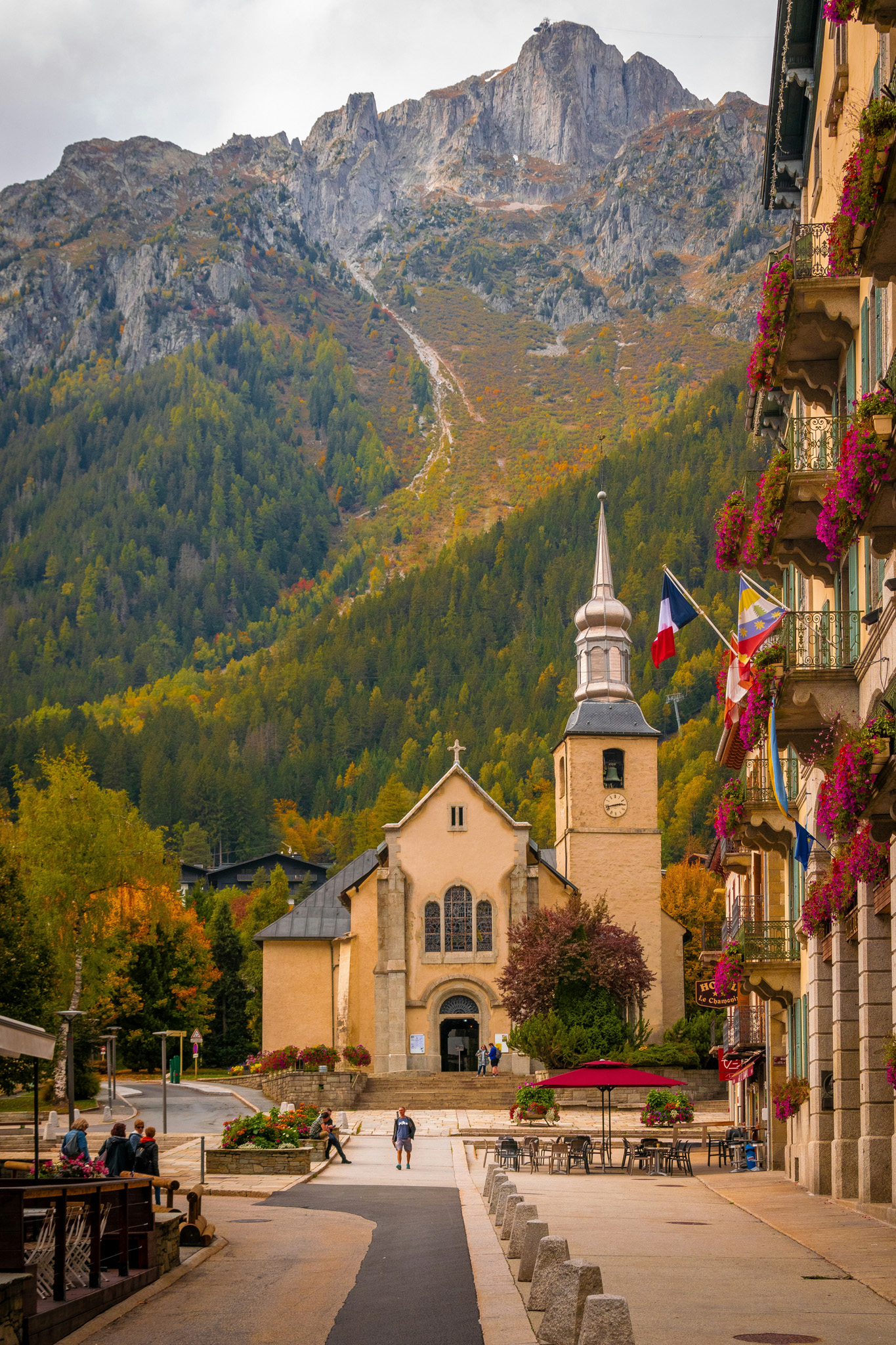
Chamonix Valley, France
The historic French gateway to Mont Blanc and the region’s most famous mountain town.
- Riding the Aiguille du Midi cable car to a 3,842 metre viewing platform
- Walking the Mer de Glace glacier and its dramatic ice cave
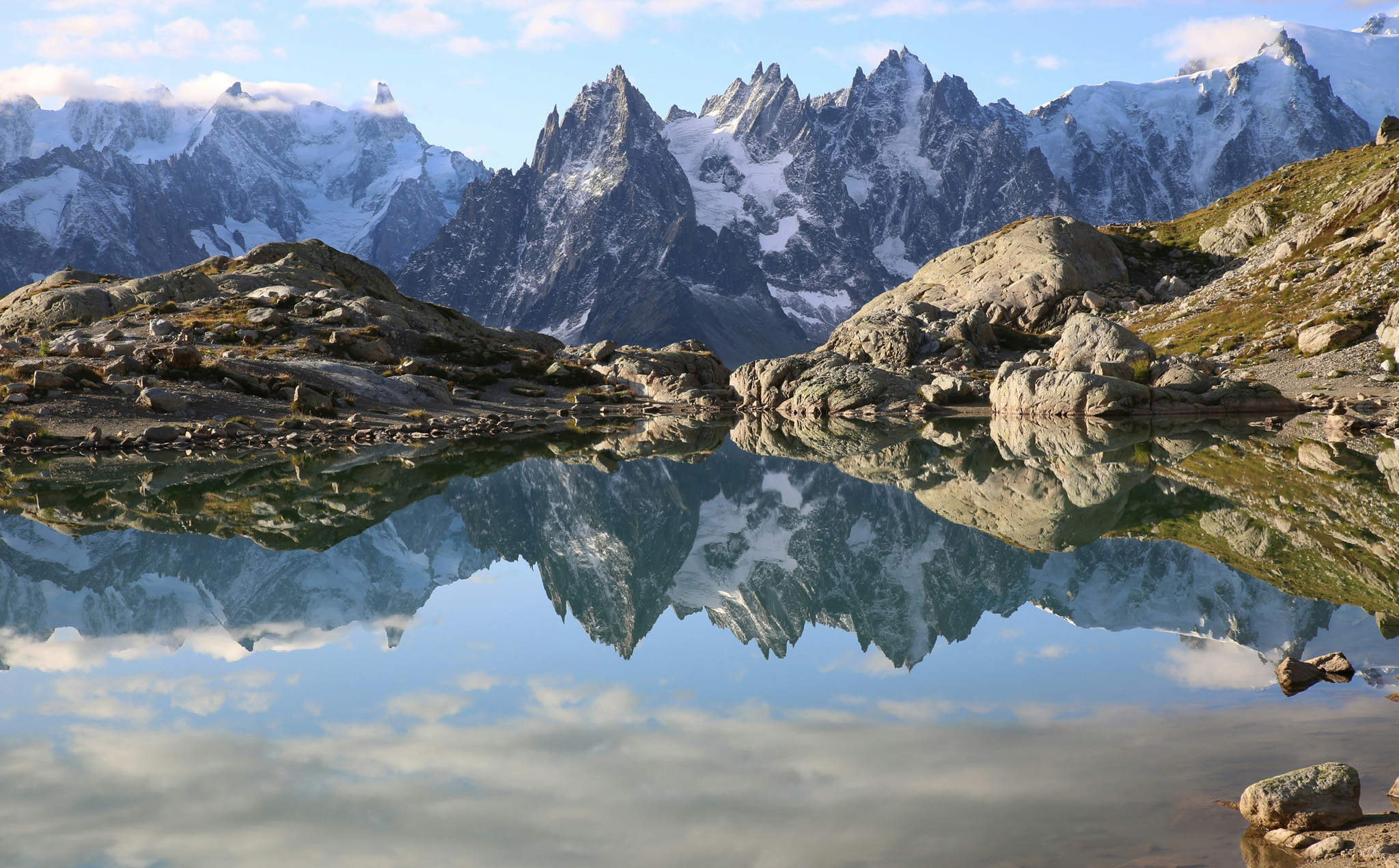
- Hiking the Grand Balcon Nord and Lac Blanc trails
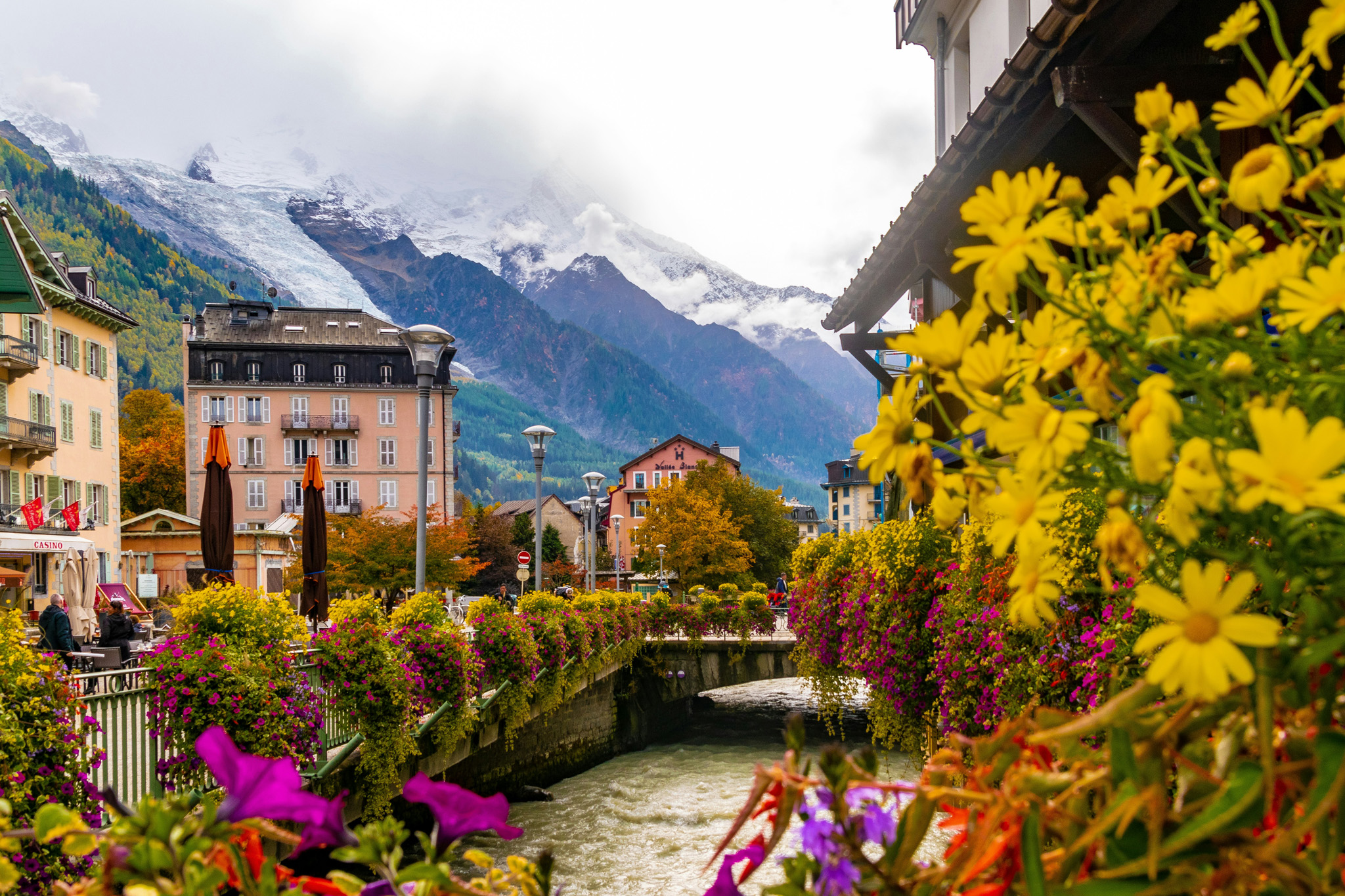
- Exploring the lively town centre, museums, and alpine boutiques
- Watching world-class climbers gear up for serious ascents
Courmayeur, Italy
The sunny Italian side of the massif, blending alpine adventure with Italian warmth.
- Soaring on the Skyway Monte Bianco rotating cable car to Pointe Helbronner
- Relaxing in the historic Pré Saint Didier thermal spa
- Strolling the pedestrian Via Roma lined with cafes and shops
- Hiking the high trails of Val Ferret and Val Veny
- Sampling hearty Valdostan cooking and local mountain wines
Verbier and the Swiss Valleys
The Swiss approach to the massif, known for polished resorts and quiet, scenic valleys.
- Skiing or hiking the vast Verbier terrain in the Four Valleys
- Walking the green pastures of Champex Lac and the Val Ferret
- Riding scenic gondolas for panoramic ridge views
- Tasting raclette and Swiss chocolate in mountain chalets
- Spotting marmots and ibex on high alpine paths
Saint Gervais and Megève, France
Elegant French villages on the western flank, combining spa culture with broad ski terrain.
- Riding the historic Mont Blanc Tramway towards the Nid d’Aigle
- Enjoying the thermal baths and wellness heritage of Saint Gervais
- Skiing the gentle, tree-lined slopes of the Evasion Mont Blanc area
- Wandering the cobbled, upmarket village centre of Megève
- Taking in panoramic balcony walks above the valley

Les Houches and the Lower Valley
A quieter, family friendly base at the foot of the massif with easy valley access.
- Skiing the sheltered, forested runs ideal for poor weather days
- Visiting the Merlet animal park with its free-roaming alpine wildlife
- Walking gentle valley trails with classic Mont Blanc views
- Riding the Bellevue cable car towards the higher trails
- Basing here for budget-friendly stays near Chamonix
Tour du Mont Blanc Trail
The legendary circuit that loops the entire massif through all three countries.
- Trekking roughly 170 kilometres over 7 to 11 days
- Crossing high passes between France, Italy, and Switzerland
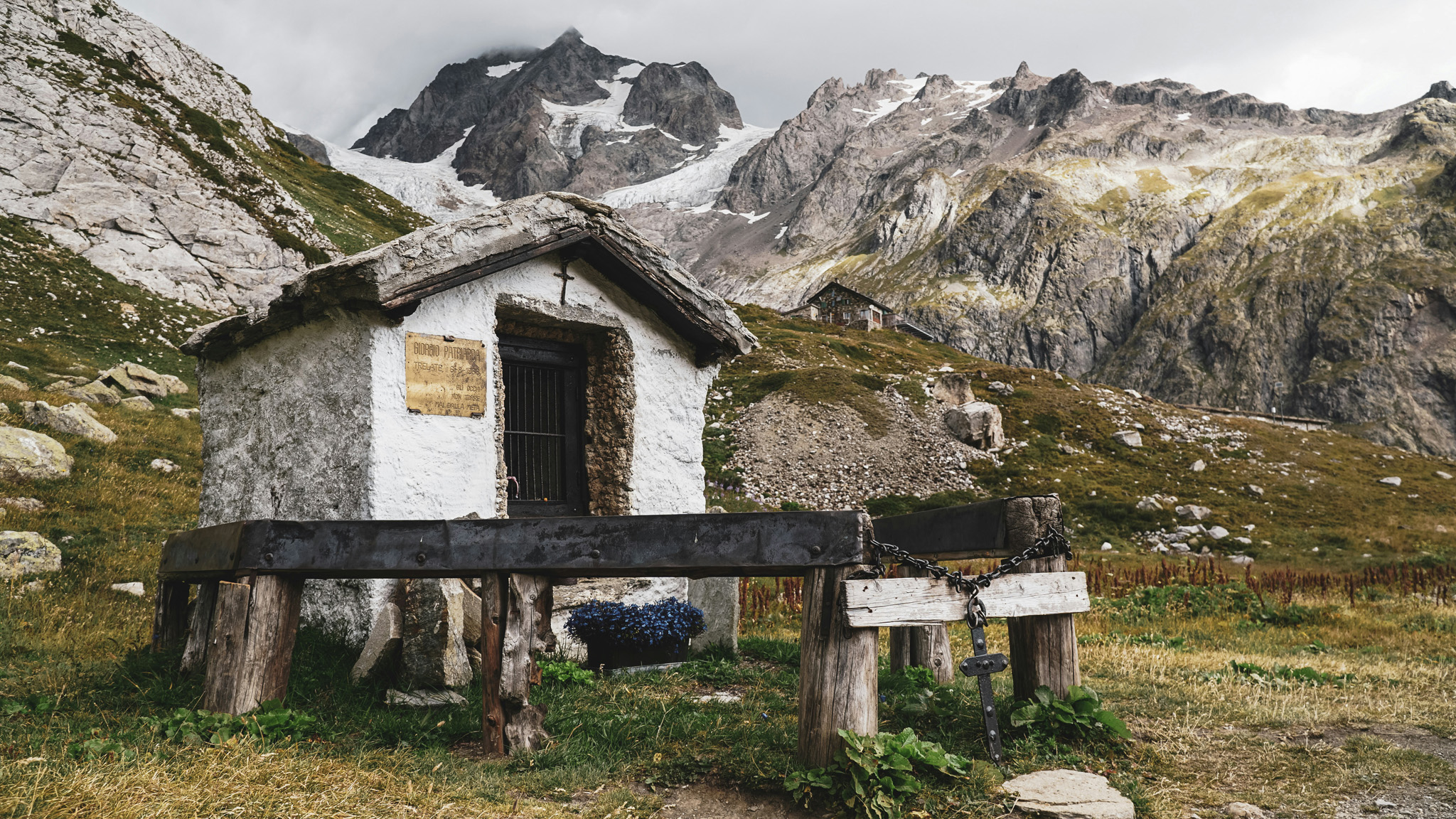
- Staying in mountain refuges and village guesthouses
- Experiencing three distinct cultures, cuisines, and languages
- Earning some of the finest mountain views in Europe
🎒 Things To Do
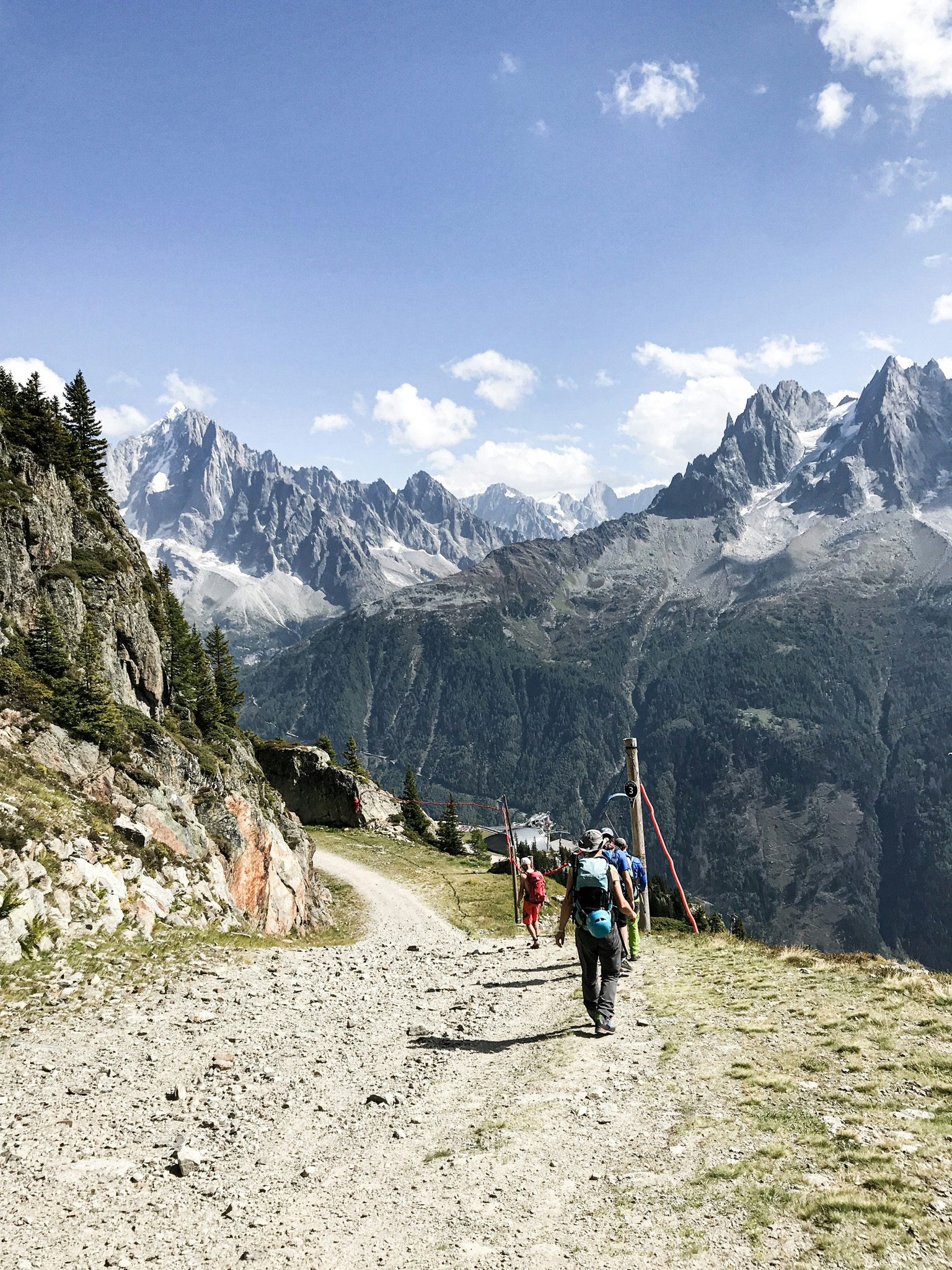
The Mont Blanc region packs a lifetime of mountain experiences into a compact, well-connected area. Whether you crave high-altitude thrills or gentle valley wandering, there is something here for every pace and season.
- Ride the Aiguille du Midi cable car for jaw-dropping summit views
- Trek all or part of the Tour du Mont Blanc circuit
- Walk on the Mer de Glace glacier and visit its ice cave
- Take the Skyway Monte Bianco rotating gondola from Courmayeur
- Ski or snowboard legendary slopes and off-piste terrain in winter
- Try paragliding from the high meadows above Chamonix
- Soak in the historic thermal spas of Saint Gervais and Pré Saint Didier
- Ride the Mont Blanc Tramway, France’s highest rack railway
- Hike the Lac Blanc and Grand Balcon trails for postcard panoramas
- Spot marmots, ibex, and chamois in the alpine parks and high passes
🍽️ Food & Drink
The cuisine of Mont Blanc is rich, warming, and deeply tied to the mountains, shifting in flavour as you cross from France into Italy and Switzerland. Expect generous portions, fine local cheeses, and plenty of comforting alpine classics designed to fuel long days outdoors.
- Fondue and raclette, melted cheese shared straight from the pot or grill
- Tartiflette, a baked dish of potatoes, lardons, onion, and reblochon cheese
- Valdostan polenta and hearty mountain stews on the Italian side
- Croziflette and other Savoyard pasta and cheese bakes
- Swiss chocolate, alpine honey, and fresh mountain dairy
- Génépi liqueur and crisp local wines from the Aosta Valley
🌦️ Weather
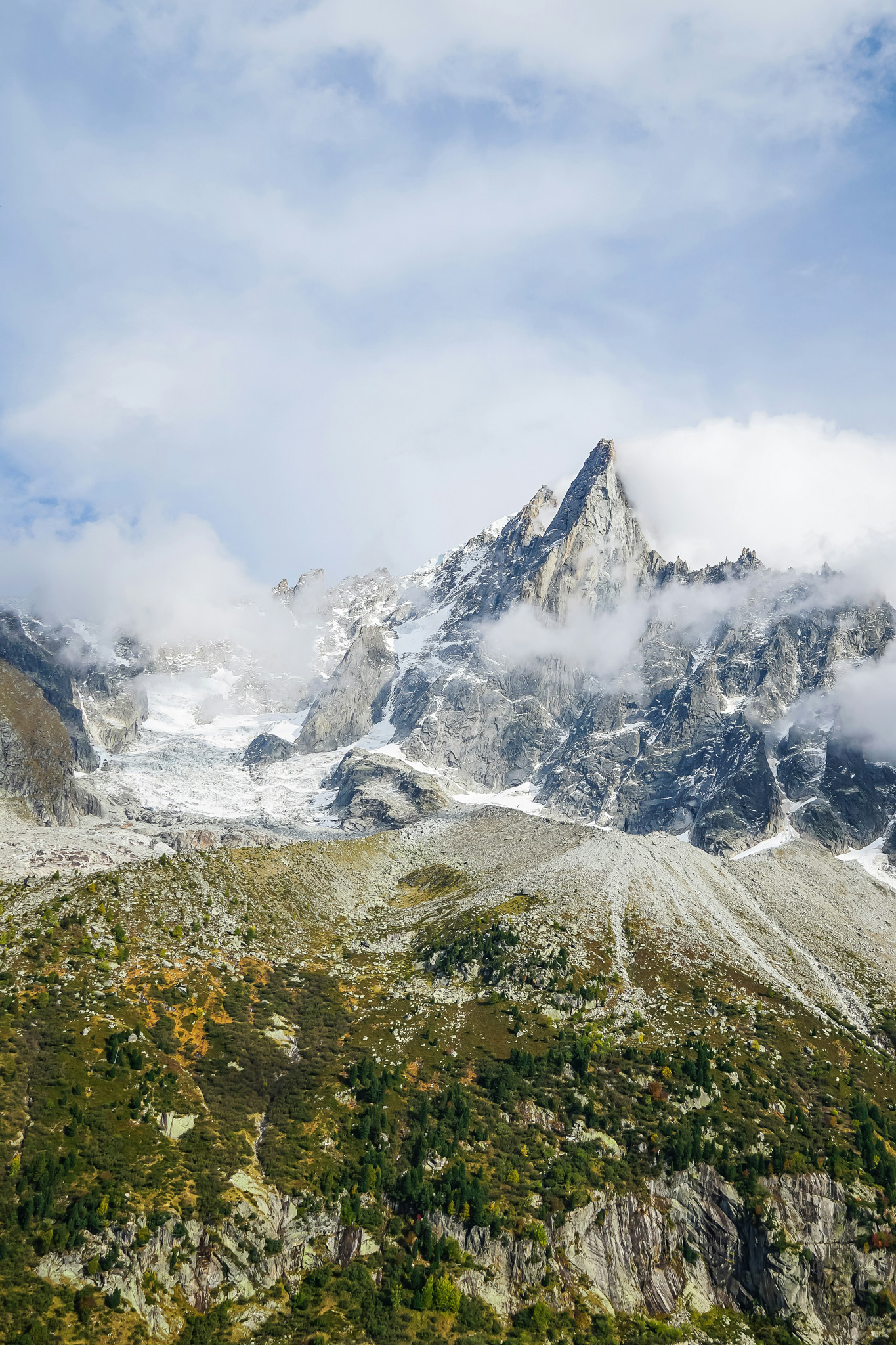
The Mont Blanc region has a true alpine climate, with conditions that change quickly and vary sharply with altitude. Valley towns can feel mild and pleasant while the high peaks remain locked in snow and ice year round.
- Summer in the valleys is warm, with daytime highs of 18-25°C
- Winter valley temperatures often sit between -5 and 5°C
- High-altitude areas stay cold and snow-covered well into early summer
- Mountain weather shifts fast, with sudden cloud, wind, and storms
- Afternoon thunderstorms are common on warm summer days
- Snow can fall on the peaks in any month of the year
📅 Best Time To Visit
June – September (Summer Hiking Season)
- The prime window for hiking, including the Tour du Mont Blanc
- Lifts, trails, and mountain refuges are fully open
- Warm valley days, long daylight, and meadows in full bloom
- July and August are busiest, so book accommodation well ahead
December – April (Winter Ski Season)
- Peak season for skiing, snowboarding, and snow sports
- Reliable snow cover across the linked resort areas
- Festive atmosphere in the villages, especially around the holidays
- Lift queues and prices are highest during school holiday periods
May and October – November (Shoulder Seasons)
- Quieter villages, lower prices, and a relaxed pace
- Many lifts and some refuges close for maintenance
- Variable weather, with lingering snow or early storms
- Best for travellers who value calm over guaranteed conditions
🎒 Packing List
- Warm, breathable layers including a fleece or insulated mid-layer
- Waterproof and windproof jacket and trousers
- Sturdy, broken-in hiking boots with good ankle support
- Comfortable walking shoes for towns and villages
- Sun protection: high-SPF sunscreen, sunglasses, and a brimmed hat
- Warm hat, gloves, and a buff or scarf, even in summer
- Daypack with a rain cover for trail walks and excursions
- Reusable water bottle and electrolytes for long days outdoors
- Basic medical kit with blister plasters, painkillers, and any personal medication
- Universal power adapter for European sockets
- Trekking poles for steep ascents and descents
- Cash in euros and Swiss francs for refuges, taxes, and small purchases
🛂 Visas & Entry Requirements
France, Italy, and Switzerland are all part of the Schengen Area, so a single Schengen entry covers travel across the entire Mont Blanc region.
- Many nationalities, including Australians, can enter visa-free for up to 90 days in any 180-day period
- Travellers from other countries may need a Schengen visa arranged in advance
- Passports should be valid for at least three months beyond your planned departure
- No internal border checks are needed when moving between the three countries
- The EU’s ETIAS travel authorisation is being introduced for visa-exempt visitors, so check its status before you travel
Official information: https://www.schengenvisainfo.com
💰 Money
- France and Italy use the Euro (EUR); Switzerland uses the Swiss Franc (CHF)
- Cards are widely accepted in towns, hotels, restaurants, and lifts
- Carry cash for mountain refuges, small cafes, and tourist taxes
- ATMs are available in Chamonix, Courmayeur, and the larger Swiss villages
- Many Swiss businesses near the border also accept euros, though change is given in francs
- Tipping is modest: rounding up or leaving 5-10% for good service is appreciated
💸 Hotel & Tourist Taxes
All three countries apply a small per-person, per-night accommodation tax (taxe de séjour in France) that funds local tourism services.
- Rates are typically a few euros per person per night, scaling with accommodation standard
- The tax is usually collected by your hotel, guesthouse, or refuge at check-in or check-out
- In France, paying the tax entitles you to a free guest card (carte d’hôte) offering free valley bus and train travel plus local discounts
- More remote mountain refuges may require the tax to be paid in cash on departure
- Children under a certain age are generally exempt, though the threshold varies by area
🌈 LGBTQIA+ Travellers
France, Italy, and Switzerland are broadly welcoming destinations for LGBTQIA+ travellers, and the Mont Blanc region is relaxed and tourist-friendly.
- Same-sex marriage is legal in France and Switzerland; Italy recognises civil unions
- Anti-discrimination protections exist across all three countries
- Resort towns like Chamonix are international and accustomed to diverse visitors
- Public attitudes are accepting, though smaller mountain villages can be more conservative
- Same-sex couples generally travel and share accommodation without difficulty
⚠️ Traveller Safety
The Mont Blanc region is very safe for visitors, with the main risks tied to mountain conditions rather than crime.
- Petty theft is uncommon but possible in busy tourist areas, so watch your belongings
- High mountains carry real hazards: rockfall, sudden weather, and altitude
- Use qualified mountain guides for glacier travel, climbing, and serious off-piste skiing
- Check weather and trail conditions daily and turn back if conditions worsen
- Towns and villages are safe at night, with well-lit, walkable centres
- Emergency number is 112
💉 Vaccinations & Health
No special vaccinations are required to visit the Mont Blanc region, and healthcare standards across all three countries are excellent.
- Ensure routine vaccinations such as tetanus and MMR are up to date
- No malaria or major disease risk exists in the region
- Altitude can affect some travellers on high-altitude excursions, so ascend gradually
- Pharmacies are widely available in towns for minor ailments and advice
- Mountain rescue is well organised but can be costly without proper insurance cover
- Official information: https://www.who.int/travel-advice
🚗 Getting Around
- An excellent network of cable cars, gondolas, and mountain trains connects the region
- Valley trains and buses link Chamonix, Les Houches, and Vallorcine, often free with a guest card
- The Mont Blanc Tunnel connects Chamonix and Courmayeur in around 15 minutes by car
- Hiring a car offers flexibility, though mountain roads can be winding and busy in peak season
- Regular coaches and transfers run from Geneva Airport into the Chamonix Valley
- Many travellers explore car-free, relying on the dense lift and public transport network
✈️ Airports
Geneva Airport (GVA)
- The main international gateway, around one hour by road from the Chamonix Valley.
Milan Malpensa Airport (MXP)
- A convenient Italian-side option, roughly two to three hours from Courmayeur.
Lyon Saint Exupéry Airport (LYS)
- A French alternative with good connections, about two and a half hours from Chamonix.
Turin Airport (TRN)
- The closest airport to the Italian side, around two hours from Courmayeur.
🗣️ Language
The Mont Blanc region spans three languages: French is spoken in Chamonix and the French valleys, Italian in Courmayeur and the Aosta Valley, and French is also the local language on the Swiss side near Martigny. English is widely understood in resort towns, hotels, and tourist services, so travellers can get by comfortably, though a few words of French or Italian are always warmly received. The phrases below are given in French, the most widely useful language across the massif.
Common Phrases
- Hello – Bonjour (bon-zhoor)
- Goodbye – Au revoir (oh ruh-vwar)
- Please – S’il vous plaît (seel voo pleh)
- Thank you – Merci (mair-see)
- Yes – Oui (wee)
- No – Non (nohn)
- Excuse me – Excusez-moi (ex-koo-zay mwah)
- Sorry – Désolé (day-zoh-lay)
- Do you speak English? – Parlez-vous anglais? (par-lay voo ahn-gleh)
- How much is it? – C’est combien? (say kom-byan)
- Where is…? – Où est…? (oo eh)
- Help – Au secours (oh suh-koor)
- Cheers – Santé (sahn-tay)
- One, two, three – Un, deux, trois (uhn, duh, twah)
- Have a good trip – Bon voyage (bon voy-yazh)
ℹ️ Practical Info
Electricity
- France and Switzerland use plug types C, E, and J; Italy uses types C, F, and L. Standard voltage is 230V across the region, so a universal adapter is recommended.
Internet & WiFi
- WiFi is widely available in hotels, cafes, and restaurants in the valley towns. Mobile data coverage is strong in populated areas but drops out on high passes and remote stretches of trail.
Water
- Tap water is safe to drink throughout France, Italy, and Switzerland. Carry a reusable bottle and refill at the many public mountain fountains.
Travel Insurance
- Comprehensive personal travel insurance is strongly recommended, and it must specifically cover mountain activities such as hiking, skiing, glacier travel, and high-altitude excursions, as mountain rescue can be very expensive.
Connectivity SIM / eSIM
- Local SIM cards from French, Italian, and Swiss providers are available in towns, though coverage needs differ if you are crossing borders frequently.
- Using an eSIM is our recommended choice while travelling anywhere in the world, and our recommended provider is Holafly. For more information on eSIMs, check out this blog.

❤️ Why Visit Mont Blanc
Mont Blanc is one of those rare places that lives up to every expectation and then quietly exceeds them. Standing in a valley town with the white dome of the highest peak in the Alps overhead, watching cable cars climb into the clouds, you feel both wonderfully small and completely alive. It is a region built for awe.
What truly sets Mont Blanc apart is the way it weaves together three cultures around a single mountain. In a matter of hours you can sip espresso in an Italian piazza, hike a French balcony trail, and share a Swiss raclette, all beneath the same towering massif. Each side brings its own flavour, yet the mountains hold it all together.
Whether you come to trek the legendary Tour du Mont Blanc, ski world-class slopes, soak in a thermal spa, or simply sit on a sunny terrace and stare at the peaks, Mont Blanc delivers a sense of wonder that stays with you long after you leave. Some mountains you visit. This one you carry home.