Costa Rica – Destination Guide
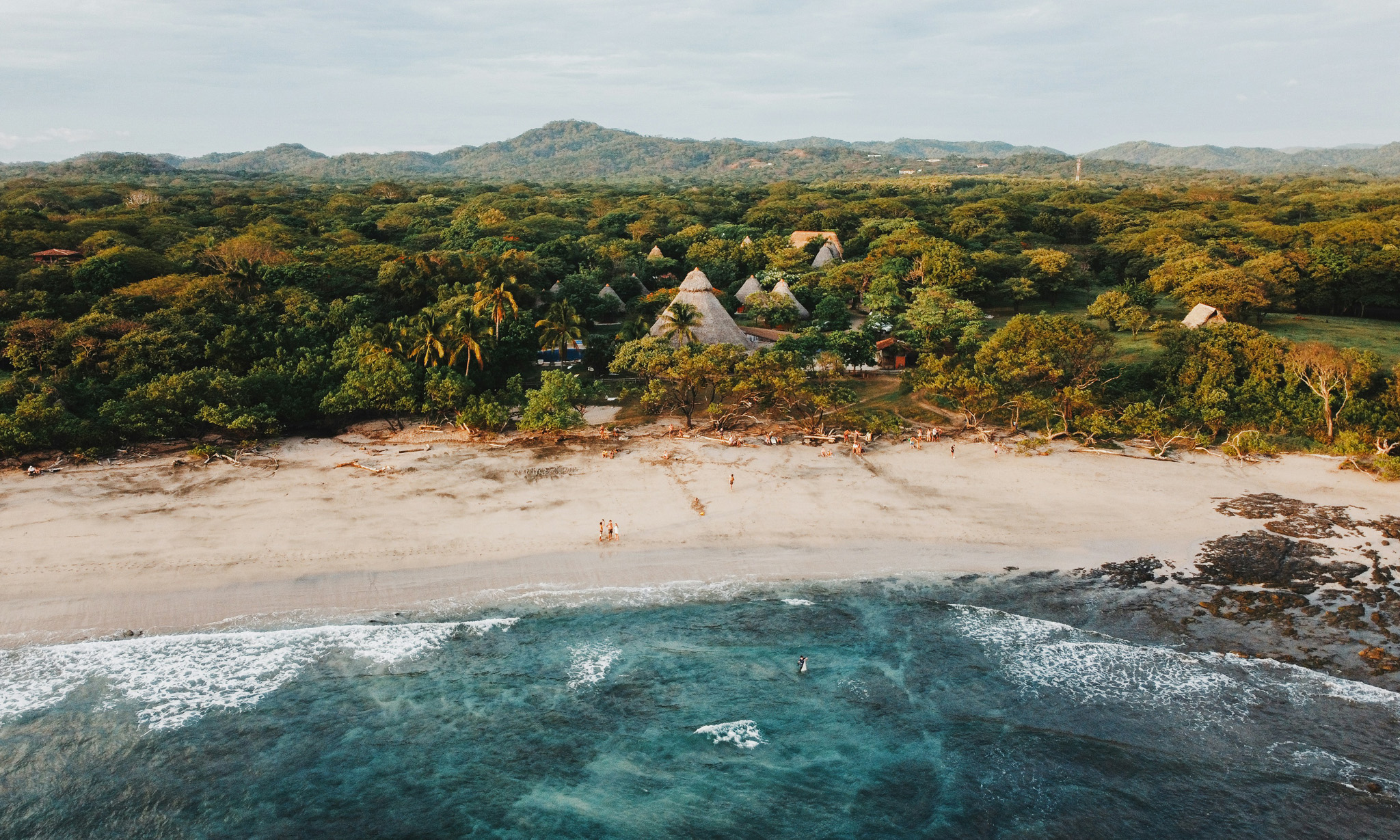
Costa Rica packs an extraordinary amount of nature, adventure, and laid-back warmth into a country smaller than Tasmania. Cloud forests drip with mist, twin coastlines roll out endless surf breaks, volcanoes steam above lush valleys, and roughly a quarter of the country is protected as national parks and reserves. Wildlife here is not a sighting, it is a constant – sloths overhead, scarlet macaws crossing the sky, monkeys treetop-hopping across your morning coffee.
The Ticos (Costa Ricans) live by a philosophy known as pura vida – pure life – and it shows up everywhere, from unhurried bus drivers to roadside soda stands serving casados under tin roofs. You can zipline through the Monteverde canopy in the morning, soak in volcanic hot springs by afternoon, and sit on a Pacific beach watching surfers carve the sunset, all without leaving the country.
Whether you come to surf, hike, birdwatch, raft, or simply rest, Costa Rica rewards every kind of traveller with an intoxicating mix of biodiversity, adventure, and that signature easygoing rhythm.
🗺️ Regions to Explore
Central Valley & San José
The country’s beating heart, home to the capital and most international arrivals.
- Wander San José’s Central Market and Pre-Columbian Gold Museum
- Day trip to Poás or Irazú volcanoes
- Coffee tours through the highlands of Heredia and Alajuela
- Doka Estate or Britt coffee plantation visits
- Easy access to airport transfers and onward travel
- Sample Tico cuisine in local sodas
Arenal & the Northern Lowlands
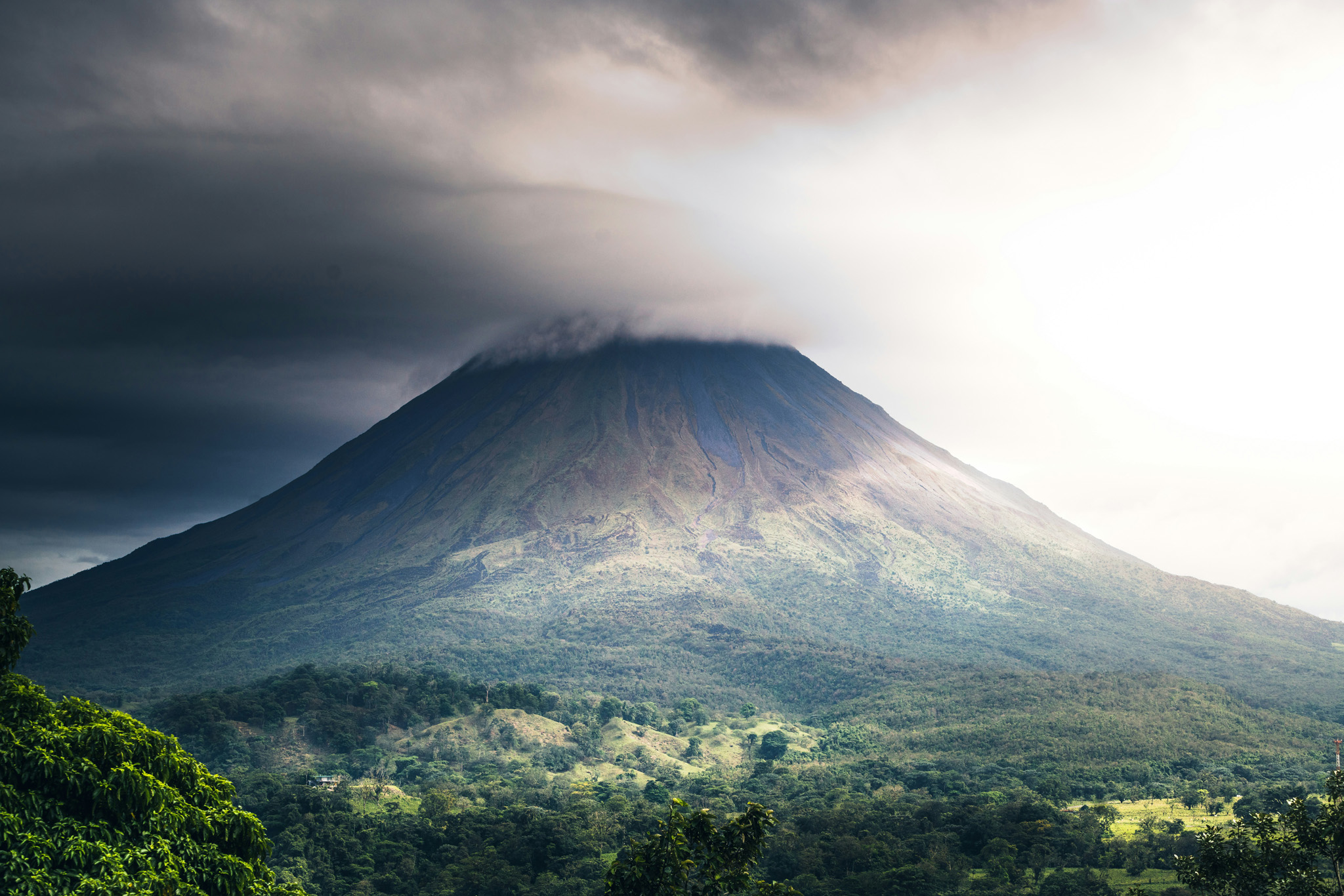
Volcano country, where adventure activities and hot springs sit at the foot of an iconic conical peak.
- Hike lava trails in Arenal Volcano National Park
- Soak in Tabacón or Baldí hot springs
- Hanging bridges and waterfall rappelling near La Fortuna
- Whitewater rafting on the Sarapiquí or Balsa rivers
- Caño Negro wildlife refuge for caiman and migratory birds
- Sunset views across Lake Arenal
Monteverde & the Cloud Forests
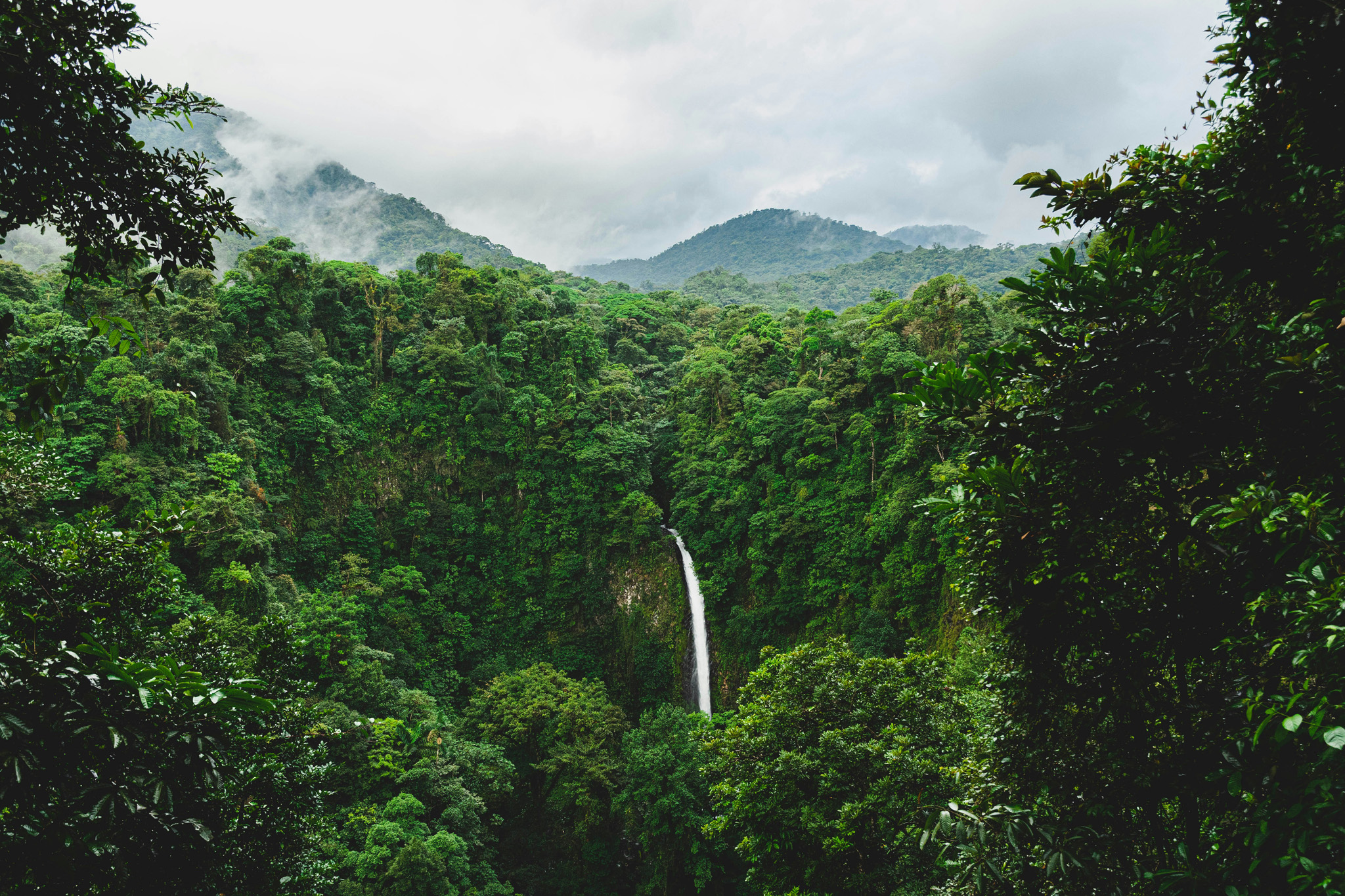
Mist-shrouded mountain forests teeming with biodiversity at every elevation.
- Walk the Monteverde Cloud Forest Biological Reserve
- Spot resplendent quetzals on guided birding tours
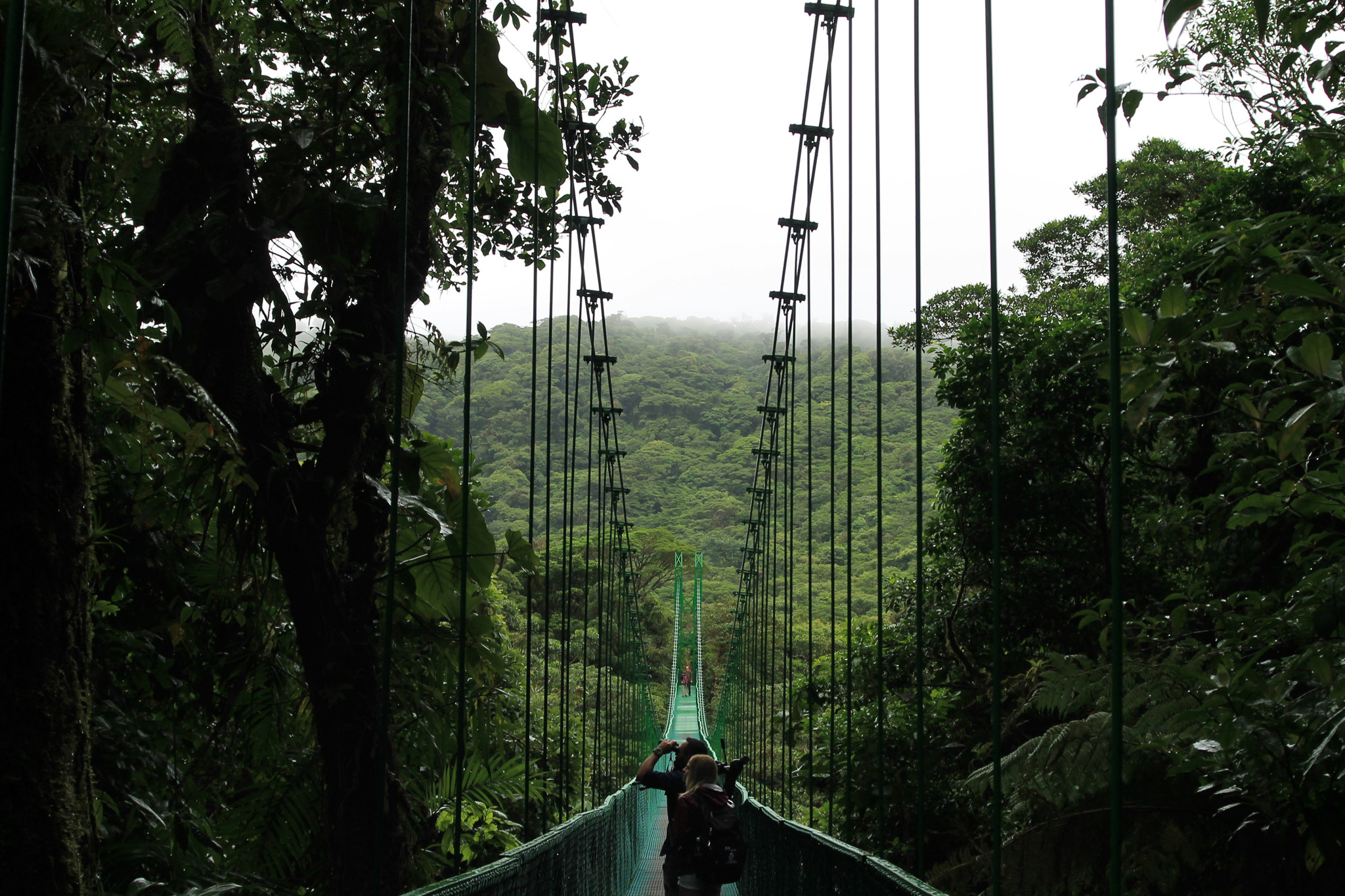
- Zipline and Sky Walk hanging bridges
- Night hikes to find frogs, snakes, and sleeping sloths
- Visit Santa Elena and its bat jungle or butterfly garden
- Sample cheese and chocolate at Monteverde dairy
Guanacaste & the Nicoya Peninsula
The dry Pacific north, known for surf towns, dry forest, and some of the country’s best beaches.
- Surf the breaks at Tamarindo, Playa Avellanas, or Santa Teresa
- Yoga and wellness retreats in Nosara
- Snorkel and dive in the Catalina or Bat Islands
- Hike Rincón de la Vieja volcano and its boiling mud pots
- Watch nesting olive ridley turtles at Ostional
- Sunset horseback rides on long, empty beaches
Central & Southern Pacific Coast
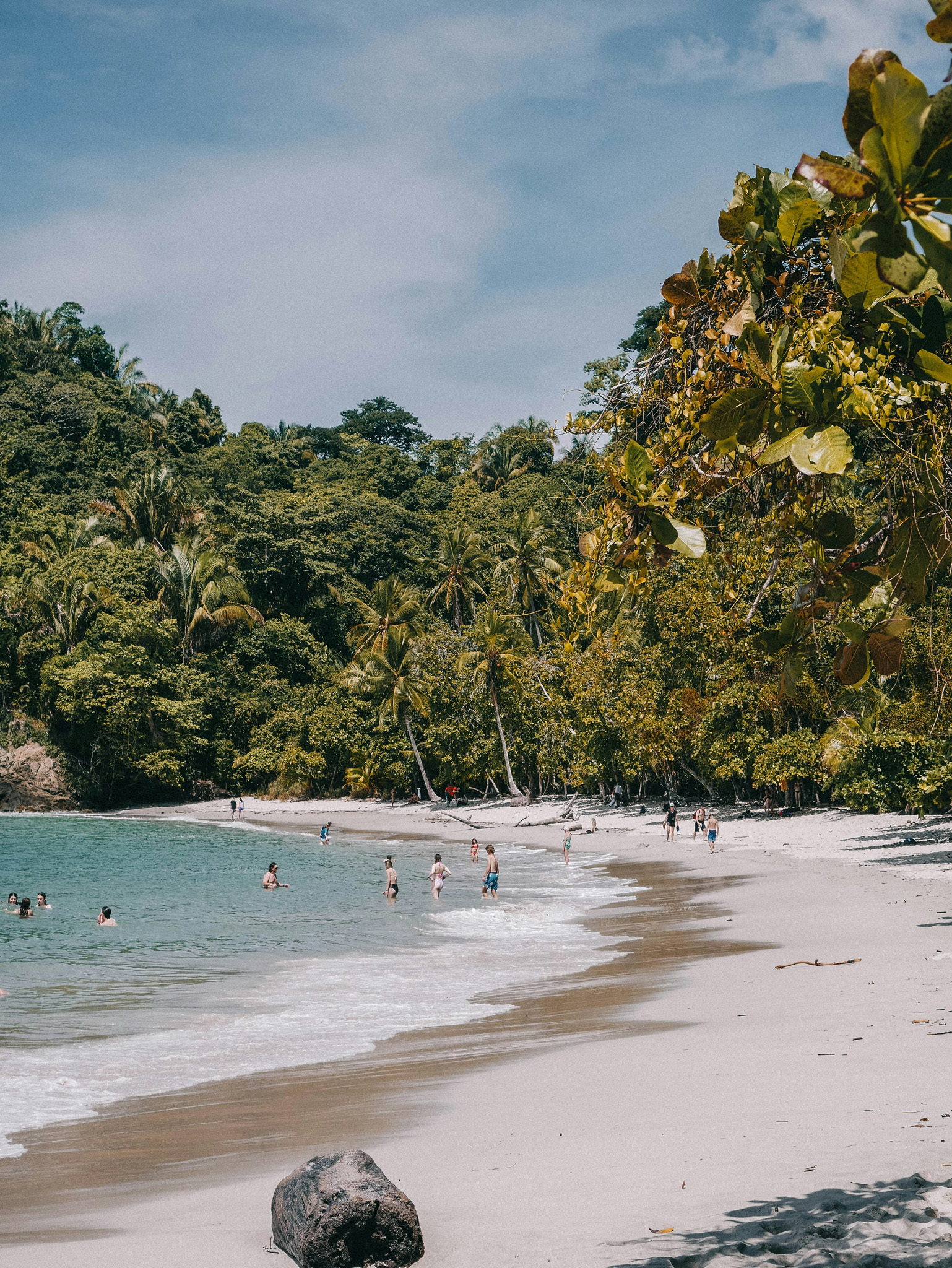
Where rainforest meets the ocean, with the country’s most accessible wildlife viewing.
- Wildlife spotting in Manuel Antonio National Park
- Surf and sportfishing from Jacó or Dominical
- Trek into Corcovado National Park on the Osa Peninsula
- Whale watching in Marino Ballena (Whale’s Tail)
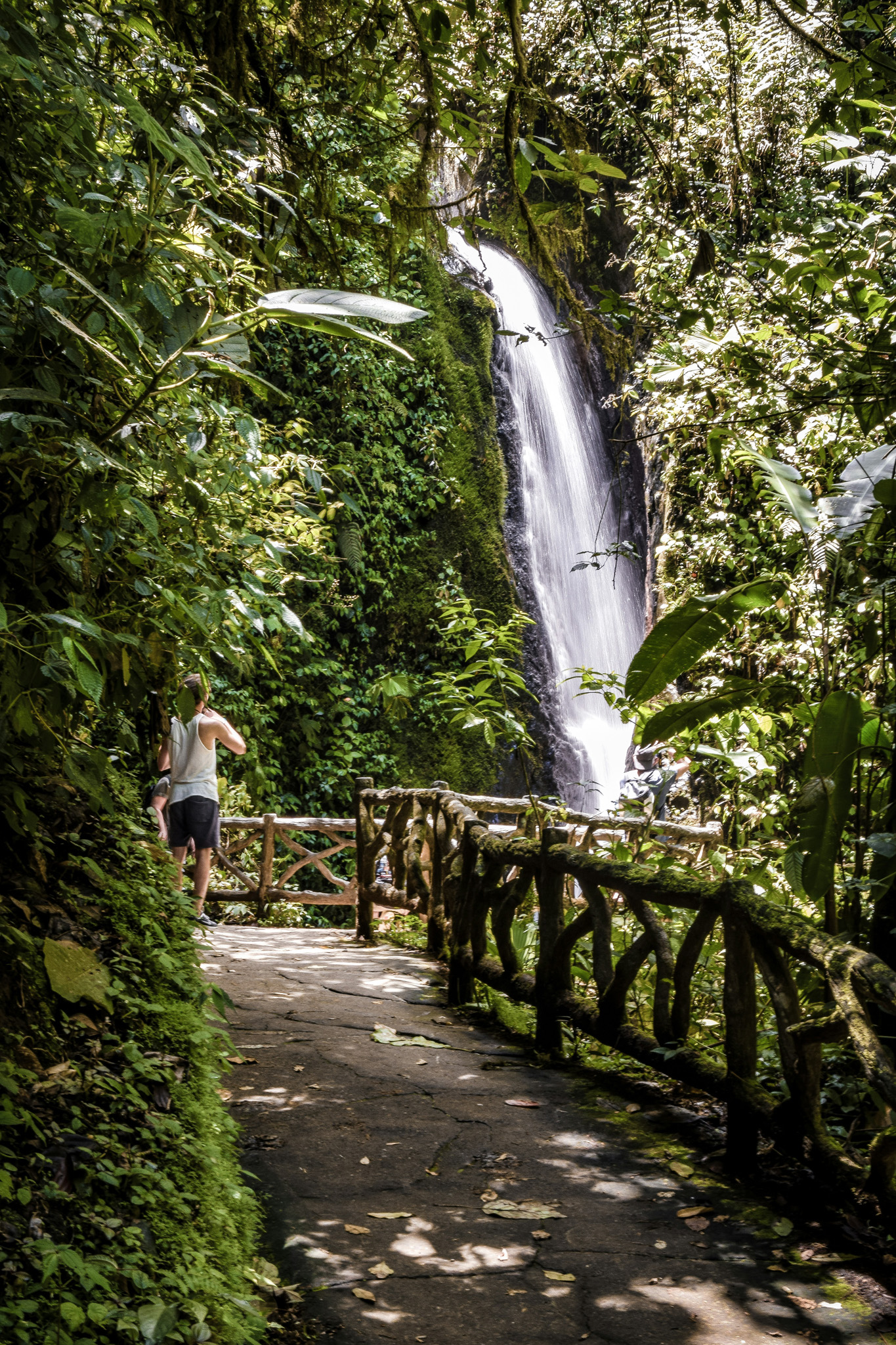
- Waterfall hikes at Nauyaca and Diamante
- Stay in eco-lodges deep in primary rainforest
Caribbean Coast
A different rhythm entirely, with Afro-Caribbean culture, reggae, and untouched jungle.
- Snorkel and dive the coral reefs of Cahuita
- Walk the rainforest beaches of Manzanillo
- Travel by boat through the canals of Tortuguero
- Watch green and leatherback turtles nest in season
- Eat rondón, patí, and coconut rice in Puerto Viejo
- Visit the Jaguar Rescue Centre near Puerto Viejo
🎒 Things To Do
- Hike active and dormant volcanoes including Arenal, Poás, Irazú, and Rincón de la Vieja
- Zipline through cloud forest and rainforest canopies
- Surf both coasts, from beginner breaks at Tamarindo to advanced waves at Santa Teresa and Pavones
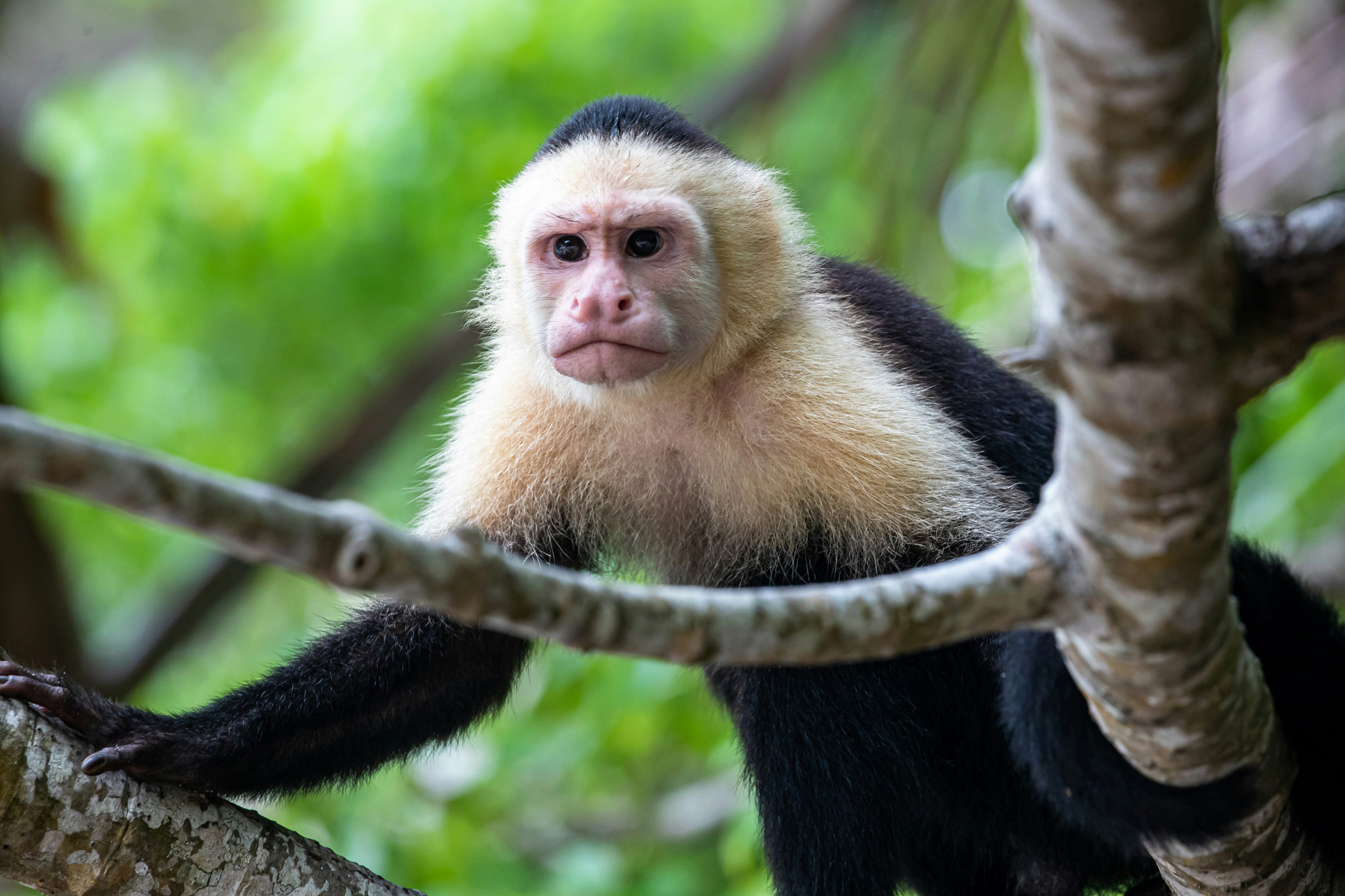
- Spot wildlife in Manuel Antonio, Corcovado, and Tortuguero national parks
- Soak in natural hot springs at the foot of Arenal
- Whitewater raft the Pacuare, Sarapiquí, or Balsa rivers
- Birdwatch for over 900 species, including the resplendent quetzal and scarlet macaw
- Snorkel or dive off the Caribbean and Pacific coasts
- Take a coffee or chocolate plantation tour in the Central Valley
- Watch sea turtles nest on both coastlines in season
🍽️ Food & Drink
Costa Rican cuisine is honest, comforting, and built on rice, beans, plantain, and tropical fruit. Meals are unhurried and often eaten in roadside sodas – small family-run eateries where the day’s casado costs a few dollars and tastes like home cooking.
- Gallo pinto – rice and black beans, the national breakfast
- Casado – a plate of rice, beans, salad, plantain, and meat or fish
- Ceviche – fresh fish cured in lime, coriander, and chilli
- Olla de carne – hearty beef and root vegetable stew
- Tres leches cake – sponge soaked in three milks
- Costa Rican coffee, especially from Tarrazú and Naranjo
- Guaro – the local sugarcane spirit, often mixed with lime and soda
- Caribbean rondón – a slow-cooked coconut milk stew of fish and root veg
🌦️ Weather
Costa Rica has a tropical climate shaped more by altitude and coast than by season. The country runs on two main seasons – dry and green (rainy) – with regional variation between the Pacific, Caribbean, and highlands.
- Coastal lowlands sit around 25-32°C year-round
- The Central Valley and San José hover at a comfortable 18-26°C
- Cloud forest areas like Monteverde are cooler and wetter, often 12-22°C
- The Caribbean coast has its own pattern, with shorter dry windows in September and October
- Dry season runs roughly December – April, green season May – November
- Afternoon downpours are typical in green season, often clearing by evening
📅 Best Time To Visit
December – April (Dry Season)
- Sunniest and most reliable weather, especially on the Pacific
- Peak tourist season – prices and crowds are at their highest
- Best window for beaches, surfing the Pacific, and volcano hikes
- Christmas, New Year, and Easter are particularly busy and book out months ahead
May – July (Early Green Season)
- Landscapes turn lush and waterfalls run at full flow
- Mornings are typically clear with afternoon showers
- Fewer tourists, better lodge availability, and lower prices
- Excellent for wildlife viewing as animals are active in the cooler, wetter weather
September – November (Peak Green Season)
- Heaviest rains across most of the country, especially on the Pacific
- The Caribbean coast paradoxically has its driest window in September – October
- Best time for whitewater rafting and prime turtle nesting at Tortuguero
- Lowest prices and quietest trails, though some remote roads can be impassable

🎒 Packing List
- Lightweight, quick-dry clothing for the heat and humidity
- A warm layer or fleece for cloud forest and highland evenings
- Waterproof rain jacket – essential year-round
- Sturdy hiking shoes or trail runners with good grip
- Sandals or water shoes for beaches and river crossings
- Swimwear and a quick-dry towel
- Reef-safe sunscreen and a wide-brimmed hat
- Strong insect repellent (DEET or picaridin) for mosquitoes and ticks
- Reusable water bottle
- Universal power adapter (US-style plugs work without one)
- Basic medical kit with rehydration salts and electrolytes
- Dry bag or zip-locks to protect electronics in rain and on boats
🛂 Visas & Entry Requirements
Costa Rica is one of the easiest countries in Central America to enter for most nationalities.
- Visitors from Australia, NZ, the UK, the EU, the US, and Canada receive a visa-free tourist stay of up to 180 days on arrival
- Passport must be valid for the duration of your stay (no six-month rule for most nationalities, but airlines often still ask for it)
- Proof of onward or return travel within the permitted stay is required at check-in and on arrival
- A $29 USD departure tax applies when flying out, almost always included in your airline ticket
- No mandatory entry travel insurance is currently required
Official information: https://www.migracion.go.cr
💰 Money
- The local currency is the Costa Rican colón (CRC), though US dollars are widely accepted
- Cards are accepted in most hotels, restaurants, tour operators, and supermarkets
- ATMs are easy to find in towns and cities, dispensing colones and often US dollars
- Carry some small colones for sodas, buses, taxis, and rural areas
- Tipping is not strictly required – restaurants add a 10% service charge by law
- Round up taxi fares and tip guides, drivers, and porters in cash when service is good
💸 Hotel & Tourist Taxes
Costa Rica applies a national sales tax to accommodation and many tourism services, plus a small departure tax for flights.
- 13% IVA (sales tax) is added to hotel rooms, tours, and most tourism services – usually included in quoted rates, but always confirm
- No separate per-night city or tourist tax is charged on top of the IVA
- A $29 USD international departure tax applies at SJO and LIR airports, almost always built into the airline ticket
- A small $7 USD exit fee applies to overland departures (e.g. crossing into Panama or Nicaragua by bus)
- Some national parks and reserves charge separate entry fees, typically $15-25 USD per person
🌈 LGBTQIA+ Travellers
Costa Rica is one of the most progressive countries in Central America for LGBTQIA+ travellers.
- Same-sex marriage has been legal since 2020 and anti-discrimination protections are in place
- San José, Manuel Antonio, and Puerto Viejo are known for visible queer-friendly communities and venues
- Public displays of affection are generally accepted in cities and tourist areas, though discretion is sensible in rural or conservative parts of the country
- Trans travellers can change their gender marker on local ID, and trans visitors are generally treated respectfully in tourism settings
- Manuel Antonio in particular has a long history as one of Latin America’s most welcoming gay-friendly beach destinations
⚠️ Traveller Safety
Costa Rica is one of the safest countries in the region but is not crime-free, and natural hazards deserve respect.
- Petty theft (pickpocketing, bag snatching, vehicle break-ins) is the most common issue, especially in San José and busy beach towns
- Never leave valuables visible in parked rental cars – a common target
- Beaches can have strong rip currents, with drownings each year – swim at lifeguarded beaches where possible
- Use registered taxis (red with a yellow triangle), Uber in San José, or pre-arranged transfers at night
- Stick to guided tours for volcano hikes, jungle treks, and remote rivers
- Emergency number is 911
💉 Vaccinations & Health
Costa Rica has good healthcare in major cities and tourist areas, but standard travel precautions apply.
- A yellow fever vaccination certificate is required if arriving from a country where yellow fever is endemic
- Routine vaccinations (MMR, tetanus, diphtheria, hepatitis A and B) should be up to date
- Typhoid is recommended for travellers visiting rural areas or eating widely outside main resorts
- Dengue, Zika, and chikungunya are present – mosquito bite prevention is essential, especially in the lowlands and during green season
- Tap water in most of the country is safe to drink, but stick to bottled or filtered water in remote rural areas
Official information: https://wwwnc.cdc.gov/travel/destinations/traveler/none/costa-rica
🚗 Getting Around
- Domestic flights via Sansa connect San José with Quepos, Tamarindo, Liberia, and Puerto Jiménez, saving long road days
- Private and shared shuttles (Interbus, Gray Line) link tourist hubs door-to-door and are the most popular option for travellers
- Public buses are cheap, frequent, and reach almost every corner of the country, though slower
- Self-driving offers flexibility, but a 4WD is strongly recommended for unsealed mountain and beach roads
- Rideshare (Uber) operates in San José and surrounds, with red official taxis everywhere else
- Boat transfers connect Tortuguero and other Caribbean coastal towns – some destinations are only reachable by water or air
✈️ Airports
Juan Santamaría International Airport (SJO)
- The country’s main international gateway, located near San José in the Central Valley, and the entry point for most travellers.
Daniel Oduber Quirós International Airport (LIR)
- A growing international airport in Liberia, the best option for travellers heading straight to Guanacaste and Pacific beach destinations.
Tobías Bolaños International Airport (SYQ)
- A small San José airport mostly used by domestic carriers like Sansa for short flights to beach and rainforest destinations.
🗣️ Language
Spanish is the official language of Costa Rica and is spoken everywhere. On the Caribbean coast, you’ll also hear Mekatelyu – a local English-based Creole – alongside Bribri and other Indigenous languages in some communities. English is widely spoken in tourist areas, hotels, and tour operations, but a few Spanish phrases will be warmly appreciated, especially in rural areas and small sodas.
Common Phrases
- Hello – Hola (oh-lah)
- Goodbye – Adiós (ah-dee-ohs)
- Please – Por favor (por fah-vor)
- Thank you – Gracias (grah-see-ahs)
- Yes – Sí (see)
- No – No (noh)
- Excuse me – Disculpe (dees-kool-peh)
- Sorry – Lo siento (loh see-en-toh)
- Do you speak English? – ¿Habla inglés? (ah-blah een-glehs)
- How much? – ¿Cuánto cuesta? (kwan-toh kwes-tah)
- Where is…? – ¿Dónde está…? (don-deh es-tah)
- Help – Ayuda (ah-yoo-dah)
- Cheers – Salud (sah-lood)
- One, two, three – Uno, dos, tres (oo-noh, dohs, trehs)
- Pure life / all good – Pura vida (poo-rah vee-dah)

ℹ️ Practical Info
Electricity
- Plug types A and B (US-style), 120V, 60Hz – the same as North America. Australian, UK, and European travellers will need an adapter.
Internet & WiFi
- WiFi is widely available in hotels, lodges, cafes, and most restaurants in tourist areas. Connections can be slower in remote rainforest lodges and on the Osa Peninsula.
Water
- Tap water is safe to drink in San José, the Central Valley, and most major tourist areas. In remote rural areas, on the Caribbean coast, and in some beach towns, stick to bottled or filtered water.
Travel Insurance
- Comprehensive travel insurance is strongly recommended for Costa Rica, with cover for medical emergencies, evacuation, and adventure activities including surfing, ziplining, whitewater rafting, and volcano hiking.
Connectivity SIM / eSIM
- Local SIM cards from Kölbi, Claro, or Movistar are affordable and easy to buy at the airport or in any town with a passport, with good coverage across populated areas
- Using an eSIM is our recommended choice while travelling anywhere in the world, and our recommended provider is Holafly. For more information on eSIMs, check out this blog.

❤️ Why Visit Costa Rica
Costa Rica is the rare destination that genuinely lives up to its reputation. In a country you can drive across in a day, you can stand at the rim of an active volcano, paddle through Caribbean jungle canals, surf both oceans, and walk through cloud forest where every footstep brings something new. It is a place built for travellers who want their days outside, in the water, in the trees, or on the trail.
What lingers afterwards is less the highlight reel and more the rhythm – the pura vida pace, the warmth of the Ticos, the easy slide from adventure to hammock and back again. Few countries make wellbeing feel this natural or this earned.
For nature lovers, families, adventurers, and anyone craving a reset, Costa Rica is one of the most rewarding places on the planet to spend a week, a month, or longer. You will leave planning your return before you have even left.