Europe’s Christmas Markets – Destination Guide
Each December, towns and cities across Central Europe shrug off the cold and light up with one of the continent’s oldest living traditions. Christmas markets fill grand squares and cobbled medieval lanes with rows of timber chalets, the warm glow of fairy lights, and air thick with the scent of mulled wine, roasted chestnuts, and freshly griddled gingerbread. Carols drift between the stalls, ice rinks appear in front of cathedrals, and entire historic centres turn into something close to a festive postcard.
This is a destination defined by atmosphere rather than borders. A single trip can move from the imperial elegance of Vienna to the Bavarian warmth of Munich, the Gothic fairy tale of Prague, and the riverside glow of Budapest, each stop offering its own version of the same shared tradition. The markets range from sprawling, centuries-old institutions with hundreds of stalls to small, intimate squares where local craftspeople sell handmade ornaments by candlelight.
What makes a Christmas market trip so rewarding is the way it slows travel down. There are no must-see ticket queues and no rigid schedules – just long, unhurried evenings spent wandering, sipping, and soaking up a season that these cities have been celebrating for hundreds of years.
🗺️ Regions to Explore
Vienna and Salzburg, Austria
Austria delivers the most elegant and musical version of the Christmas market tradition.
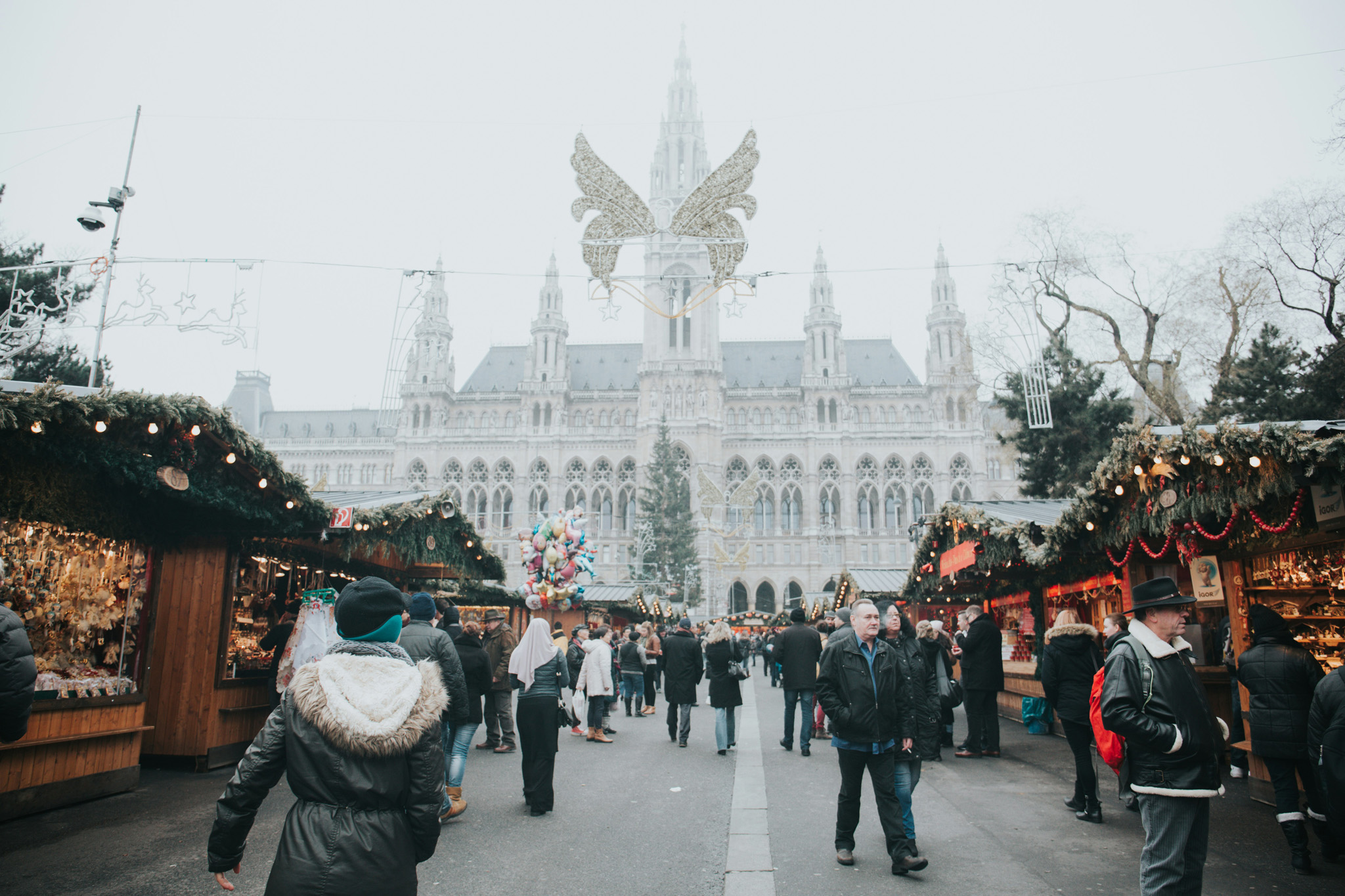
- Wiener Christkindlmarkt at Rathausplatz, set against the floodlit Neo-Gothic City Hall
- Ice skating and a giant carousel in the surrounding Rathauspark
- The historic Salzburg Christkindlmarkt beneath the spires of the cathedral
- Smaller, atmospheric markets at Spittelberg and Schonbrunn Palace
- Choirs, brass bands, and nativity scenes throughout Advent
- Viennese coffee houses for warming up between stalls
Munich and Nuremberg, Germany
Bavaria is the spiritual home of the Christmas market, blending tradition with hearty festive food.
- The central Christkindlmarkt at Munich’s Marienplatz
- Tollwood Winter Festival at Theresienwiese for an artistic, alternative twist
- Nuremberg’s famous Christkindlesmarkt, running since the 16th century
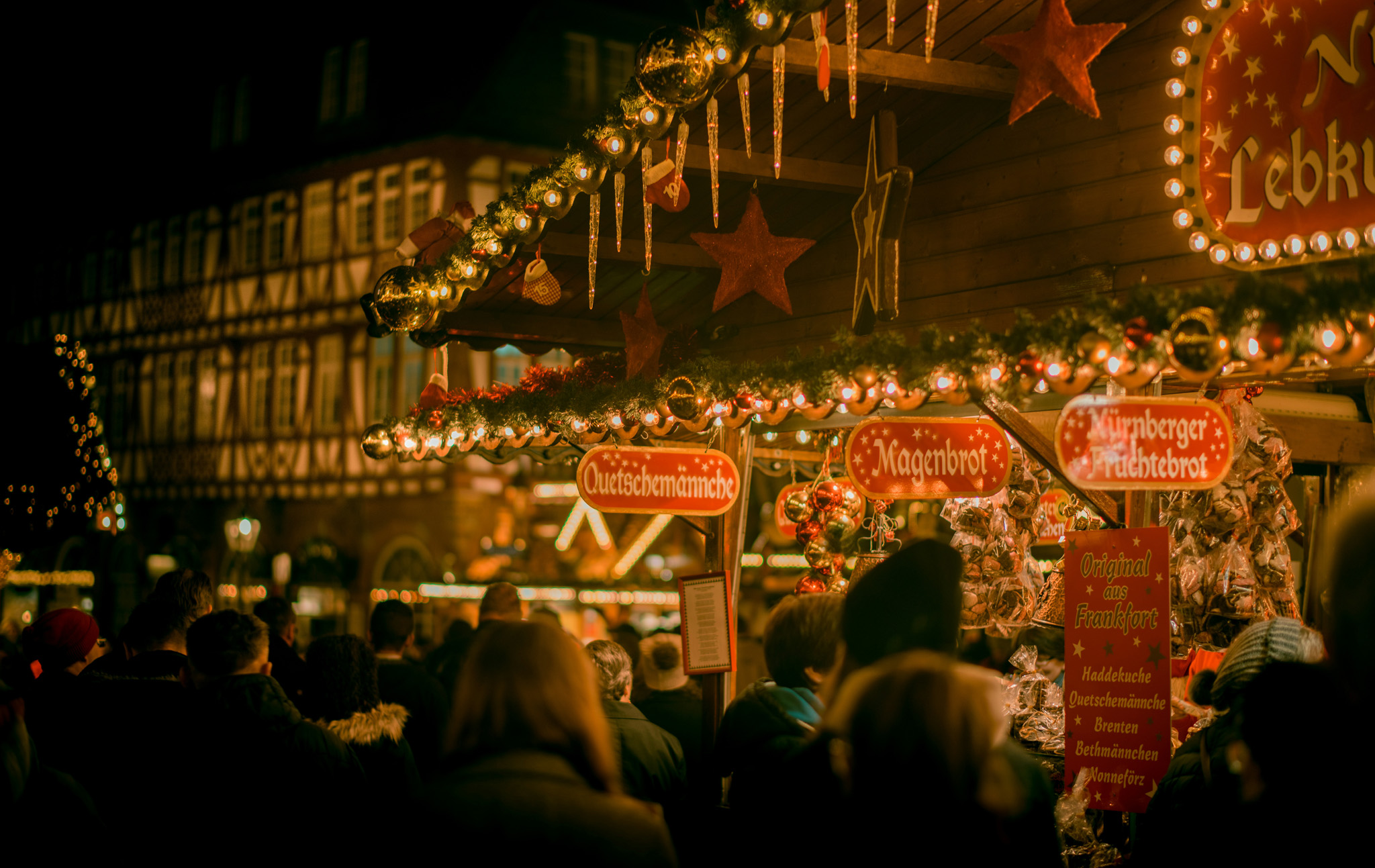
- Lebkuchen gingerbread and roasted almonds at every turn
- Mugs of glühwein served in collectible market cups
- Handmade wooden ornaments and traditional crafts
Strasbourg, France
The Alsatian capital calls itself the Capital of Christmas, and few places earn the title more convincingly.
- The Christkindelsmärik, among the oldest markets in Europe
- Over 300 stalls spread across the historic centre
- The illuminated Strasbourg Cathedral as a backdrop
- Alsatian specialities like bredele biscuits and vin chaud
- The picture-perfect Grande Île and Petite France quarters
- A blend of French and German festive traditions
Prague, Czech Republic
Prague’s old town becomes a storybook scene of Gothic towers and timber chalets.
- The main market in Old Town Square beneath the astronomical clock
- A second festive market at Wenceslas Square
- Trdelník chimney cakes baked fresh over open coals
- Czech crafts, marionettes, and hand-painted ornaments
- Carol singers performing beneath the illuminated towers
- A towering, lavishly decorated central Christmas tree
Budapest, Hungary
Budapest pairs its markets with grand architecture and a relaxed, generous spirit.
- The artisan market at Vörösmarty Square
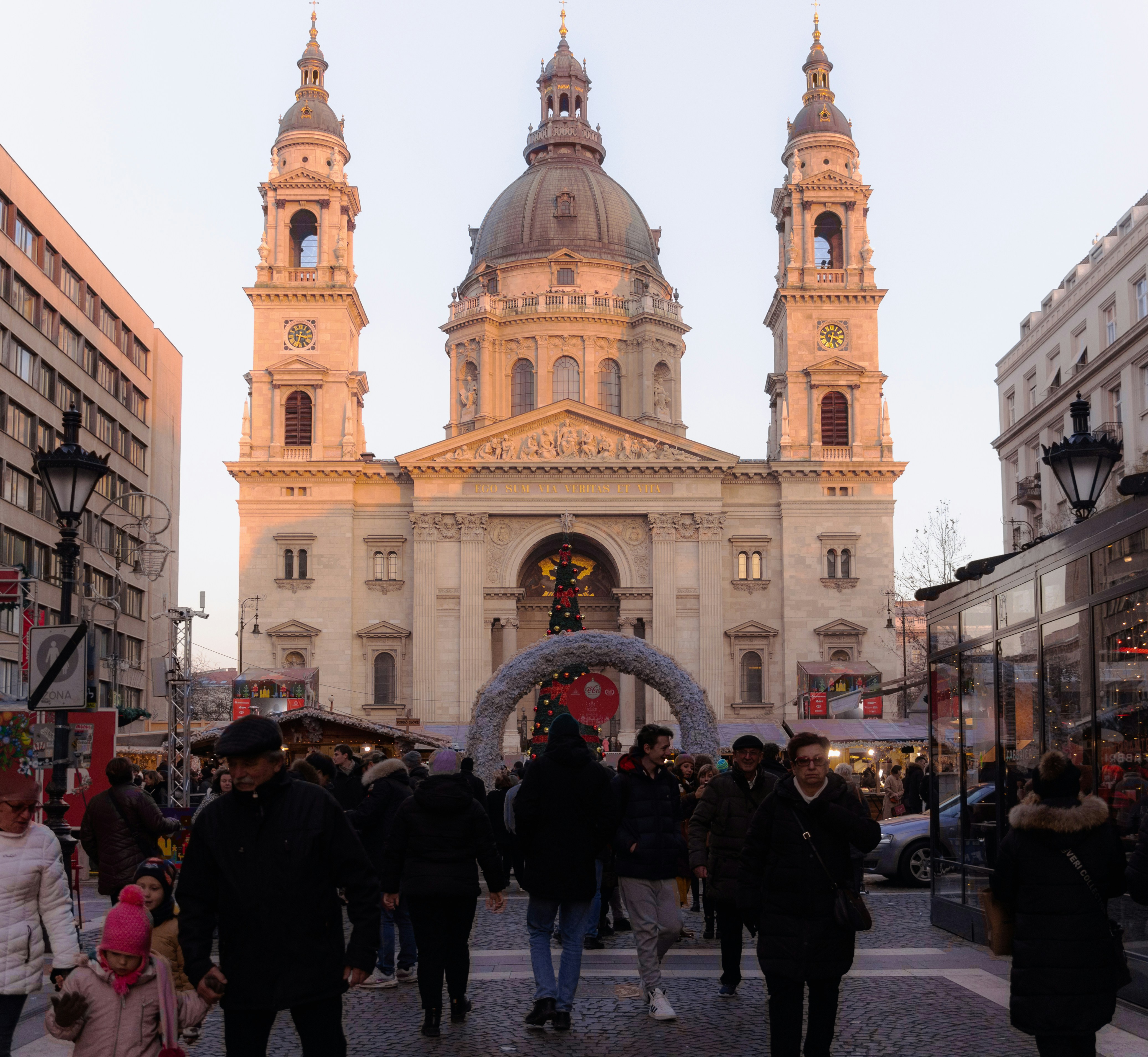
- The market at St Stephen’s Basilica, with its open-air ice rink
- A nightly light projection show on the Basilica’s façade
- Hungarian street food including chimney cake and goulash
- Thermal baths for a warm contrast to the cold evenings
- Strong focus on handmade, locally produced gifts
🎒 Things To Do
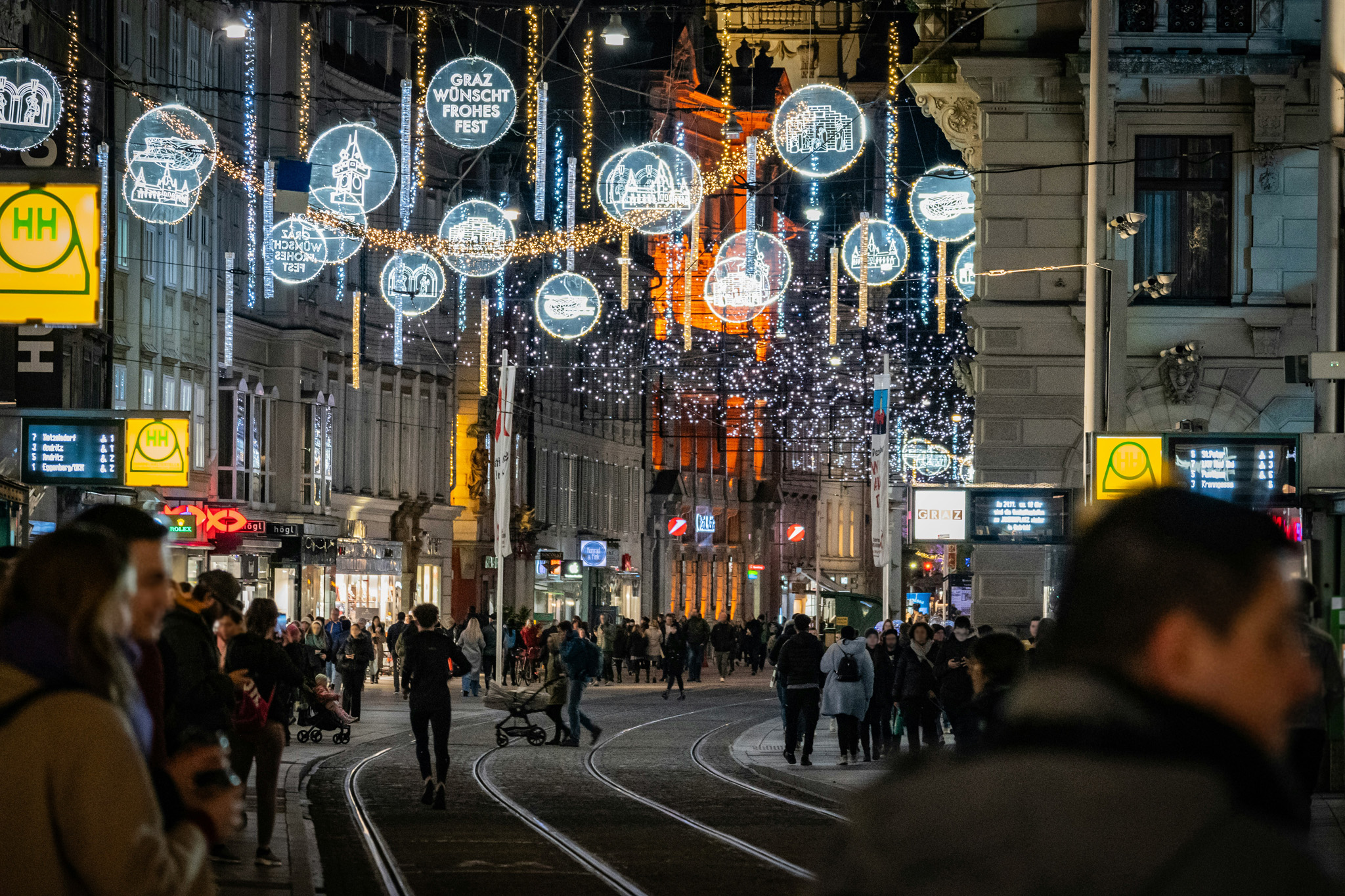
- Wander the great market squares after dark when the lights are at their best
- Warm up with glühwein, punsch, or vin chaud between stalls
- Skate on the open-air rinks set up in front of cathedrals and town halls
- Watch carol concerts, choirs, and brass bands perform across Advent
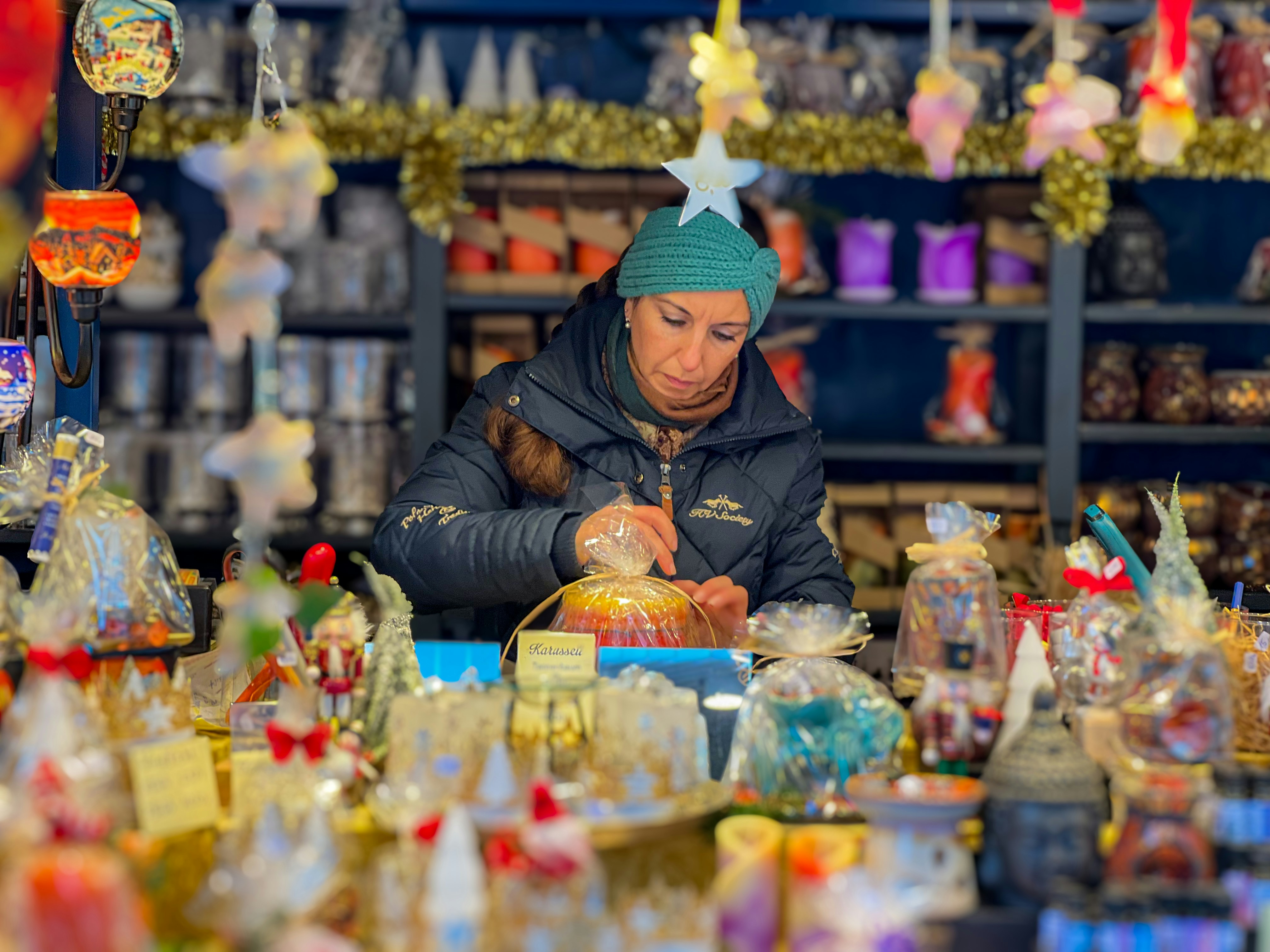
- Shop for handmade ornaments, wooden toys, and traditional crafts
- Ride festive carousels and big wheels at the larger markets
- Sample regional Christmas baking, from Lebkuchen to bredele to trdelník
- Take a guided walking tour to learn the history behind each market
- Visit historic churches and cathedrals decorated for the season
- Travel between cities by train to compare each country’s festive traditions
🍽️ Food & Drink
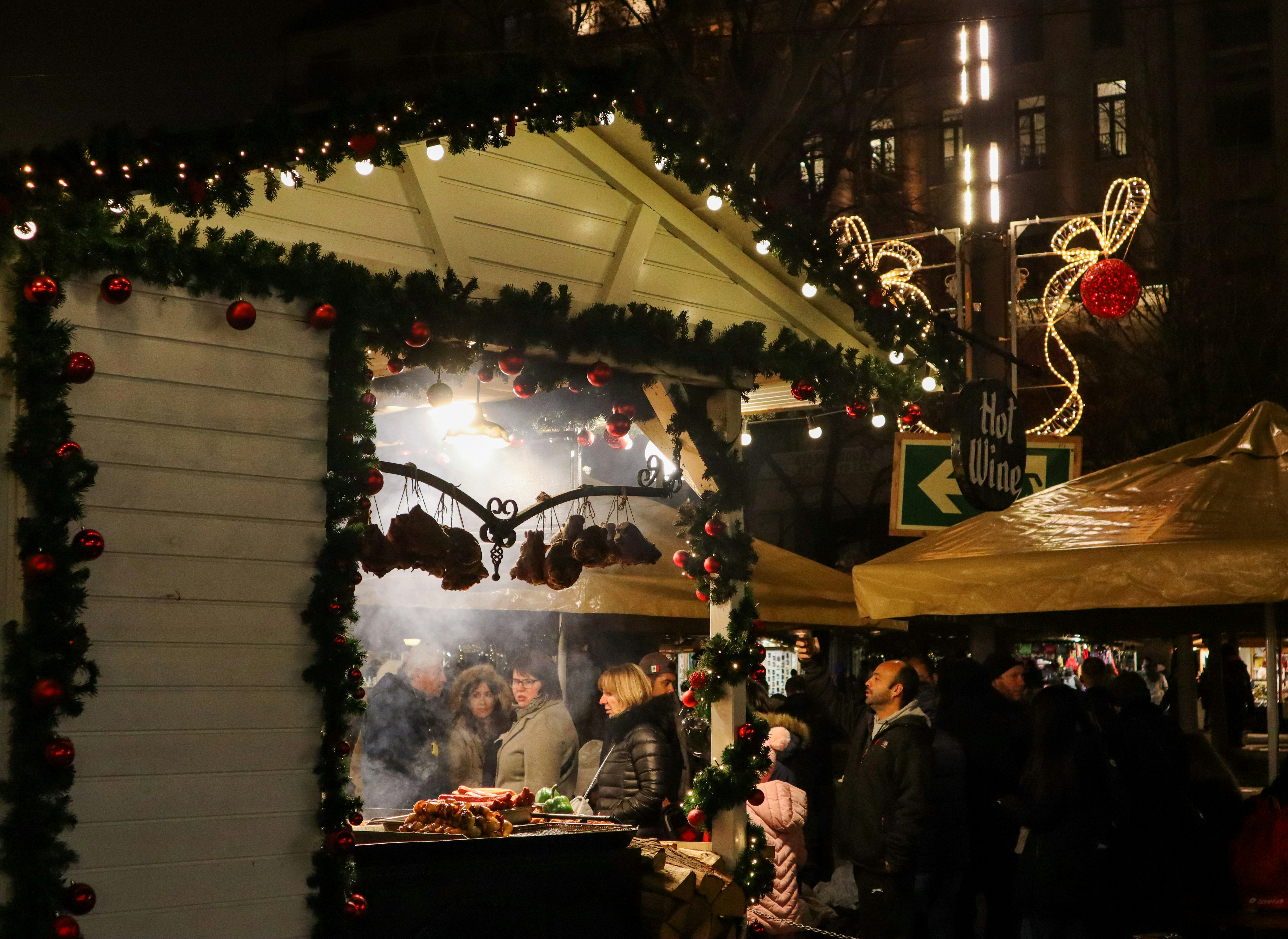
Christmas markets are as much an eating and drinking experience as a shopping one. Every stall fills the air with roasting nuts, sizzling sausages, and sweet baking, and a steaming mug of mulled wine is the unofficial passport of the season.
- Glühwein and punsch – warm spiced wine and fruit punch served across Austria and Germany
- Vin chaud – the French version of mulled wine, popular in Strasbourg
- Bratwurst and grilled sausages, often served in a fresh roll
- Lebkuchen, Stollen, and roasted almonds for the sweet tooth
- Trdelník – Czech chimney cake rolled in sugar and cinnamon
- Hungarian kürtőskalács and hearty bowls of goulash
🌦️ Weather
The Christmas market season falls in deep winter, so cold weather is part of the experience. Conditions are crisp and often grey, with the chance of snow adding to the festive atmosphere.
- Daytime temperatures typically range from 0-7°C
- Evenings frequently drop below freezing, often -5°C or colder
- Snowfall is possible, particularly in Salzburg and alpine regions
- Short daylight hours mean markets are best enjoyed after dark
- Damp, overcast days are common across all the market cities
- Wind chill can make exposed squares feel significantly colder
📅 Best Time To Visit
Mid November to Early December (Opening Season)
- Most markets open between mid and late November
- Quieter crowds and a relaxed, unhurried atmosphere
- Full festive lighting and stalls in place from opening weekend
- Ideal for travellers who want the magic without the peak rush
Mid December (Peak Season)
- The busiest and most atmospheric stretch of the season
- All markets fully operational with peak entertainment and events
- Expect large crowds, especially on weekends and evenings
- Book accommodation and trains well in advance
Late December to Early January (Closing and New Year)
- Many markets close between 23 and 26 December
- Some markets in Vienna and elsewhere transition into New Year markets
- A handful run into early January for festive travellers
- Always check individual market dates close to departure
🎒 Packing List
- Insulated, warm winter jacket
- Thermal base layers for the coldest days and evenings
- Warm mid-layers such as jumpers and fleeces
- Gloves, a hat, and a scarf
- Waterproof walking shoes or insulated boots
- Compact umbrella or packable rain jacket
- Power adapter (Type C and F)
- Portable charger and spare cables
- Small basic medical kit with cold and flu remedies
- Reusable shopping bag for souvenirs and gifts
- Lip balm and moisturiser for cold, dry air
- A small amount of local cash for market stalls
🛂 Visas & Entry Requirements
All of the main Christmas market countries are part of the Schengen Area, so a single entry approach applies across the trip.
- EU and Schengen nationals need no visa for travel within the Schengen Area
- Non-EU visitors may need a Schengen Visa, valid for stays up to 90 days within any 180-day period
- Many nationalities can enter visa-free for short stays, but should confirm based on their passport
- Passports should be valid for at least three months beyond the planned departure date
- The EU’s ETIAS travel authorisation is being introduced for visa-exempt visitors, so check its current status before you travel
- Official information: https://www.schengenvisainfo.com/
💰 Money
- The Euro (€) is used in Austria, Germany, and France
- The Czech Republic uses the Czech Koruna (CZK)
- Hungary uses the Hungarian Forint (HUF)
- Cards are widely accepted, but many market stalls prefer or only take cash
- ATMs are easy to find in all market cities for topping up local currency
- Carry a mix of cash and card, and keep small notes and coins for stalls
💸 Hotel & Tourist Taxes
Most European cities apply a small accommodation or tourist tax, charged on top of the room rate.
- Vienna and Salzburg apply a local accommodation tax, typically a small percentage of the room rate
- German cities such as Munich and Nuremberg may apply a city or culture tax, often a few euros per night
- Strasbourg charges a French taxe de séjour, usually a small per person, per night fee
- Prague and Budapest both apply modest per person, per night tourist taxes
- Taxes are usually collected at check-in or check-out, sometimes in cash, and rates vary by city and hotel category
🌈 LGBTQIA+ Travellers
The Christmas market cities are generally welcoming, with the major capitals being especially open and progressive.
- Austria, Germany, and France all recognise same-sex marriage and have strong anti-discrimination protections
- Vienna, Munich, and Strasbourg have visible and well-established LGBTQIA+ communities
- The Czech Republic recognises registered partnerships and is broadly tolerant, particularly in Prague
- Hungary is more socially conservative, and some recent laws have drawn international criticism, though Budapest itself is more liberal
- Public displays of affection are widely accepted in larger cities, with more discretion advisable in rural areas
⚠️ Traveller Safety
The Christmas market cities are generally very safe, with the main risk being opportunistic theft in crowded areas.
- Violent crime is rare, but pickpocketing is common in busy markets and on public transport
- Keep bags zipped and valuables secure, especially in dense market crowds
- Markets are well lit and well attended into the evening, making them comfortable to explore after dark
- Stick to official, marked stalls and licensed vendors for food and drink
- Emergency number is 112 across all of these countries
💉 Vaccinations & Health
No special vaccinations are required for travel to these European countries.
- Routine vaccinations should be up to date, including measles, mumps, and rubella
- A seasonal flu vaccination is worth considering given the winter travel period
- No malaria or tropical disease risk applies in these destinations
- EU citizens should carry a European Health Insurance Card, and all travellers should have comprehensive travel insurance
- Official information: https://www.who.int/health-topics/travel-and-health
🚗 Getting Around
- Fast, reliable trains connect all the main market cities and make a multi-city trip easy
- City centres are compact and best explored on foot, with most markets within walking distance of each other
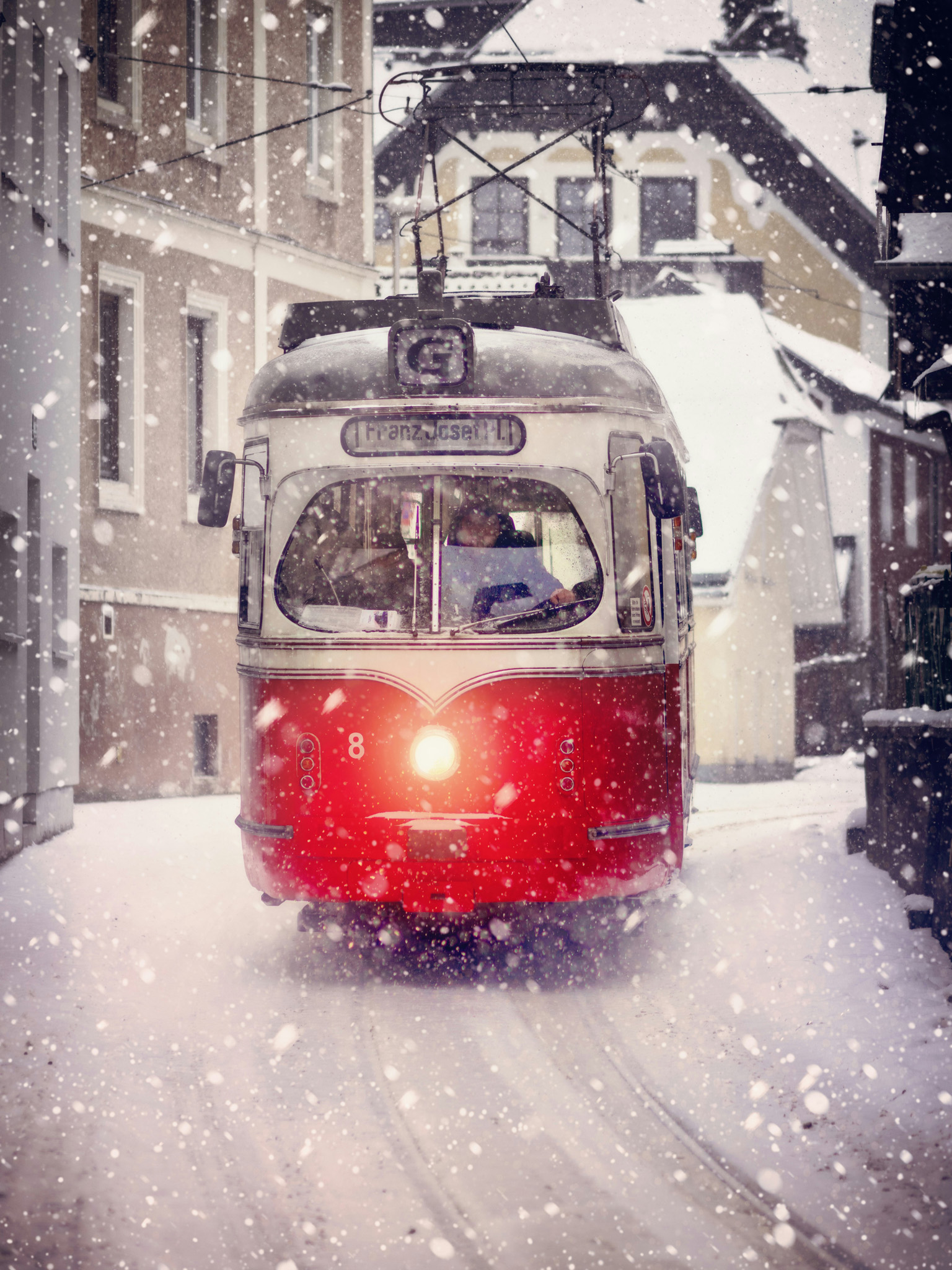
- Trams, metros, and buses are efficient, affordable, and well suited to cold weather
- Taxis and ride-hailing apps are widely available for late evenings
- Driving is generally unnecessary and parking in historic centres can be difficult
- Allow extra travel time in winter, as snow and ice can occasionally cause delays
✈️ Airports
Vienna International Airport (VIE)
- The main gateway to Austria, connected to the city by the City Airport Train and regular rail services
Munich International Airport (MUC)
- A major hub serving Bavaria, with a direct S-Bahn train into central Munich in around 40 minutes
Václav Havel Airport Prague (PRG)
- The Czech Republic’s main airport, linked to the city by airport express bus and taxi
Budapest Ferenc Liszt International Airport (BUD)
- Hungary’s primary airport, served by a dedicated airport bus, shuttles, and taxis into the city
🗣️ Language
The Christmas market trail crosses several languages: German in Austria and Germany, French in Strasbourg, Czech in Prague, and Hungarian in Budapest. English is widely understood in tourist areas, hotels, and markets across all of these cities, so travellers will rarely struggle to be understood. Still, a few words in the local language are always appreciated by stallholders and locals alike, so the essentials below are given in all five key languages of the trip.
Common Phrases – German (Austria & Germany)
- Hello – Hallo (HAH-loh)
- Thank you – Danke (DAHN-kuh)
- Cheers – Prost (prohst)
- How much is it? – Was kostet das? (vass KOS-tet dass)
- Merry Christmas – Frohe Weihnachten (FROH-uh VYE-nakh-ten)
Common Phrases – French (Strasbourg)
- Hello – Bonjour (bohn-ZHOOR)
- Thank you – Merci (mair-SEE)
- Cheers – Santé (sahn-TAY)
- How much is it? – Combien ça coûte? (kom-bee-AN sa KOOT)
- Merry Christmas – Joyeux Noël (zhwa-YUH no-EL)
Common Phrases – Czech (Prague)
- Hello – Ahoj (AH-hoy)
- Thank you – Děkuji (DYEH-koo-yi)
- Cheers – Na zdraví (nah ZDRAH-vee)
- How much is it? – Kolik to stojí? (KOH-lik toh STOH-yee)
- Merry Christmas – Veselé Vánoce (VEH-seh-leh VAH-no-tseh)
Common Phrases – Hungarian (Budapest)
- Hello – Szia (SEE-yah)
- Thank you – Köszönöm (KUH-suh-nuhm)
- Cheers – Egészségedre (EH-gehsh-shay-ged-reh)
- How much is it? – Mennyibe kerül? (MEN-nyi-beh KEH-rool)
- Merry Christmas – Boldog Karácsonyt (BOL-dog KAH-rah-chont)

ℹ️ Practical Info
Electricity
- These countries use Type C and Type F plugs, with a standard voltage of 230V and 50Hz. Bring a universal adapter.
Internet & WiFi
- WiFi is widely available in hotels, cafés, and many public spaces, and mobile data coverage is reliable across all market cities.
Water
- Tap water is safe to drink throughout Austria, Germany, France, the Czech Republic, and Hungary.
Travel Insurance
- Comprehensive personal travel insurance is strongly recommended, ideally covering winter conditions, trip delays, and cancellations, as cold weather can occasionally disrupt travel plans.
Connectivity SIM / eSIM
- Local SIM cards are readily available at airports, convenience stores, and mobile provider outlets across all of these countries.
- Using an eSIM is our recommended choice while travelling anywhere in the world, and our recommended provider is Holafly. For more information on eSIMs, check out this blog.

❤️ Why Visit Europe’s Christmas Markets
There is nothing else in travel quite like a European Christmas market in full swing. The combination of twinkling lights, centuries-old squares, festive food, and the steady hum of carols creates an atmosphere that feels genuinely magical, no matter how many markets you have seen before. It is a tradition these cities have been perfecting for hundreds of years, and it shows in every detail.
What makes the experience so special is its variety. A single trip can take you from the imperial grandeur of Vienna to the cosy Bavarian warmth of Munich, the fairy-tale streets of Prague, and the glowing riverbanks of Budapest. Each city celebrates the same season in its own distinct way, and travelling between them turns a simple festive break into a rich, layered journey.
If you have ever wanted to experience Christmas at its most heartfelt and atmospheric, this is the trip to take. Wrap up warm, follow the scent of mulled wine, and let Europe’s Christmas markets remind you exactly what the season is supposed to feel like.