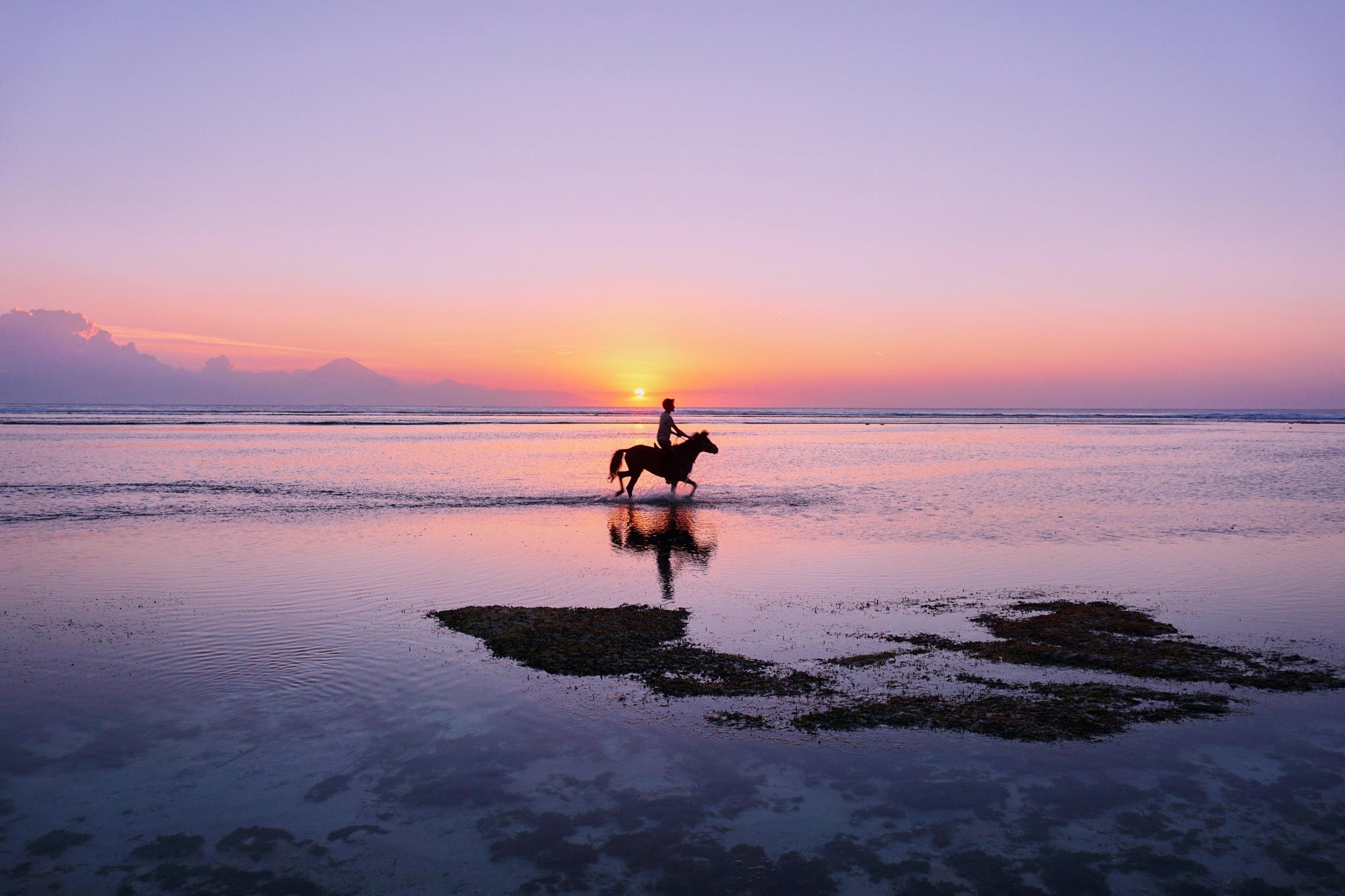
Lombok Indonesia – Destination Guide
Just east of Bali across the Lombok Strait, this island offers the tropical beauty its famous neighbour is known for, but at a slower pace and with a quieter, more grounded character. Lombok is dominated by Mount Rinjani, Indonesia’s second-highest volcano, whose summit crater and turquoise lake draw trekkers from around the world. Below it, the landscape unfolds into terraced rice fields, dense jungle, waterfalls, and a coastline that runs from the white sand and clear water of the south to the calm bays and offshore islands of the northwest.
The island is the heartland of the Sasak people, whose villages, weaving traditions, and predominantly Muslim culture give Lombok a distinct identity from Hindu Bali. Surfers come for the world-class breaks around Kuta and Desert Point, while the three Gili Islands just off the coast have built a reputation as a relaxed, car-free escape with some of the best snorkelling and diving in the region.
Lombok rewards travellers who want natural beauty without the crowds – a place where you can summit a volcano, learn to surf, and snorkel with turtles, all within a few days, and still find empty stretches of beach to yourself.
🗺️ Regions to Explore
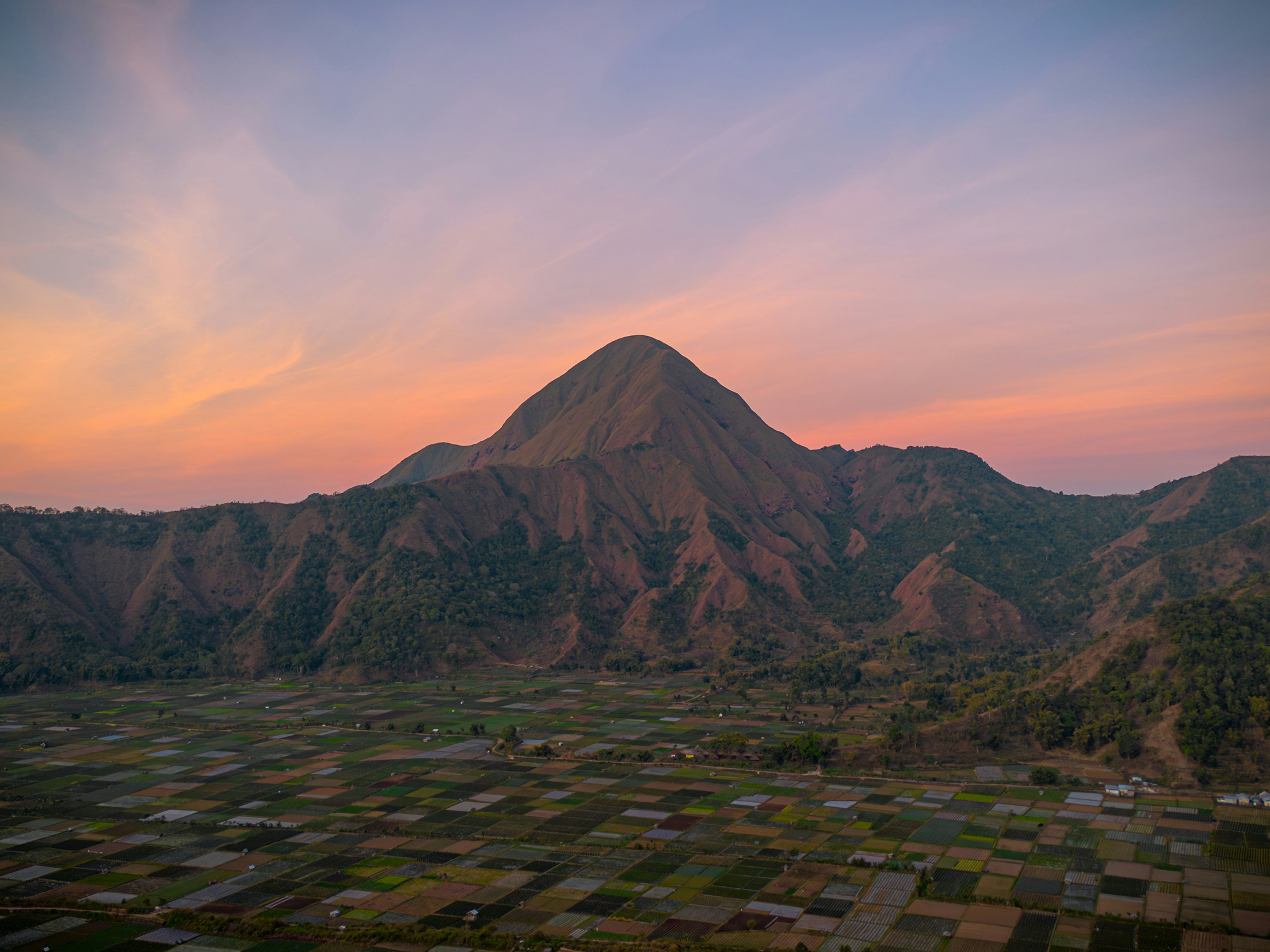
Mount Rinjani and the North
The mountainous north is centred on Gunung Rinjani National Park, the island’s adventure heartland.
- Multi-day treks to Rinjani’s summit and crater rim
- Segara Anak crater lake and natural hot springs
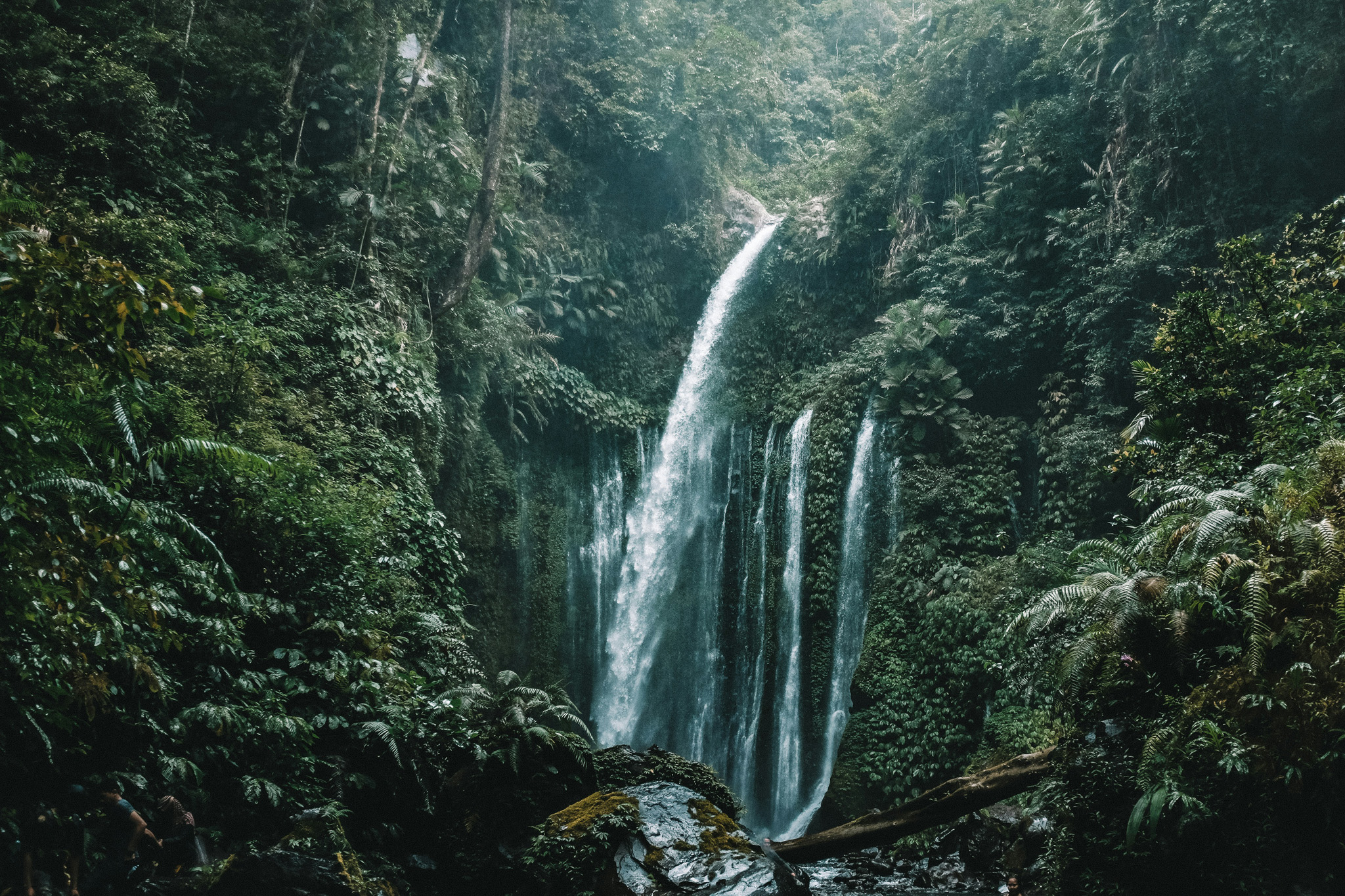
- Sendang Gile and Tiu Kelep waterfalls near Senaru
- Traditional Sasak village visits around Senaru and Bayan
- Cooler mountain air and forest trails
Kuta and the South Coast
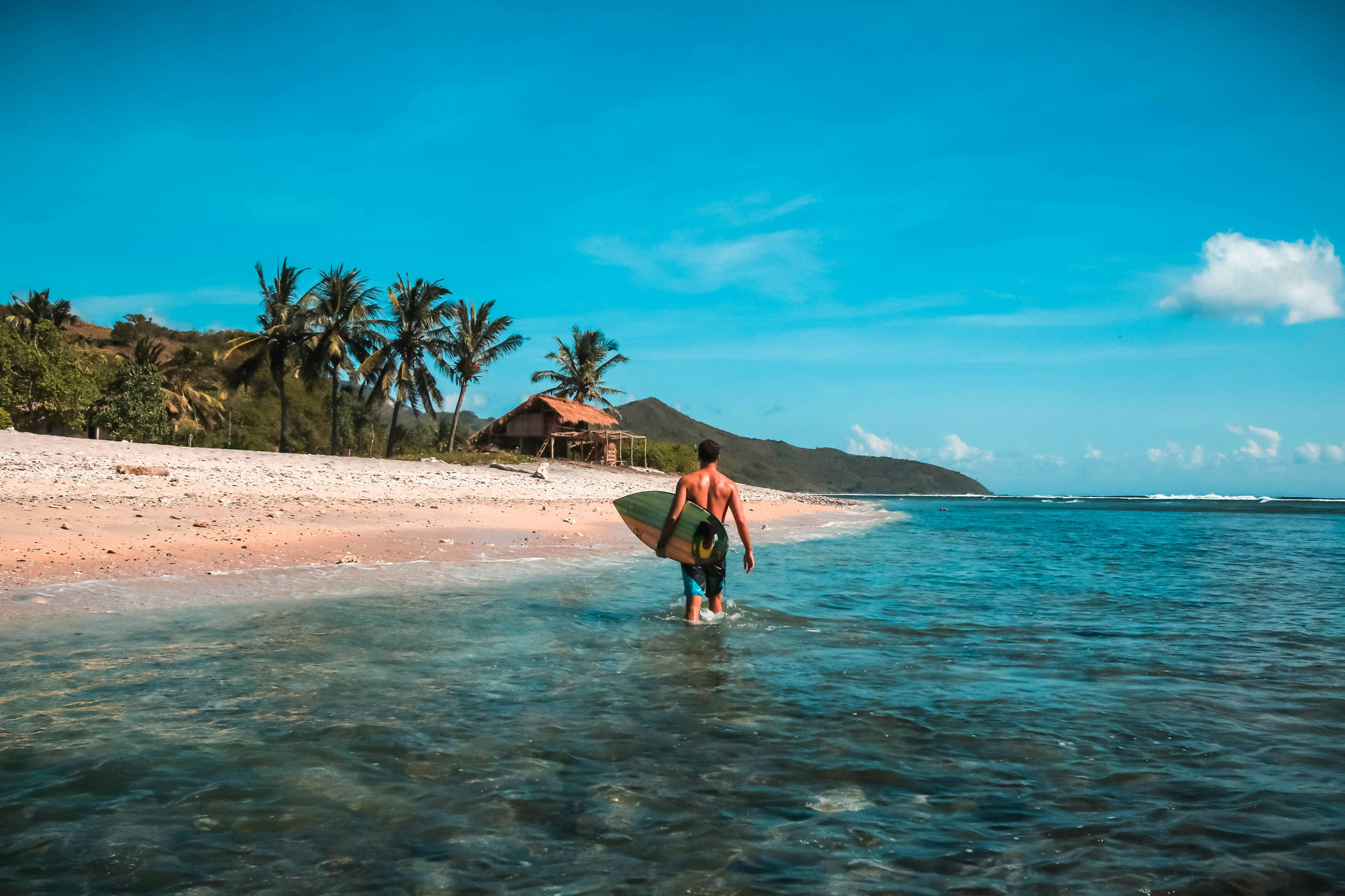
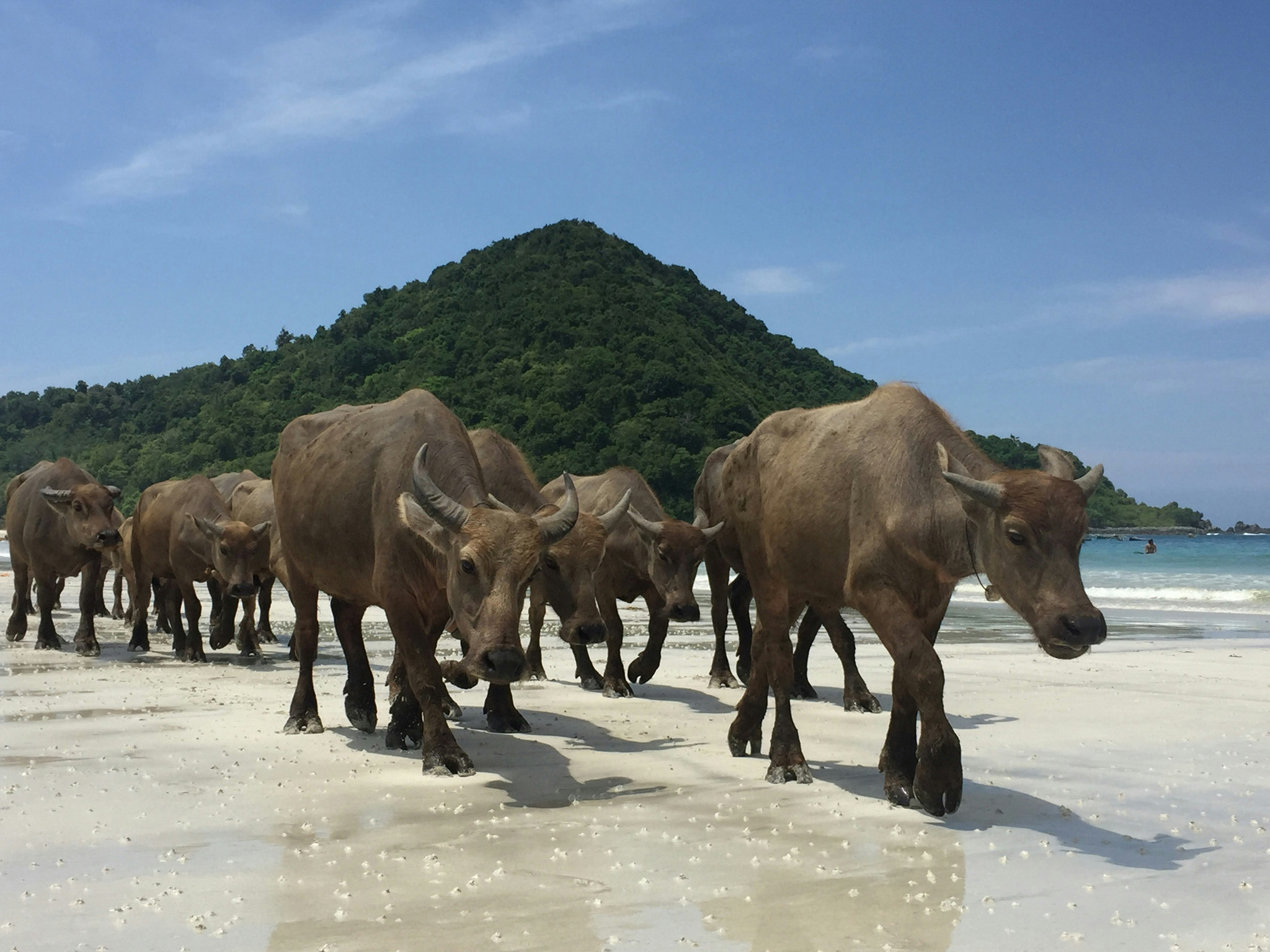
Lombok’s south is a string of dramatic bays, headlands, and surf beaches that remain far less developed than the rest of the island.
- Surfing for all levels around Kuta, Gerupuk, and Selong Belanak
- Swimming and sunbathing at Mawun, Tanjung Aan, and Mawi beaches
- Coastal hikes to clifftop viewpoints over the bays
- Bukit Merese hill for sunset
- Local seafood warungs and a growing cafe scene
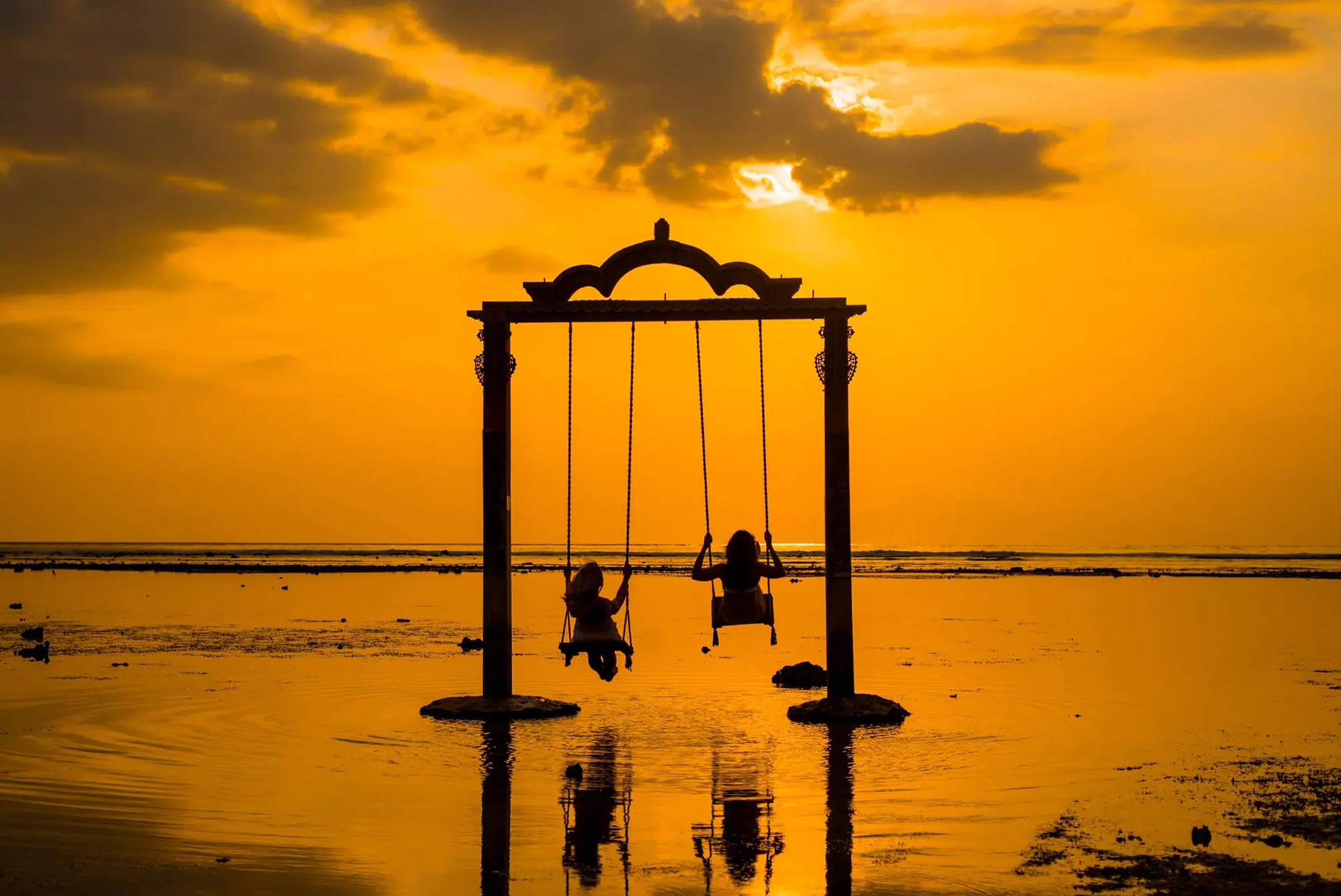
The Gili Islands
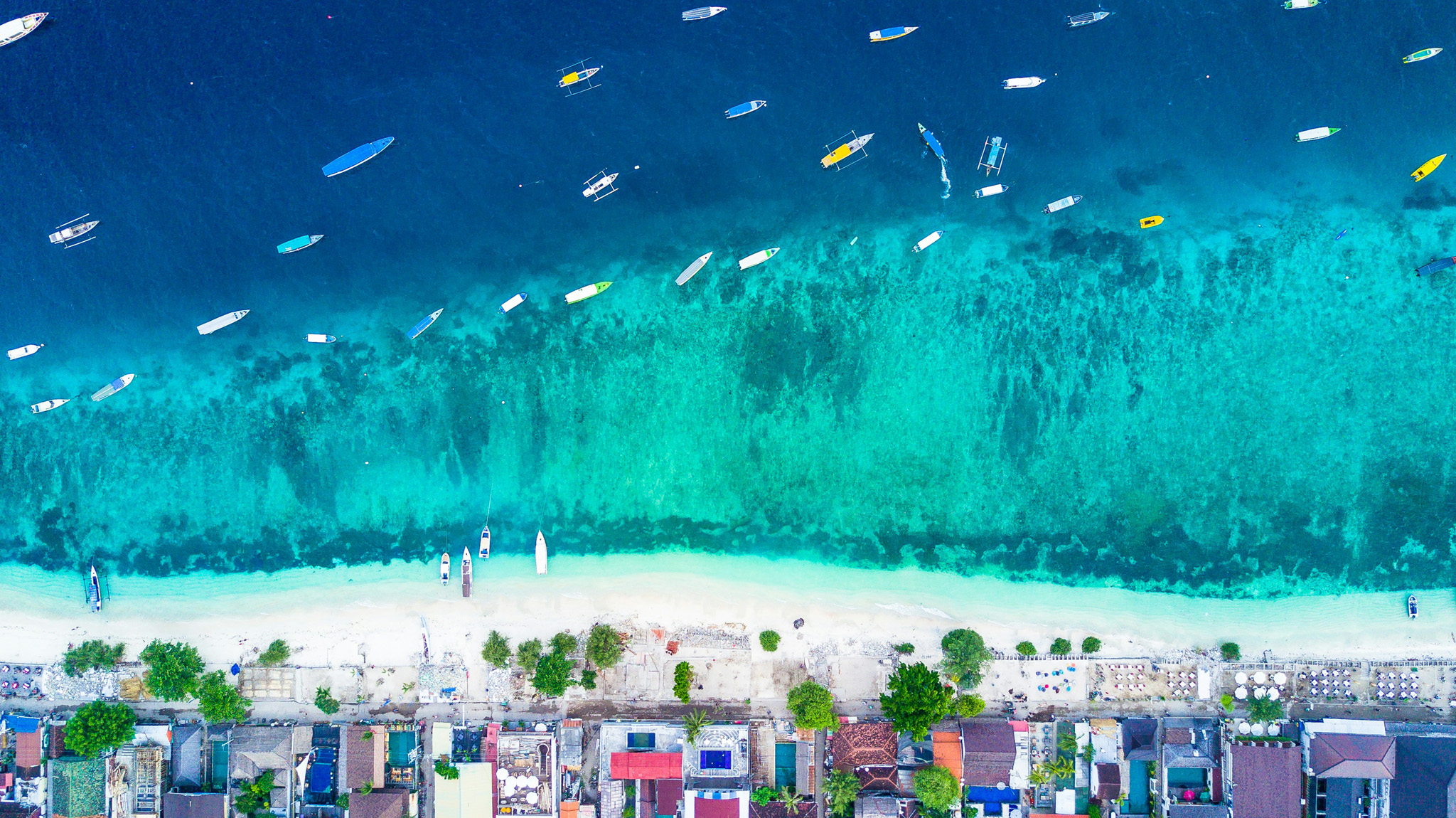
Three small car-free islands off the northwest coast, reached by fast boat or local ferry.
- Gili Trawangan for snorkelling, diving, and a lively social scene
- Gili Air for a balance of relaxation and amenities
- Gili Meno for the quietest, most secluded stay
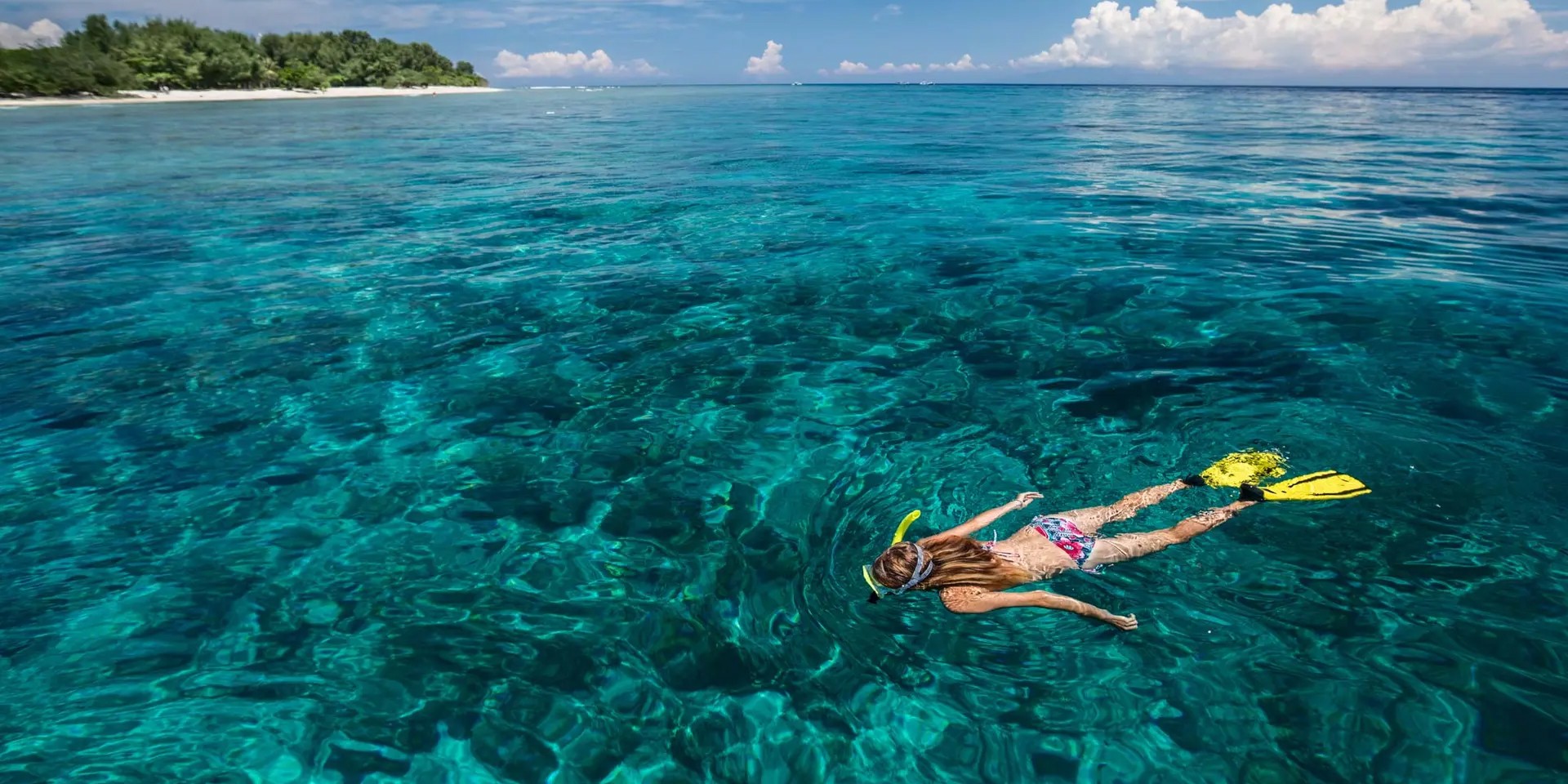
- Snorkelling with sea turtles and over coral gardens
- Cycling or walking the full loop of each island
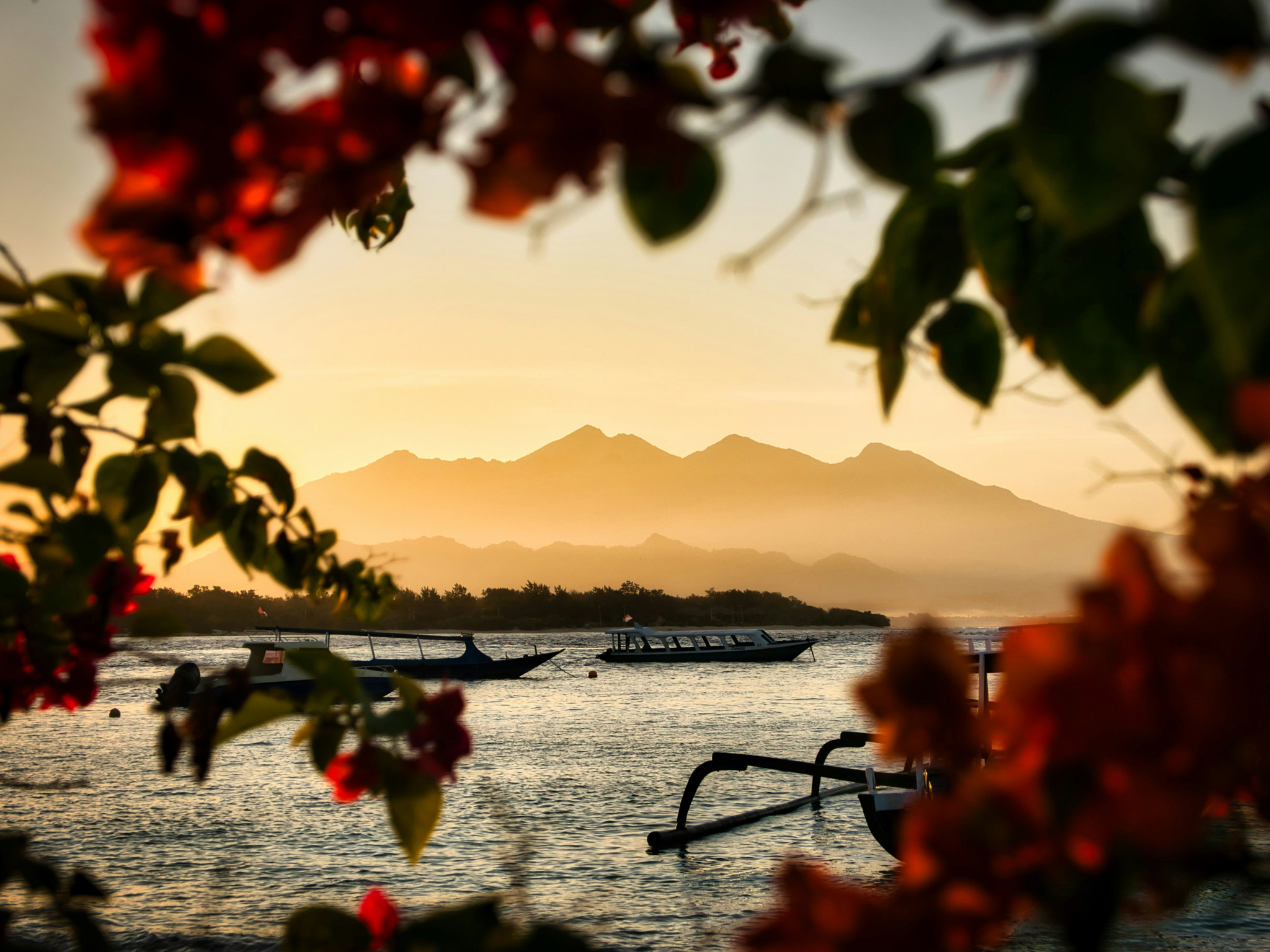
- Sunset views back towards Lombok and Bali’s Mount Agung
Senggigi and the Northwest Coast
The original tourist strip, a relaxed stretch of beaches and bays north of the capital.
- Calm swimming beaches and gentle bays
- Sunset views over the water towards Bali
- Snorkelling and diving day trips
- A range of resorts, restaurants, and bars
- A convenient base for boats to the Gili Islands
Mataram and the Central Plains
The island’s capital and surrounding lowlands hold Lombok’s main urban centre and cultural sites.
- West Nusa Tenggara State Museum
- Traditional markets and local food
- Mayura Water Palace and Pura Meru temple
- Sasak weaving villages such as Sukarara
- Pottery villages and craft workshops nearby
🎒 Things To Do
- Trek Mount Rinjani to the crater rim or full summit
- Learn to surf or improve your skills on the south coast breaks
- Snorkel or dive with turtles around the Gili Islands
- Chase waterfalls in the jungle around Senaru
- Visit traditional Sasak villages to see weaving and stilt-house architecture
- Relax on the empty white sand beaches of the south
- Cycle around a car-free Gili island
- Watch the sunset from Bukit Merese or a Senggigi beach bar
- Take a cooking class to learn Sasak dishes
- Island-hop by fast boat between Lombok, the Gilis, and Bali
🍽️ Food & Drink
Sasak cuisine is known for being bold and fiery, built around grilled meats, fresh seafood, and generous use of chilli and aromatic spice pastes. Lombok’s name is often linked to the Indonesian word for chilli, and the food lives up to the reputation.
- Ayam Taliwang, grilled chicken in a spicy chilli and tomato sauce
- Plecing Kangkung, water spinach with a fresh chilli, tomato, and lime sambal
- Nasi Balap Puyung, rice with spicy shredded chicken, soybeans, and crackers
- Sate Rembiga, marinated grilled beef skewers
- Fresh grilled seafood at beachside warungs, especially in the south
- Local coffee and fresh tropical fruit juices
🌦️ Weather
Lombok has a tropical climate with consistently warm temperatures year-round and two clear seasons. Conditions vary with altitude, so the slopes of Rinjani are noticeably cooler than the coast.
- Daytime coastal temperatures of 28-32°C for most of the year
- Dry season runs roughly May – October with sunny, lower-humidity days
- Wet season runs roughly November – April with heavy afternoon downpours
- High humidity year-round, especially in the wet season
- Rinjani and the highlands are significantly cooler, dropping near freezing at the summit before dawn
- Sea temperatures stay warm and pleasant for swimming all year
📅 Best Time To Visit
May – September (Dry Season)
- The best window for trekking Rinjani, with clear skies and stable trails
- Reliable sunshine for beaches, surfing, and the Gili Islands
- The busiest and most popular period, so book accommodation and treks early
October and April (Shoulder Season)
- A mix of sunny days and occasional showers
- Fewer crowds and better value on accommodation
- Good conditions for most activities, though trekking can be less predictable
November – March (Wet Season)
- Frequent heavy afternoon and evening rain, with humid mornings
- Rinjani trekking routes often close for safety during the peak of the rains
- The quietest and cheapest time to visit, with lush green landscapes
🎒 Packing List
- Lightweight, breathable clothing for hot and humid days
- Warm layers and a fleece for cold nights on Rinjani
- A waterproof jacket or rain poncho
- Sturdy hiking boots or trail shoes for trekking
- Swimwear and a quick-dry towel
- Reef-safe sunscreen, sunglasses, and a wide-brimmed hat
- Insect repellent
- A reusable water bottle, ideally with a filter
- A power adapter for Indonesian sockets
- A basic medical kit with personal medication
- Electrolyte sachets for trekking and hot days
- A head torch for early-morning summit hikes
🛂 Visas & Entry Requirements
Most visitors arrive on a visa on arrival, with entry to Indonesia processed through a single national system.
- Many nationalities, including Australians, can get a Visa on Arrival, available as an e-VOA online before travel or on arrival
- All travellers must complete the All Indonesia electronic arrival card before reaching the border
- Your passport must be valid for at least six months from your date of arrival
- Proof of onward or return travel may be requested
- If you fly via Bali, a separate Bali tourism levy of IDR 150,000 applies on arrival in Bali
- Official information: https://www.imigrasi.go.id
💰 Money
- The currency is the Indonesian Rupiah (IDR)
- Cash is essential, especially on the Gili Islands and in rural areas and villages
- Cards are accepted at larger hotels, resorts, and some restaurants, mainly in Senggigi, Kuta, and Mataram
- ATMs are available in main towns and on Gili Trawangan, but can be scarce or unreliable elsewhere, so withdraw before heading remote
- Tipping is not mandatory but is appreciated, with small amounts welcomed for guides, drivers, and trekking porters
- Carry small denominations for warungs, markets, and local transport
💸 Hotel & Tourist Taxes
Lombok does not have a province-wide tourist arrival levy of the kind charged in Bali, so the costs visitors encounter are mostly small local fees.
- Most hotels and resorts include government tax and service charge in the rate, typically around 21 percent combined, though some quote it separately
- A small airport service charge applies on departures from Lombok International Airport, usually bundled into the ticket price
- Minor harbour or village fees of around IDR 10,000 per person may apply at Gili Island and Bangsal ports, paid in cash
- If you arrive in Indonesia via Bali, the one-off Bali tourism levy of IDR 150,000 applies, but it is not charged again for travel on to Lombok
🌈 LGBTQIA+ Travellers
Indonesia is a predominantly Muslim country and Lombok is socially conservative, so LGBTQIA+ travellers should be mindful of local attitudes.
- Same-sex relationships are not illegal at the national level, but there is no legal recognition or anti-discrimination protection
- Public attitudes are conservative, and open displays of affection by any couple are uncommon outside tourist areas
- Tourist hubs such as the Gili Islands and Senggigi tend to be more relaxed and welcoming
- Discretion is advised in villages, rural areas, and around religious sites
- Same-sex couples can generally book accommodation without issue, particularly at international hotels and resorts
⚠️ Traveller Safety
Lombok is generally a safe destination for travellers, with most issues being minor and avoidable with normal precautions.
- Petty theft such as bag-snatching can occur, so keep valuables secure, particularly on busy beaches and boats
- Rinjani treks should only be done with a licensed guide, as the terrain is demanding and weather can change quickly
- Take care in the water, as some south coast beaches have strong currents and rip tides
- Be cautious with alcohol and avoid cheap spirits, as cases of methanol poisoning have been reported in Indonesia
- Use registered transport and agree on fares or use ride apps where available
- Emergency number is 112
💉 Vaccinations & Health
No vaccinations are mandatory for most travellers, but several are recommended before visiting Lombok.
- A yellow fever certificate is required only if arriving from a country with risk of yellow fever transmission
- Routine vaccinations should be up to date, including measles, mumps, rubella, tetanus, and diphtheria
- Hepatitis A and typhoid are commonly recommended for travel in Indonesia
- Dengue fever is present, so use insect repellent and cover up at dawn and dusk
- Medical facilities on Lombok are limited, and serious cases often require evacuation to Bali, Singapore, or Australia
- Official information: https://www.who.int/travel-advice
🚗 Getting Around
- Hiring a private driver for the day is a popular, flexible, and affordable way to explore the island
- Car and scooter rental is available, though roads can be narrow, busy, and poorly lit at night
- Ride-hailing apps such as Grab and Gojek operate around Mataram and the airport, but coverage is patchy elsewhere
- Local minibuses, known as bemos, run set routes and are very cheap but slow and infrequent
- Fast boats connect Lombok with the Gili Islands and Bali, and the islands themselves are explored on foot, by bicycle, or by horse-drawn cart
- Allow extra travel time, as journeys across the island can be slow
✈️ Airports
Lombok International Airport (LOP)
- The island’s main gateway, located in the south near Praya, handling domestic flights and a limited number of international routes
Ngurah Rai International Airport (DPS)
- Bali’s main airport, used by many travellers as the international entry point before connecting to Lombok by short flight or fast boat
🗣️ Language
The official language is Indonesian (Bahasa Indonesia), which is spoken across the island and used in schools, business, and signage. The local language is Sasak, widely spoken in everyday life and in villages, with several regional dialects. English is understood in tourist areas such as the Gili Islands, Senggigi, and Kuta, but is less common in rural and inland areas, so learning a few Indonesian phrases is genuinely useful and appreciated.
Common Phrases
- Hello – Halo (HA-lo)
- Goodbye – Selamat tinggal (suh-LAH-mat ting-GAL)
- Please – Tolong (TOH-long)
- Thank you – Terima kasih (tuh-REE-mah KAH-see)
- Yes – Ya (yah)
- No – Tidak (TEE-dah)
- Excuse me – Permisi (per-MEE-see)
- Sorry – Maaf (mah-AHF)
- Do you speak English? – Apakah Anda bisa bahasa Inggris? (AH-pah-kah AHN-dah BEE-sah bah-HAH-sah ING-griss)
- How much? – Berapa harganya? (buh-RAH-pah har-GAH-nyah)
- Where is…? – Di mana…? (dee MAH-nah)
- Help – Tolong (TOH-long)
- Cheers – Bersulang (ber-SOO-lang)
- One, two, three – Satu, dua, tiga (SAH-too, DOO-ah, TEE-gah)
- Delicious – Enak (EH-nak)
ℹ️ Practical Info
Electricity
- Indonesia uses plug types C and F, with a standard voltage of 230V
Internet & WiFi
- WiFi is widely available in hotels, cafes, and restaurants in tourist areas, though speeds can be slow on the Gili Islands and in remote areas
- Mobile data coverage is good around towns and main routes
Water
- Tap water is not safe to drink
- Stick to bottled or filtered water, and consider a refillable bottle with a filter to reduce plastic waste
Travel Insurance
- Comprehensive personal travel insurance is strongly recommended, and should cover medical treatment, emergency evacuation, and adventure activities such as trekking Rinjani, surfing, and diving, as medical facilities on the island are limited
Connectivity SIM / eSIM
- Local SIM cards from providers such as Telkomsel are cheap and available at the airport and in towns, though registration with a passport is required
- Using an eSIM is our recommended choice while travelling anywhere in the world, and our recommended provider is Holafly. For more information on eSIMs, check out this blog.

❤️ Why Visit Lombok
Lombok offers the best of tropical Indonesia without the crowds and development that define its more famous neighbour. Here you can stand on the rim of a smoking volcano at sunrise, surf empty breaks on a wild southern coastline, and snorkel with turtles in clear water off a car-free island, all on the same trip. It is an island built for travellers who want adventure and natural beauty in equal measure.
What makes Lombok memorable is its sense of space and authenticity. The pace is slower, the beaches are emptier, and the Sasak culture gives the island a character entirely its own. Whether you are trekking through mountain forest, learning to weave in a village, or simply watching the sun drop behind Bali from a quiet bay, Lombok feels like a place still being discovered.
For anyone seeking the rewards of Indonesia at a gentler rhythm, Lombok delivers in full. Go now, while it still feels like a secret.