Norway – Destination Guide

Written by Rob Embury - Best In Travel

Norway is a country built on a grand scale. Glacier-carved fjords cut deep into a coastline that unravels for thousands of kilometres, snow-streaked mountains rise straight from the water, and in the far north the land tips into the Arctic, where the sun refuses to set in summer and the sky turns electric green in winter. It is a place of dramatic contrast, where modern, design-conscious cities sit a short drive from genuine wilderness.

Travel here rewards those who slow down. A scenic train threads through valleys and over high plateaus, a coastal ferry glides past waterfalls and fishing villages, and a quiet hiking trail leads to a lookout that few photographs ever do justice. The pace is unhurried, the air is clean, and the landscape constantly shifts between gentle and overwhelming.

What makes Norway special is the closeness of it all. Wilderness is never an abstraction here – it begins at the edge of town, and the right to roam means it genuinely belongs to everyone. For travellers who want their scenery vast, their air sharp, and their experiences a little raw, Norway delivers in a way few places can.

🗺️ Regions to Explore

Oslo and the East

Norway’s capital and its surrounding lakes, forests, and farmland form the country’s cultural and urban heart.

  • Explore world-class museums covering Viking history, polar exploration, and the painter Edvard Munch
  • Wander the waterfront, the Opera House roof, and the city’s design and food scene
  • Hike or cross-country ski in the Nordmarka forest right on Oslo’s doorstep
  • Take a day trip to the lakeside towns and historic sites of the eastern valleys
  • Sample the cafe culture and modern Nordic restaurants of a compact, walkable city

The Fjords and the West

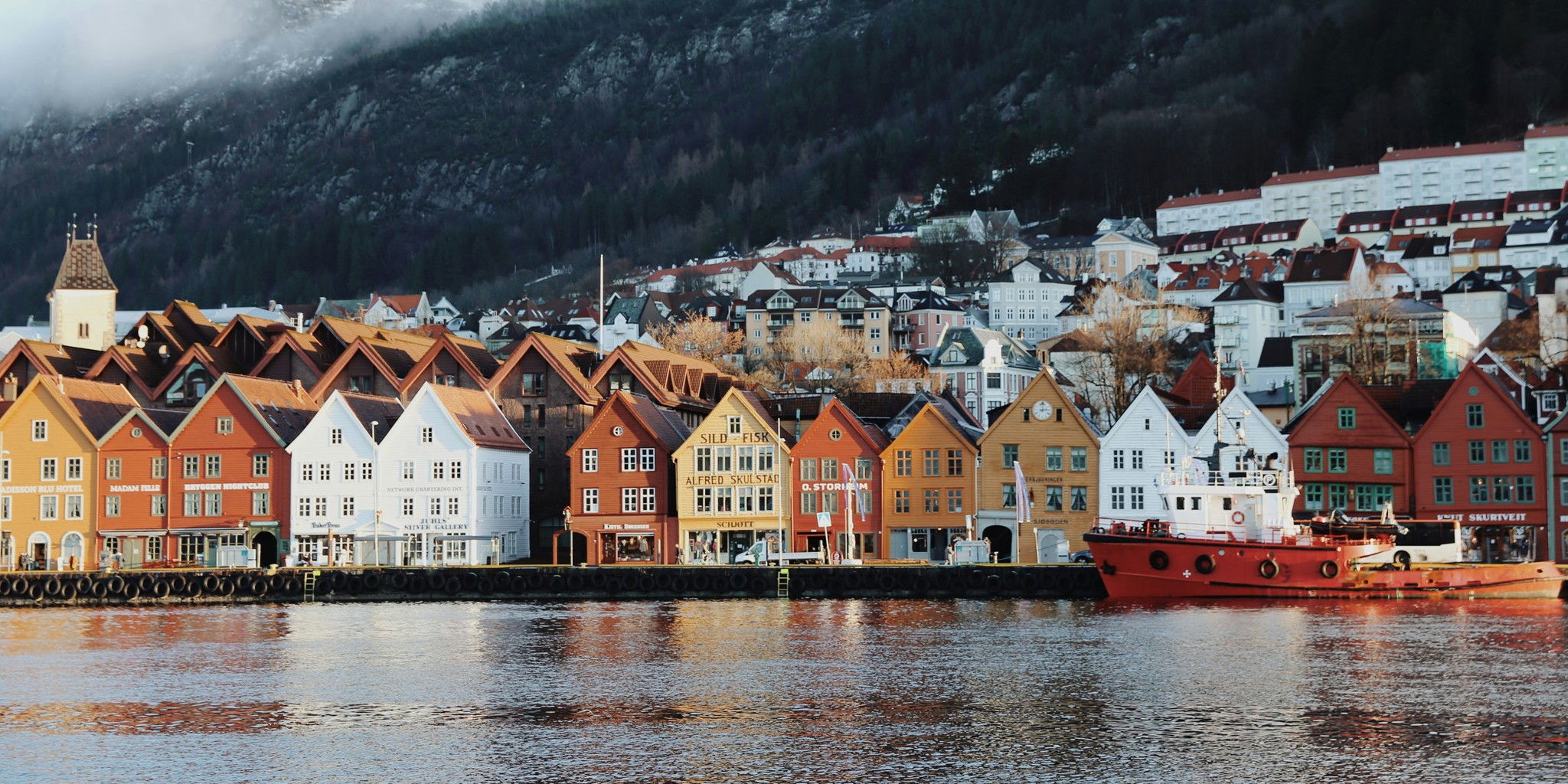
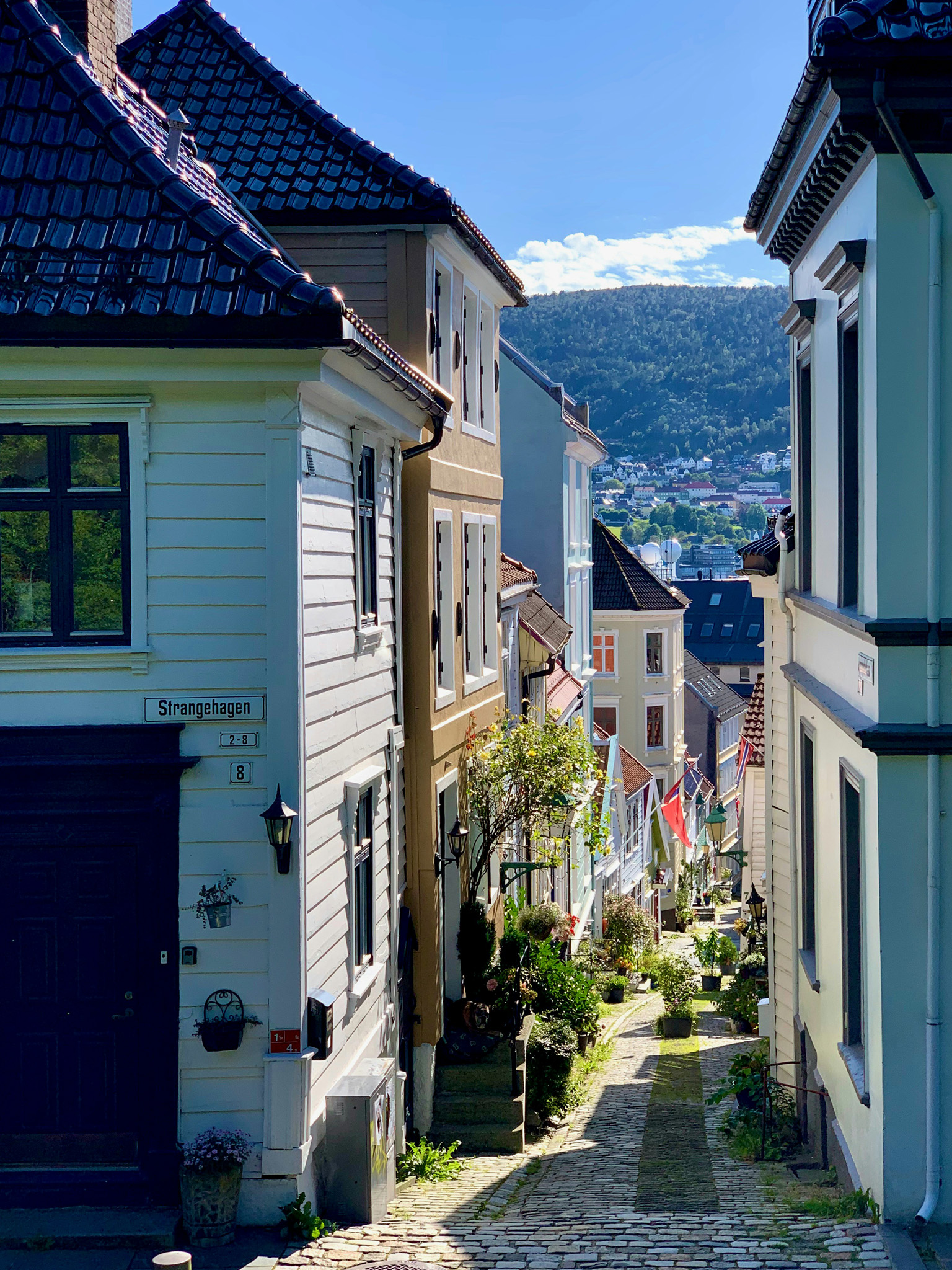
The classic Norway of postcards, where Bergen anchors a coastline of deep fjords and tumbling waterfalls.

  • Cruise the UNESCO-listed Geirangerfjord and Nærøyfjord
  • Explore Bergen’s colourful Bryggen wharf and lively fish market
  • Ride the Flåm Railway, one of the world’s most scenic train journeys
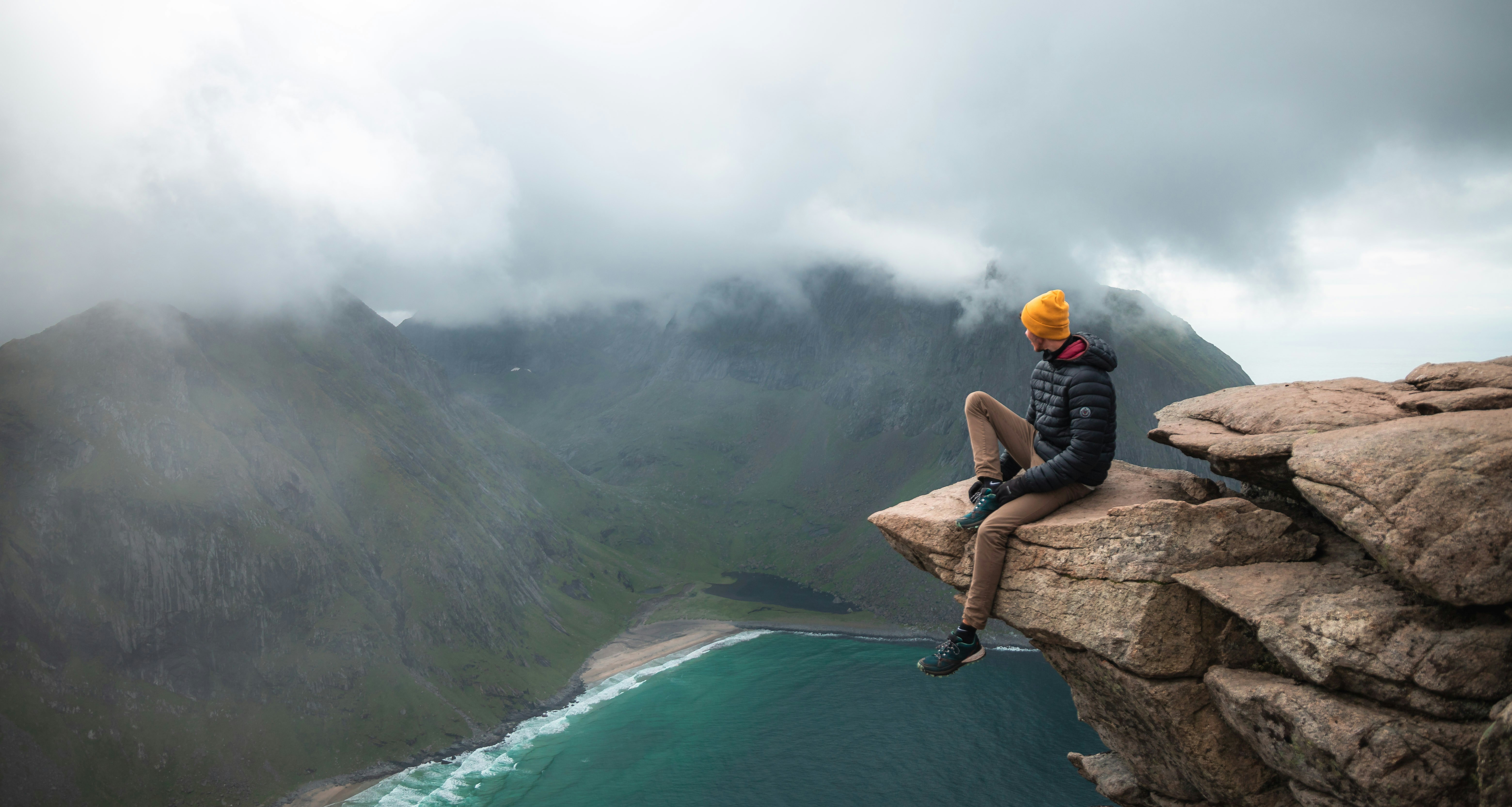
  • Hike to Trolltunga, Preikestolen, or Kjeragbolten for unforgettable lookouts
  • Drive the winding Trollstigen mountain road in summer

Trøndelag and Central Norway

A region of broad valleys, the historic city of Trondheim, and the gateway to the high mountains.

  • Visit the medieval Nidaros Cathedral, a pilgrimage destination for centuries
  • Walk part of the St Olav Ways pilgrim trail
  • Explore the Dovrefjell plateau, home to wild musk oxen
  • Discover the rebuilt mining town and creative scene of Røros
  • Base yourself in Trondheim for a relaxed, student-city atmosphere

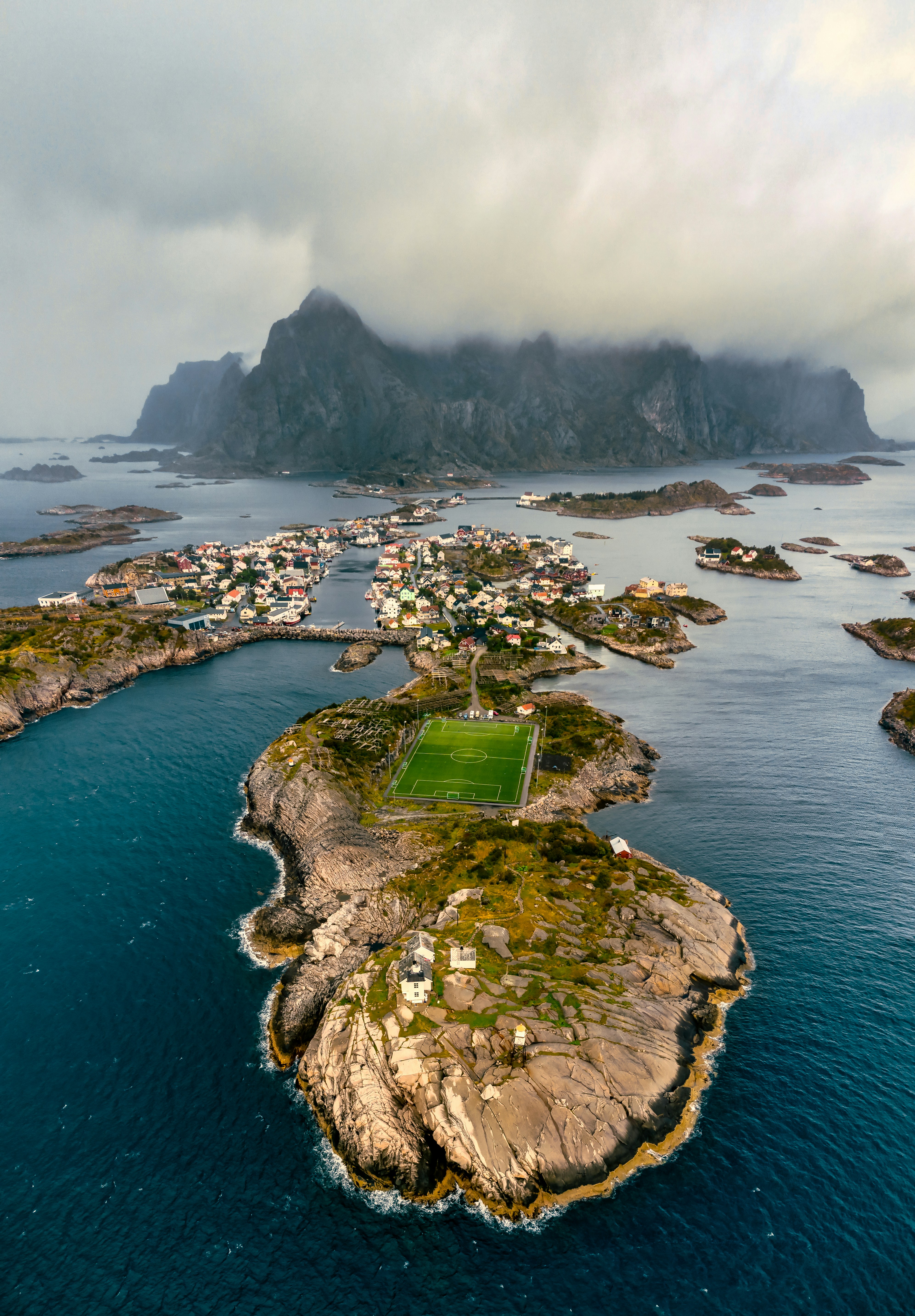
Lofoten and Northern Norway

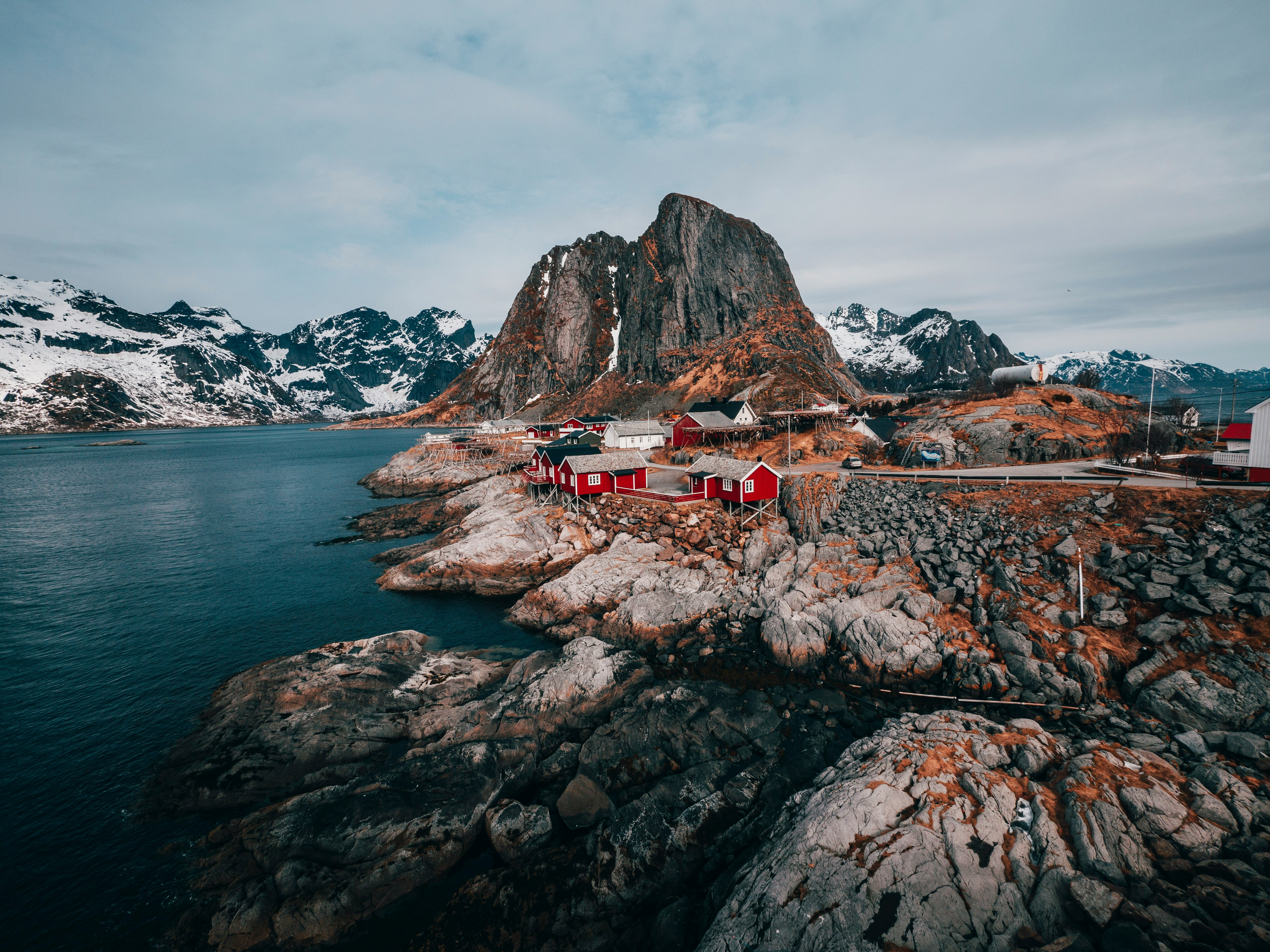
Jagged peaks rising straight from the sea, with fishing villages perched on the shoreline above Arctic waters.

  • Photograph the dramatic peaks and red fishermen’s cabins of the Lofoten Islands
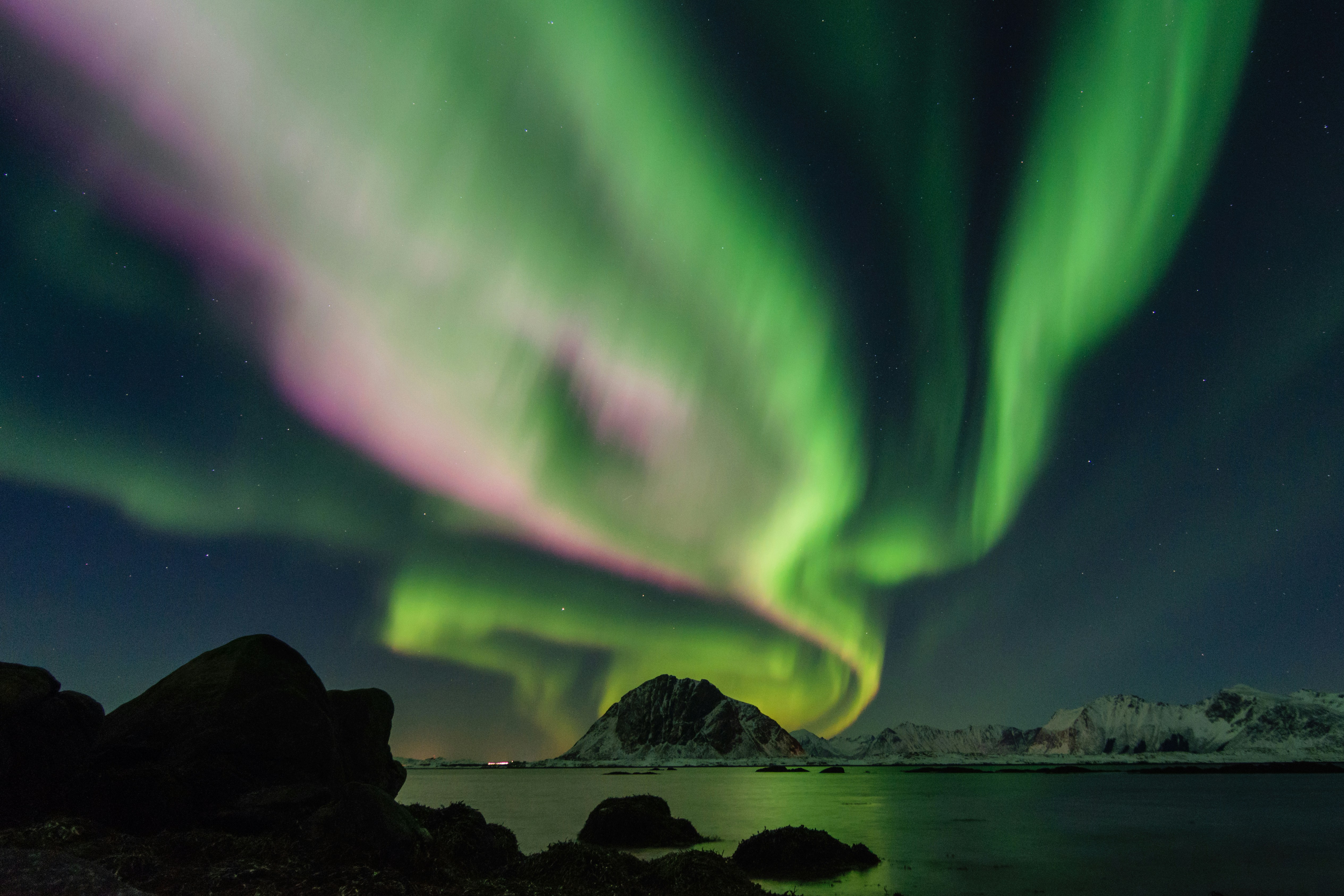
  • Chase the northern lights between autumn and early spring
  • Experience the midnight sun through the long Arctic summer
  • Go whale watching, sea kayaking, or surfing in the far north
  • Explore Tromsø, the lively cultural hub above the Arctic Circle

Svalbard

A remote Arctic archipelago closer to the North Pole than to mainland Norway.

  • Join a guided expedition to spot polar bears, walrus, and Arctic foxes
  • Cruise past glaciers and ice-filled fjords
  • Experience the polar night or 24-hour daylight depending on the season
  • Visit Longyearbyen, one of the world’s northernmost settlements
  • Snowmobile or dog-sled across the frozen wilderness in winter

🎒 Things To Do

  • Cruise a fjord by ferry or sightseeing boat through the western coastline
  • Hike to a famous lookout such as Preikestolen, Trolltunga, or Kjeragbolten
  • Ride a scenic railway, with the Flåm and Bergen lines among the best
  • Chase the northern lights in the Arctic north between September and March
  • Experience the midnight sun on a summer trip above the Arctic Circle
  • Spot wildlife, from whales and sea eagles to musk oxen and reindeer
  • Cross-country or downhill ski through the long Norwegian winter
  • Explore Viking history through museums, burial mounds, and reconstructed sites
  • Drive a National Scenic Route past waterfalls, glaciers, and mountain passes
  • Kayak quiet fjords or join a guided glacier walk with proper equipment

🍽️ Food & Drink

Norwegian cuisine is built around what the land and sea provide – cold-water fish, game, dairy, and berries. It tends towards the simple and seasonal, with a strong tradition of preserving and smoking, and a modern Nordic movement that has brought fresh creativity to restaurant kitchens.

  • Fresh and cured seafood, especially salmon, cod, and Arctic king crab
  • Brown cheese, a sweet caramelised whey cheese eaten on bread or waffles
  • Reindeer and elk, often served as a hearty stew or fillet
  • Lefse and waffles, soft flatbreads and treats served with butter, sugar, or jam
  • Cinnamon buns and other pastries that anchor the daily coffee break
  • Aquavit, a spiced spirit traditionally enjoyed with festive meals

🌦️ Weather

Norway’s climate varies enormously from the mild, wet coast to the colder inland valleys and the Arctic far north. The Gulf Stream keeps the coastline far warmer than its latitude suggests, but conditions can shift quickly, especially in the mountains.

  • Summers are mild, with coastal and lowland temperatures around 15-25°C
  • Winters are cold, often below freezing inland and in the north, milder on the coast
  • The west coast is wet year-round, with Bergen among Europe’s rainiest cities
  • The Arctic north sees the midnight sun in summer and polar night in winter
  • Mountain weather is changeable in any season, so always check forecasts
  • Snow can linger on high passes and trails well into early summer

📅 Best Time To Visit

June – August (Summer Peak)

  • Warmest weather, long daylight hours, and the midnight sun in the north
  • Best window for hiking, fjord cruises, and scenic drives, as all roads and trails are open
  • The busiest and most expensive season, so book accommodation well ahead

September – October and April – May (Shoulder Season)

  • Quieter trails, lower prices, and beautiful autumn colour or spring greenery
  • Early autumn brings the first chance of the northern lights in the north
  • Some mountain roads and high trails may still be closed by snow in spring

November – March (Winter)

  • Prime season for the northern lights, skiing, and Arctic activities
  • Short days and cold temperatures, especially inland and in the north
  • Cities stay lively and atmospheric, with Christmas markets and winter events

🎒 Packing List

  • Warm, layerable clothing including thermal base layers and a fleece or wool mid-layer
  • A waterproof and windproof jacket and trousers, essential year-round
  • Sturdy, broken-in hiking boots with good grip
  • A warm hat, gloves, and scarf, even in summer for the mountains and the north
  • Quick-dry trousers and shirts for active days
  • Sunglasses and sunscreen, important for snow glare and the long summer sun
  • A reusable water bottle, as tap water is excellent throughout the country
  • A power adapter for European two-pin plugs
  • A compact daypack for hikes and day trips
  • A basic medical kit with blister care, painkillers, and any personal medication
  • Electrolyte tablets or sachets for long active days
  • A sleep mask, useful during the bright nights of the midnight sun

🛂 Visas & Entry Requirements

Norway is part of the Schengen Area, and entry rules follow Schengen standards for short visits.

  • Many nationalities, including Australian, UK, US, EU, and Canadian passport holders, can enter visa-free for up to 90 days within any 180-day period
  • From 2026, visa-exempt travellers will need an approved ETIAS travel authorisation before arrival – check the official portal for current rollout status
  • Passports should be valid for at least three months beyond the planned departure date
  • You may be asked to show proof of onward travel, sufficient funds, and confirmed accommodation
  • Official information: https://www.udi.no/en/

💰 Money

  • The currency is the Norwegian krone (NOK)
  • Norway is one of the most cashless countries in the world, and cards are accepted almost everywhere
  • Contactless and mobile payments are the norm, even for small purchases
  • ATMs are widely available in cities and towns if you do want cash
  • Tipping is not expected, though rounding up or leaving around 5-10% for good restaurant service is appreciated
  • Norway is expensive, so budget generously for food, drinks, and transport

💸 Hotel & Tourist Taxes

From summer 2026, Norway is introducing a locally applied visitor’s contribution, so some destinations will add a small tax to accommodation costs.

  • The fee is capped at 3% of the accommodation cost and applies to hotels, guesthouses, and short-term rentals such as Airbnb
  • It is not a nationwide tax – only municipalities that apply and are approved can charge it, with popular hotspots like Bergen, Tromsø, and Lofoten among the first expected to adopt it
  • The fee also applies to cruise ship passengers in participating areas
  • Travellers using camper vans, tents, and recreational boats are exempt
  • The charge is added to your accommodation bill, so confirm with your hotel whether it applies and budget for a small extra amount

🌈 LGBTQIA+ Travellers

Norway is one of the most welcoming and progressive countries in the world for LGBTQIA+ travellers.

  • Same-sex marriage has been legal since 2009, and strong anti-discrimination protections are in place
  • Social attitudes are open and accepting, particularly in cities such as Oslo, Bergen, and Trondheim
  • Oslo Pride is a major annual event drawing large, lively crowds each summer
  • Smaller rural communities are generally tolerant, though visibly affectionate behaviour may attract less familiarity than in cities
  • Travellers can expect to be treated with respect and equality throughout the country

⚠️ Traveller Safety

Norway is a very safe country with low crime rates, and the main risks come from nature rather than people.

  • Crime against travellers is rare, though petty theft and pickpocketing can occur in busy tourist areas
  • The biggest hazards are weather and terrain, so check conditions before hikes and never underestimate the mountains
  • Use marked trails, carry proper gear, and turn back if weather closes in
  • For glacier walks, kayaking, and Arctic activities, always go with a qualified guide
  • Emergency number is 112

💉 Vaccinations & Health

Norway poses no unusual health risks, and standard precautions are sufficient for most travellers.

  • No vaccinations are required to enter Norway
  • Make sure routine vaccinations such as MMR, tetanus, and diphtheria are up to date
  • There is no malaria risk, and tropical diseases are not a concern
  • Ticks can be present in coastal and southern areas in the warmer months, so check yourself after hikes through long grass
  • Official information: https://www.fhi.no/en/

🚗 Getting Around

  • Norway has an excellent rail network, with several routes ranking among the world’s most scenic
  • Coastal ferries and the Hurtigruten coastal voyage are a classic way to travel between fjord towns
  • Domestic flights are useful for covering the long distances to the far north and Svalbard
  • Renting a car gives the most freedom for fjord country, though distances and ferry crossings add time
  • Roads are well maintained but mountainous and winding, with some high passes closed in winter
  • Cities have reliable buses, trams, and metro systems, and are generally compact and walkable

✈️ Airports

Oslo Airport, Gardermoen (OSL)

  • The country’s largest airport and main international gateway, located north of Oslo

Bergen Airport, Flesland (BGO)

  • The key hub for the western fjords and a popular entry point for fjord-focused trips

Tromsø Airport (TOS)

  • The main gateway to the Arctic north, northern lights tours, and Svalbard connections

🗣️ Language

The official language is Norwegian, which has two written standards, Bokmål and Nynorsk. Sami languages are also official in parts of the north. English is very widely spoken across all age groups, and travellers will have no difficulty communicating in cities, on public transport, or in tourist areas. Learning a few Norwegian phrases is still appreciated as a friendly gesture.

Common Phrases

  • Hello – Hei (hay)
  • Goodbye – Ha det (hah deh)
  • Please – Vær så snill (vair saw snill)
  • Thank you – Takk (tahk)
  • Yes – Ja (yah)
  • No – Nei (nay)
  • Excuse me – Unnskyld (oon-shül)
  • Sorry – Beklager (beh-klah-ger)
  • Do you speak English? – Snakker du engelsk? (snah-ker doo eng-elsk)
  • How much? – Hvor mye? (vor mü-eh)
  • Where is…? – Hvor er…? (vor air)
  • Help – Hjelp (yelp)
  • Cheers – Skål (skawl)
  • Good – Bra (brah)
  • You’re welcome – Bare hyggelig (bah-reh hüg-geh-lee)

ℹ️ Practical Info

Electricity

  • Norway uses Type C and Type F plugs, with a standard voltage of 230V

Internet & WiFi

  • WiFi is fast and widely available in hotels, cafes, and public spaces, and mobile coverage is strong across populated areas, though it can drop out in remote mountains and the far north

Water

  • Tap water is clean, safe, and of excellent quality everywhere, so there is no need to buy bottled water

Travel Insurance

  • Comprehensive personal travel insurance is strongly recommended, and travellers planning hiking, glacier walks, skiing, kayaking, or other adventure activities should confirm these are specifically covered by their policy

Connectivity SIM / eSIM

  • Local SIM cards are easy to buy at airports, convenience stores, and mobile shops in cities
  • Using an eSIM is our recommended choice while travelling anywhere in the world, and our recommended provider is Holafly. For more information on eSIMs, check out this blog.

❤️ Why Visit Norway

Norway is a destination that works on you slowly. The scale of it is staggering at first – fjords that seem to have no end, mountains that drop straight into the sea, and Arctic light that bends the whole sense of a day. But what stays with travellers is something quieter: the feeling of standing in genuine wilderness that is calm, clean, and entirely open to you.

It is a country that makes the outdoors feel effortless. A train ride is an event in itself, a ferry becomes a sightseeing cruise, and a short walk from town can deliver a view worth crossing the world for. Whether you come for the summer’s endless daylight or the winter’s green-lit skies, the landscape never stops giving you something to look at.

For travellers who want their scenery untamed, their cities thoughtful, and their experiences honest, Norway is unforgettable. It is a place that rewards curiosity and patience, and one that most visitors find themselves wanting to return to long before they have left.

INSTAGRAM

@bestintravel