France – Destination Guide
France is a country that rewards every kind of traveller. From the lavender-streaked hills of Provence to the granite peaks of the Alps, from the wave-battered coastline of Brittany to the sun-soaked beaches of the Côte d’Azur, the landscape shifts dramatically every few hundred kilometres. Each region carries its own dialect of food, architecture, and pace – and yet there is a shared rhythm to French life that ties it all together: the long lunch, the corner café, the careful regard for craft and conversation.
Beyond the postcard images of Paris, France offers vineyards, medieval villages, snow-capped mountains, prehistoric cave paintings, and Roman ruins still standing in working towns. It is a country built on centuries of art, philosophy, food, and revolution, and traces of all of it remain visible in the architecture, museums, and everyday rituals. Whether you come for the food, the history, the landscapes, or the language, France will give you reasons to return.
What makes France so rewarding is its ability to feel both timeless and alive – a place where ancient cathedrals share streets with bustling weekend markets, and where every region offers a meaningful and distinct experience.
🗺️ Regions to Explore
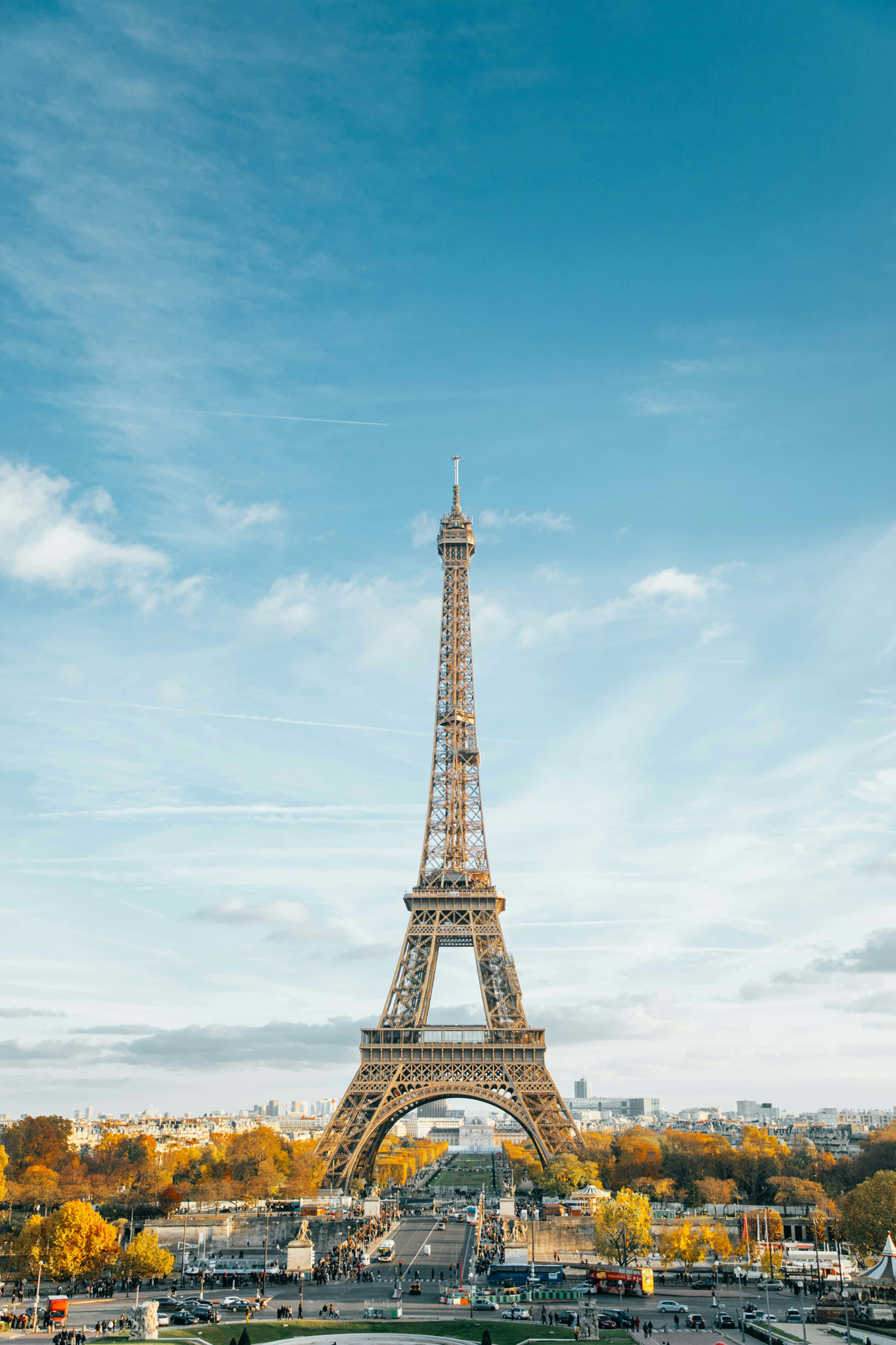
Paris & Île-de-France
The cultural heart of the country, where centuries of art, fashion, and revolution meet daily café life.
- Walking the Seine from Notre-Dame to the Eiffel Tower
- Exploring the Louvre, Musée d’Orsay, and Centre Pompidou
- Wandering Montmartre’s cobbled streets and artist squares
- Day-tripping to the gardens and palace of Versailles
- Sampling pastries and bistro classics in the Marais
Provence & the Côte d’Azur
A sun-drenched south of lavender fields, hilltop villages, and a glittering Mediterranean coastline.
- Strolling the markets of Aix-en-Provence and Avignon
- Photographing lavender fields in bloom around Valensole
- Swimming and people-watching in Nice, Antibes, and Cassis
- Visiting the Roman amphitheatres of Arles and Nîmes
- Hiking the calanques between Marseille and Cassis

The French Alps & Mont Blanc
Alpine peaks, glacial lakes, and storybook mountain villages straddling the Italian and Swiss borders.
- Hiking or skiing in Chamonix beneath Mont Blanc
- Boating on Lake Annecy in the warmer months
- Riding cable cars to glacier viewpoints like Aiguille du Midi
- Sampling raclette and tartiflette in mountain refuges
- Walking sections of the Tour du Mont Blanc trail
The Loire Valley
A green, gentle region of rivers, châteaux, and rolling vineyards once favoured by French royalty.
- Visiting Chambord, Chenonceau, and Villandry châteaux
- Cycling the riverside paths of the Loire à Vélo route
- Wine tasting in Sancerre, Vouvray, and Saumur
- Exploring the medieval streets of Amboise and Tours
- Picnicking in the formal gardens of restored estates
Brittany & Normandy
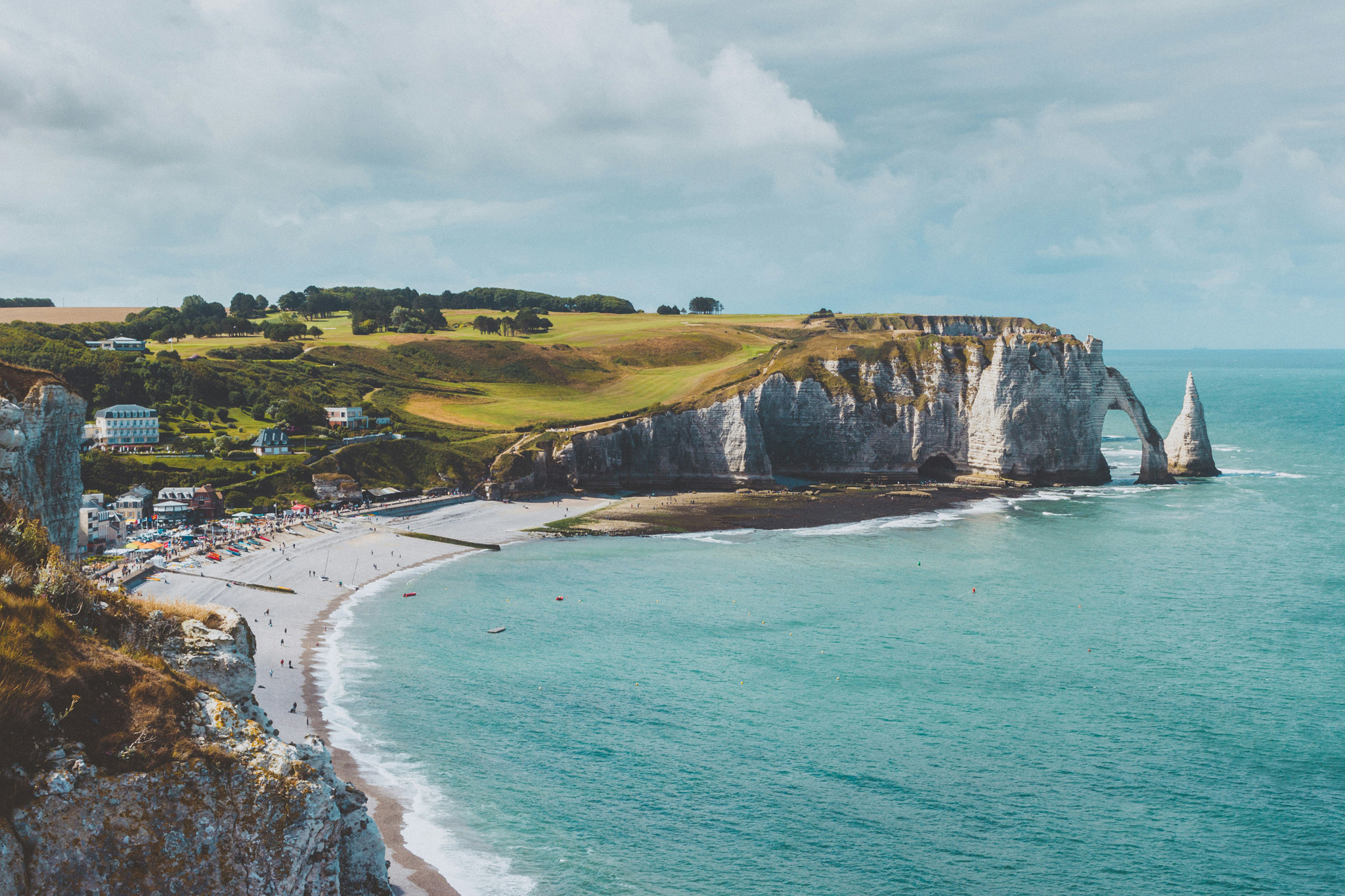
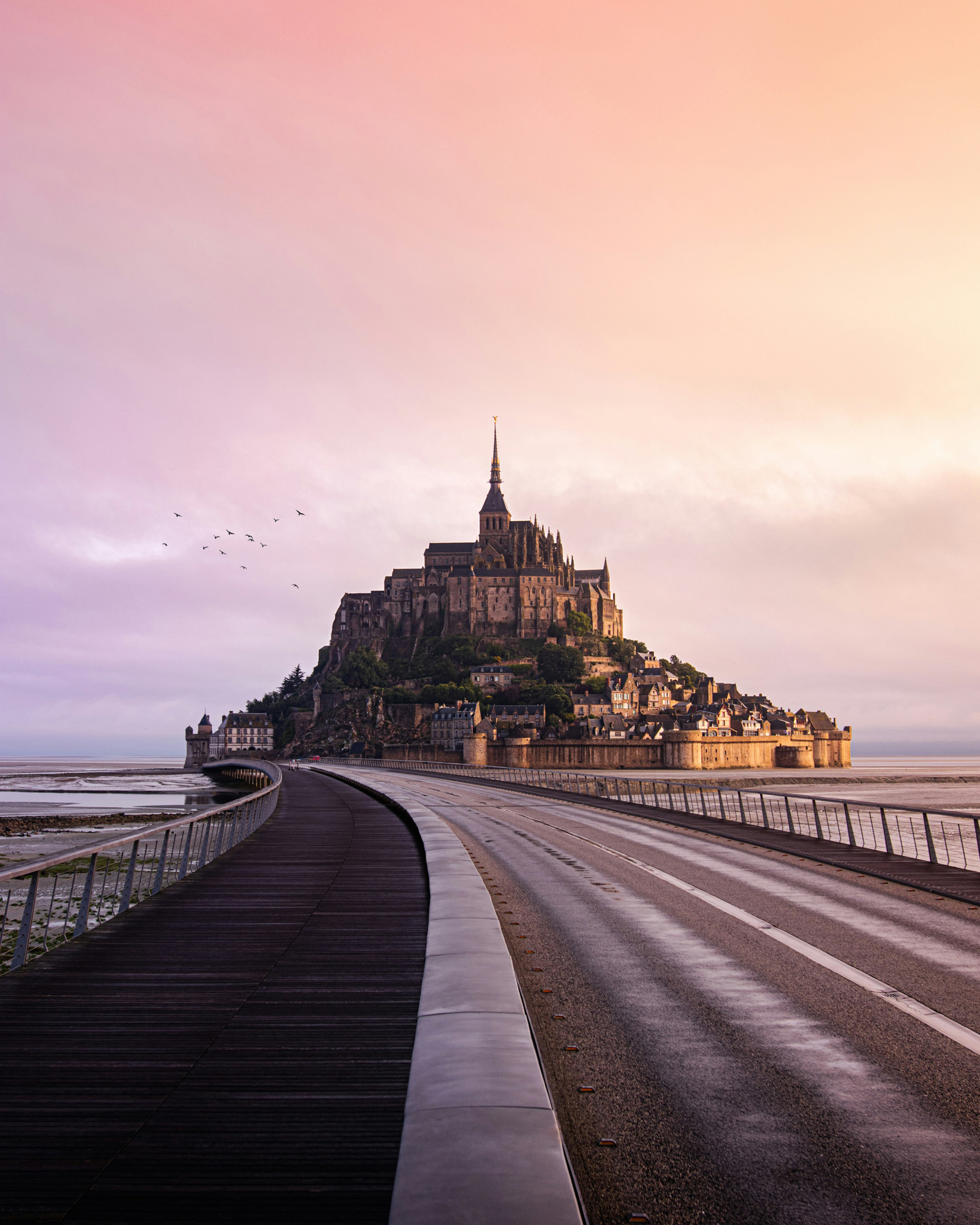
A rugged, wind-swept north of fishing villages, towering cliffs, and powerful wartime history.
- Visiting Mont-Saint-Michel at high tide
- Walking the D-Day landing beaches and memorials
- Eating oysters and galettes in coastal towns
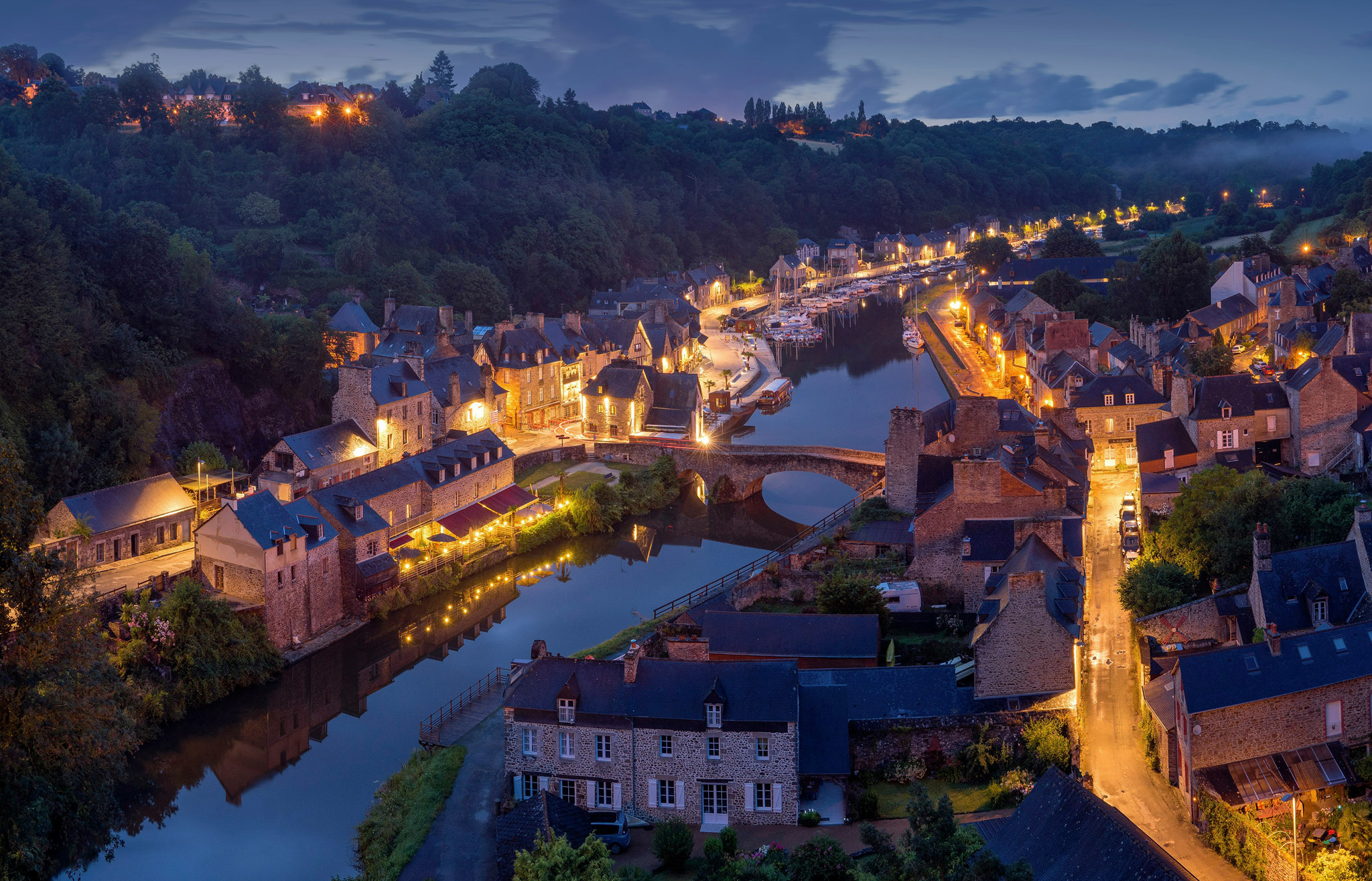
- Exploring the medieval port of Saint-Malo
- Wandering Monet’s gardens at Giverny
Dordogne & Southwest France
A region of caves, foie gras, and golden stone villages tucked into a slower, rural rhythm.
- Touring prehistoric cave art at Lascaux IV
- Canoeing the Dordogne River past hilltop castles
- Eating duck confit and walnut tarts in Sarlat
- Exploring Bordeaux’s vineyards and 18th-century centre
- Walking the bastide villages of the Lot Valley
🎒 Things To Do
- Wander a working morning market in any French town
- Take a long lunch with wine in a countryside auberge
- Visit at least one château, abbey, or cathedral
- Walk a section of a long-distance trail like the GR20 or GR10
- Tour a regional vineyard with a local winemaker
- Watch the sunset from a coastal village in Provence
- Cycle between villages in the Loire or Burgundy
- Take a cooking class focused on regional cuisine
- Spend a slow morning in a Parisian café with a pastry
- Catch a regional festival – music, film, harvest, or saints’ day
🍽️ Food & Drink
French cuisine is built on regional pride, seasonal produce, and unhurried meals. Each region has its own signature dishes, cheeses, and wines worth tracking down.
- Fresh croissants, pain au chocolat, and baguettes from neighbourhood boulangeries
- Coq au vin, boeuf bourguignon, and cassoulet in countryside bistros
- Bouillabaisse and seafood platters along the Mediterranean coast
- Regional cheeses – Comté, Camembert, Roquefort, Reblochon
- Pastries like tarte tatin, mille-feuille, and éclairs
- Local wines from Bordeaux, Burgundy, Champagne, the Rhône, and Loire valleys

🌦️ Weather
France has a temperate climate with strong regional variation between the Atlantic coast, the Mediterranean south, the mountain ranges, and the continental interior.
- Summers in most regions are warm and pleasant, with averages of 20-30°C
- The Mediterranean south can climb past 35°C in July and August
- Winters in the north and centre are cold and grey, typically 0-8°C
- The Alps and Pyrenees see heavy snow from December through March
- Spring and autumn bring mild days, occasional rain, and smaller crowds
- Coastal Brittany and Normandy stay cooler and wetter year-round
📅 Best Time To Visit
May – June (Spring)
- Mild, sunny days with fewer crowds than peak summer
- Lavender begins to bloom in Provence by late June
- Excellent for cycling, hiking, and city exploring
- Most attractions, restaurants, and seasonal openings are running
July – August (Peak Summer)
- Warm weather across the whole country and long daylight hours
- Beaches, alpine trails, and major sights are at their busiest
- Many Parisians leave the city, and some local restaurants close
- Book accommodation and trains well in advance
September – October (Autumn)
- Mild temperatures, golden vineyards, and the grape harvest
- Quieter towns, easier dining, and a softer light for photography
- Excellent for wine regions, hiking, and food-focused travel
- Rain becomes more frequent in the north by late October
🎒 Packing List
- Comfortable walking shoes for cobbled streets and trails
- Layered clothing for variable weather across regions
- A light waterproof jacket and compact umbrella
- Smart-casual outfit for restaurants and city evenings
- Sunglasses, sunscreen, and a wide-brim hat for summer
- A reusable water bottle for refilling at public fountains
- A power adapter for European Type E plugs
- A small day pack for markets, museums, and day trips
- Insect repellent for rural and coastal areas in summer
- A basic medical kit with painkillers and blister care
- Electrolytes for hiking or hot-weather travel
- A printed or downloaded copy of key bookings and passports
🛂 Visas & Entry Requirements
France is part of the Schengen Area, which simplifies entry for many travellers but has specific rules worth checking.
- Citizens of the EU, UK, US, Canada, Australia, and NZ can enter visa-free for up to 90 days
- The 90-day allowance applies across the entire Schengen Area, not just France
- Passports must be valid for at least three months beyond the date of departure
- From 2026, non-EU travellers will need an approved ETIAS authorisation before arrival
- Always check current entry rules and proof-of-onward-travel requirements before flying
Official information: https://france-visas.gouv.fr/
💰 Money
- The currency is the euro (EUR, €)
- Cards are widely accepted, including contactless and mobile payments
- ATMs are easy to find in cities, towns, and most villages
- Carry small euro notes for markets, rural bakeries, and small cafés
- Tipping is not expected but rounding up or leaving 5-10% is appreciated
- A small “service compris” charge is already included on most restaurant bills
💸 Hotel & Tourist Taxes
France charges a nightly accommodation tax called the taxe de séjour, set locally by each municipality and applied per adult, per night across hotels, rentals, campsites, and short-stay accommodation.
- Rates range from around €0.65 per night for budget campsites up to €15.60 per night for top-tier “palace” hotels, with 4-star hotels typically charging around €6.60 and 5-star around €9.20
- Paris significantly increased its rates from 1 January 2026, with an additional 200% Île-de-France Mobilités surcharge applied across the wider Paris region to fund public transport
- Other popular destinations like Nice, Cannes, Lyon, and Bordeaux apply their own scales, typically €1.50-€6.00 per person per night
- The tax is collected directly by your accommodation on arrival or departure, listed as a separate line on your invoice, and usually payable in cash or by card
- Children under 18 are exempt, as are some long-term and emergency stays
🌈 LGBTQIA+ Travellers
France is one of the more LGBTQIA+ friendly countries in Europe, with strong legal protections and visible queer communities in major cities.
- Same-sex marriage has been legal since 2013 and is fully recognised nationwide
- Anti-discrimination laws cover employment, housing, and public services
- Paris, Marseille, Lyon, and Nice have active LGBTQIA+ scenes and annual Pride events
- Acceptance is generally high in cities but can be more reserved in rural areas
- Public displays of affection are common and generally unremarkable in urban areas
⚠️ Traveller Safety
France is considered safe for travellers, with the most common issues being petty theft in busy tourist areas rather than violent crime.
- Pickpocketing is common on the Paris metro, around major monuments, and at train stations
- Keep valuables out of back pockets and use a zipped or cross-body bag in cities
- Demonstrations and strikes happen periodically and are best avoided
- Stick to well-lit streets at night, particularly around major train stations
- Mountain and water-based activities should be done with appropriate guides and gear
Emergency number is 112
💉 Vaccinations & Health
France has excellent healthcare and no mandatory vaccinations are required for most travellers.
- Routine vaccinations should be up to date – MMR, tetanus, diphtheria, polio
- Hepatitis A and B are sometimes recommended depending on travel style
- Tap water is safe to drink across the whole country
- Pharmacies (marked with a green cross) are well-stocked and easy to find
- Travel insurance with medical cover is strongly recommended for all visitors
Official information: https://www.diplomatie.gouv.fr/en/coming-to-france/
🚗 Getting Around
- France has one of the best high-speed rail networks in Europe, with the TGV linking major cities
- Regional TER trains reach smaller towns and rural areas affordably
- Renting a car is the easiest way to explore wine regions, the Dordogne, or Provence
- Toll roads (autoroutes) are well-maintained but can be expensive
- Buses fill in gaps where trains don’t reach, particularly in rural areas
- Cities like Paris, Lyon, and Marseille have efficient metros and tram systems
✈️ Airports
- Paris Charles de Gaulle (CDG) – The largest international hub in France, handling the majority of long-haul flights and connecting to most major global cities.
- Paris Orly (ORY) – A second Paris airport handling many European and domestic routes, often more convenient for southern France connections.
- Nice Côte d’Azur (NCE) – The main gateway to Provence and the French Riviera, with strong European and seasonal long-haul connections.
- Lyon-Saint Exupéry (LYS) – The key airport for the Rhône-Alpes region, the French Alps, and central France.
🗣️ Language
The official language of France is French, spoken by virtually the entire population. Regional languages such as Breton, Occitan, Alsatian, Corsican, and Basque are still spoken in pockets of the country but are rarely encountered in daily travel. English proficiency is reasonable in Paris, major cities, and tourist hubs – particularly among younger people and hospitality staff – but drops off quickly in rural areas. Learning even a few basic French phrases is genuinely appreciated and will noticeably improve the warmth of your interactions.
Common Phrases
- Hello — Bonjour (bohn-zhoor)
- Good evening — Bonsoir (bohn-swahr)
- Goodbye — Au revoir (oh ruh-vwahr)
- Please — S’il vous plaît (seel voo pleh)
- Thank you — Merci (mehr-see)
- You’re welcome — De rien (duh ree-an)
- Yes — Oui (wee)
- No — Non (nohn)
- Excuse me — Excusez-moi (ex-koo-zay mwah)
- Sorry — Pardon (par-dohn)
- Do you speak English? — Parlez-vous anglais? (par-lay voo on-glay)
- I don’t understand — Je ne comprends pas (zhuh nuh kom-pron pah)
- How much is it? — C’est combien? (say kom-bee-an)
- Where is…? — Où est…? (oo eh)
- Cheers! — Santé! (sahn-tay)
ℹ️ Practical Info
Electricity
- Type E plugs, 230V standard voltage. Bring a European adapter.
Internet & WiFi
- WiFi is widely available in hotels, cafés, and public spaces. Mobile data is fast and reliable in cities; coverage thins out in remote mountain and rural areas.
Water
- Tap water is safe to drink throughout France. Many towns have free public water fountains for refilling bottles.
Travel Insurance
- Comprehensive travel insurance is strongly recommended, particularly if you’re planning to ski, hike, or take part in any alpine or water-based activities.
Connectivity SIM / eSIM
- Local SIM cards are easy to buy from Orange, SFR, Bouygues, and Free at airports and city stores.
- Using an eSIM is our recommended choice while travelling anywhere in the world, and our recommended provider is Holafly. For more information on eSIMs, check out this blog.

❤️ Why Visit France
France rewards travellers who slow down. Whether it’s a two-hour lunch in a vineyard village, an afternoon wandering a Provençal market, or watching the light change on a Loire château, the country asks you to pay attention to small, well-made things. The food, the wine, the architecture, the language – all of it carries a sense of care that’s increasingly rare.
Beyond the famous sights, France offers an extraordinary range of landscapes and experiences within a single country. You can ski in the Alps and swim in the Mediterranean in the same week, walk through prehistoric cave art in the morning and eat a Michelin-starred dinner in the evening. Few places offer this kind of variety with so much depth in every region.
Come for the icons – the Eiffel Tower, Mont-Saint-Michel, the Riviera – but stay for the quieter pleasures: a glass of local wine at sunset, the smell of fresh bread at dawn, the unhurried generosity of a good French meal shared with people you like. That’s the France worth returning to.