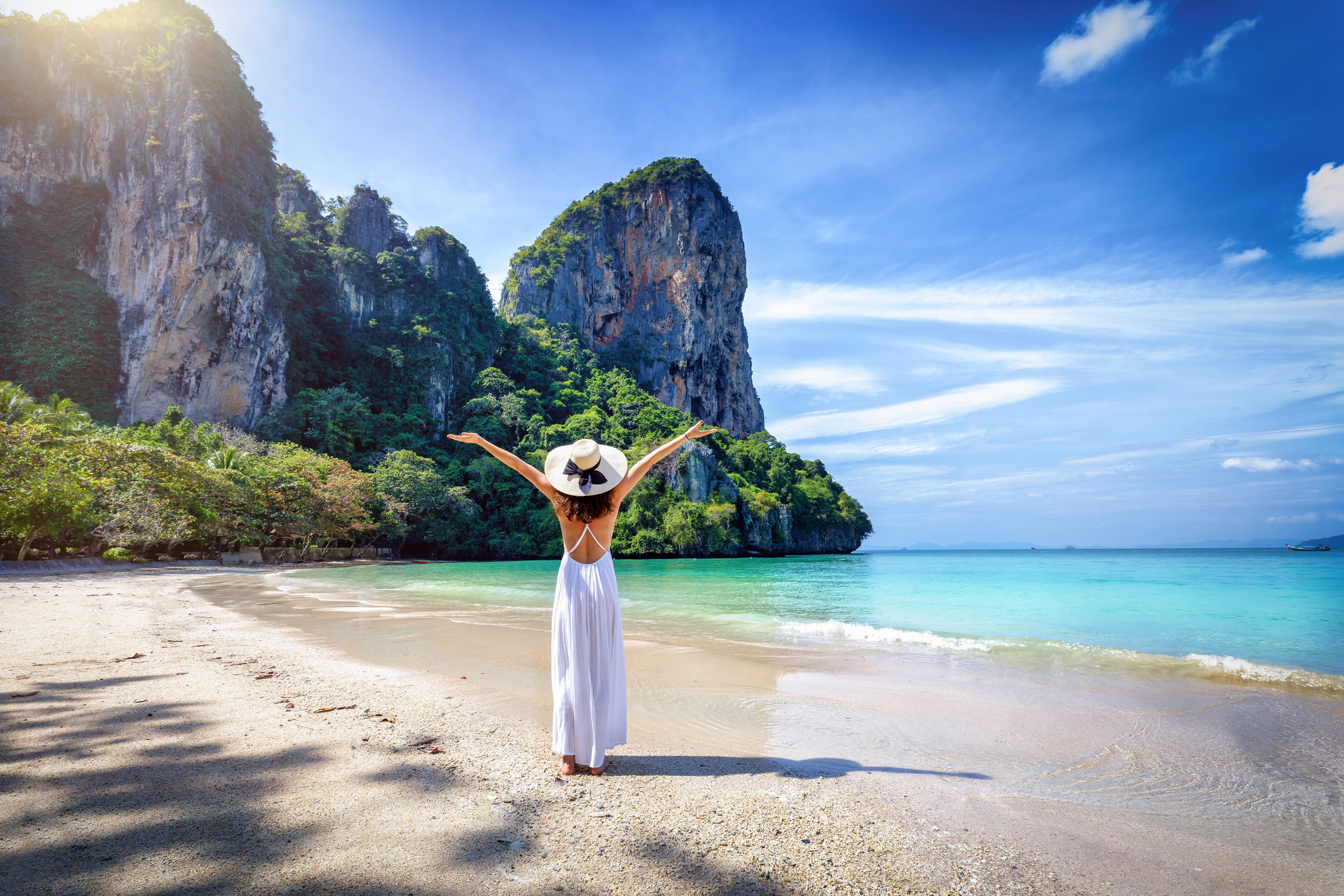
Thailand – Destination Guide
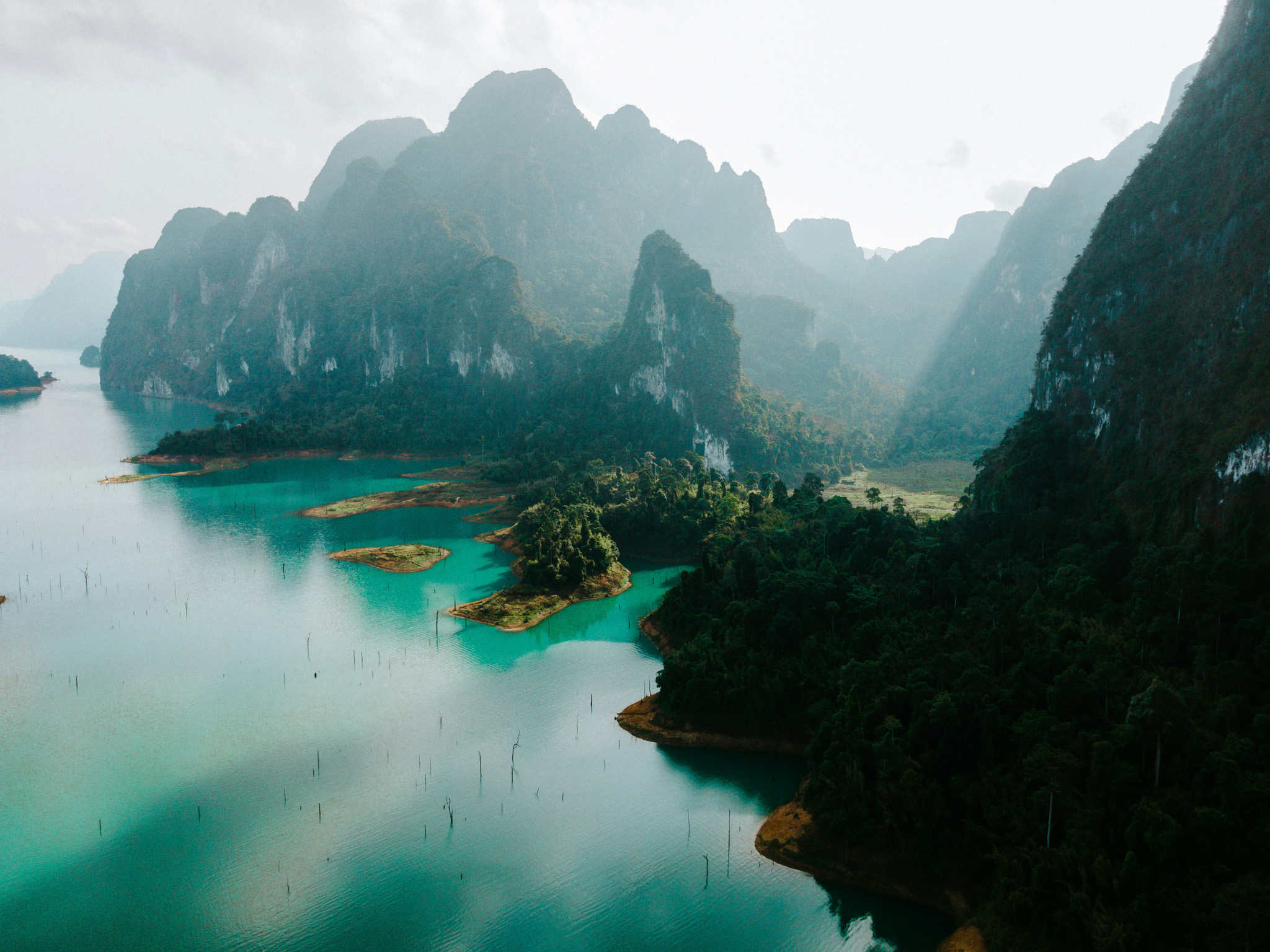
Thailand is a country of golden temples and limestone islands, neon-lit cities and quiet rice terraces, fiery street food and gentle highland mornings. Stretching from the misty mountains of the north to the turquoise seas of the south, it packs an extraordinary range of landscapes and experiences into a single, easily navigable destination. Few places make travel feel this effortless or this rewarding.
The character of Thailand is shaped by its warmth – both the tropical heat and the genuine friendliness that gives the country its nickname, the Land of Smiles. Buddhism threads through daily life, from saffron-robed monks collecting alms at dawn to the glittering shrines tucked into busy street corners. Food is a national obsession, markets hum until late, and even the smallest towns reward the curious traveller.
Whether you come to dive coral reefs, trek through jungle, learn to cook a perfect green curry, or simply slow down on a hammock-strung beach, Thailand delivers depth and variety in equal measure. It is a destination that suits first-time travellers and seasoned explorers alike, and one that almost always pulls people back for more.
🗺️ Regions to Explore
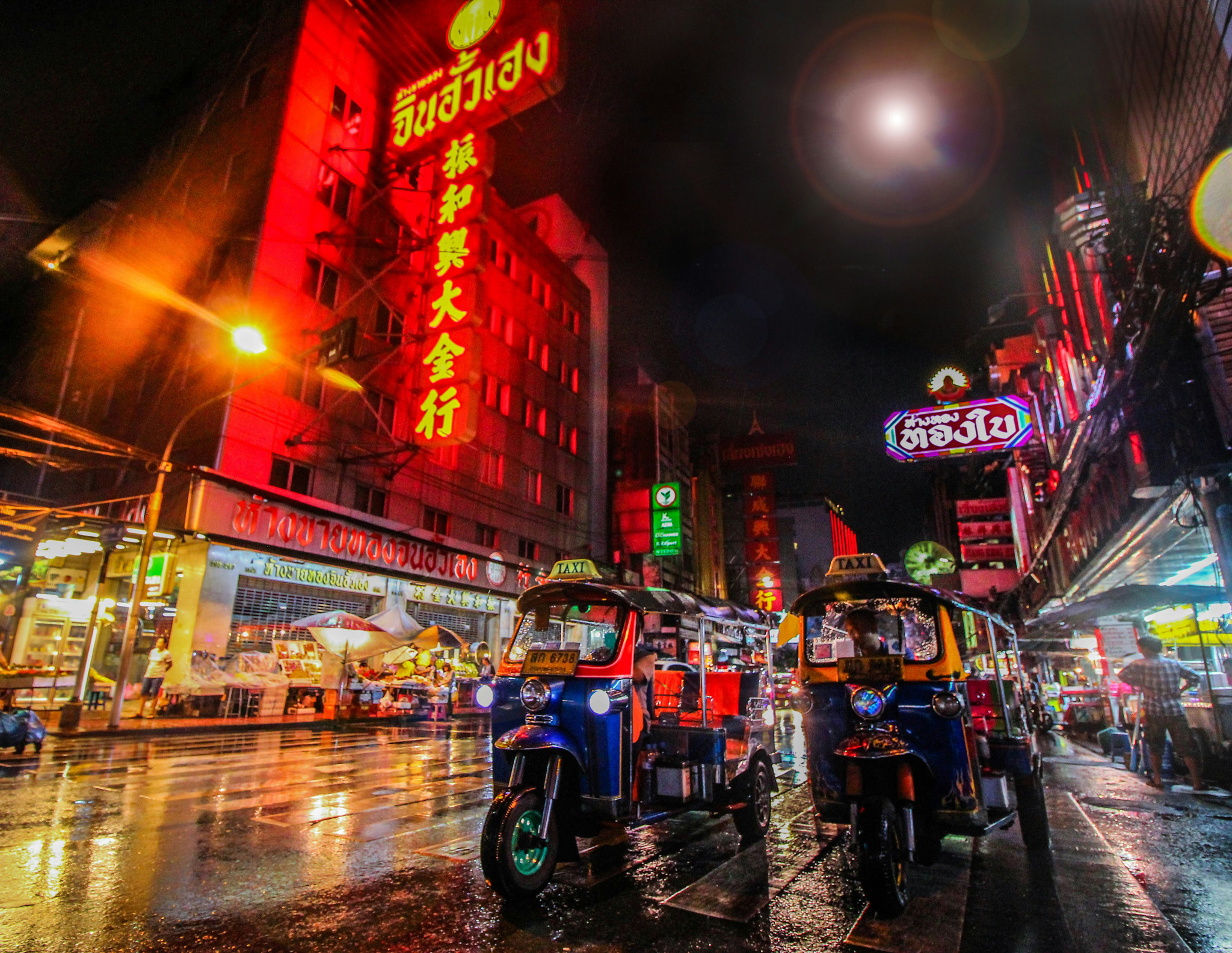
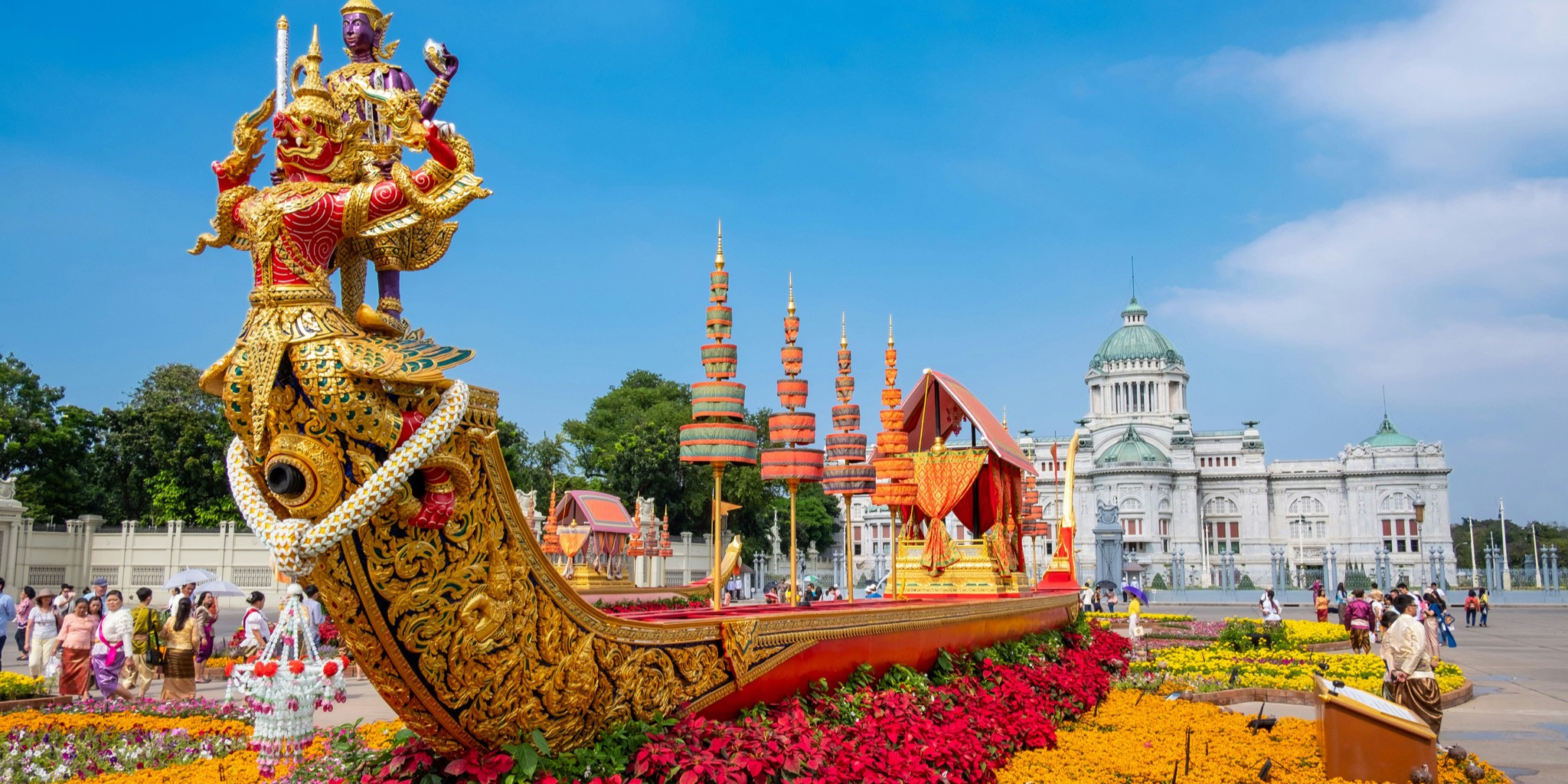
Bangkok and the Central Plains
The frenetic, captivating heart of the country, where ancient temples sit beside gleaming malls and rooftop bars.
- Visit the Grand Palace and Wat Phra Kaew
- Cruise the canals and Chao Phraya River
- Explore the ruins of Ayutthaya, a former royal capital
- Eat your way through street food districts like Yaowarat
- Browse the vast Chatuchak Weekend Market
Northern Thailand
A region of forested mountains, hill tribe villages, and a slower, more cultural pace centred on Chiang Mai and Chiang Rai.
- Wander the temple-filled old city of Chiang Mai
- Visit the White Temple and Blue Temple in Chiang Rai
- Trek to hill tribe communities and waterfalls
- Spend time at an ethical elephant sanctuary
- Take a Thai cooking class in the cooler highland air
The Andaman Coast
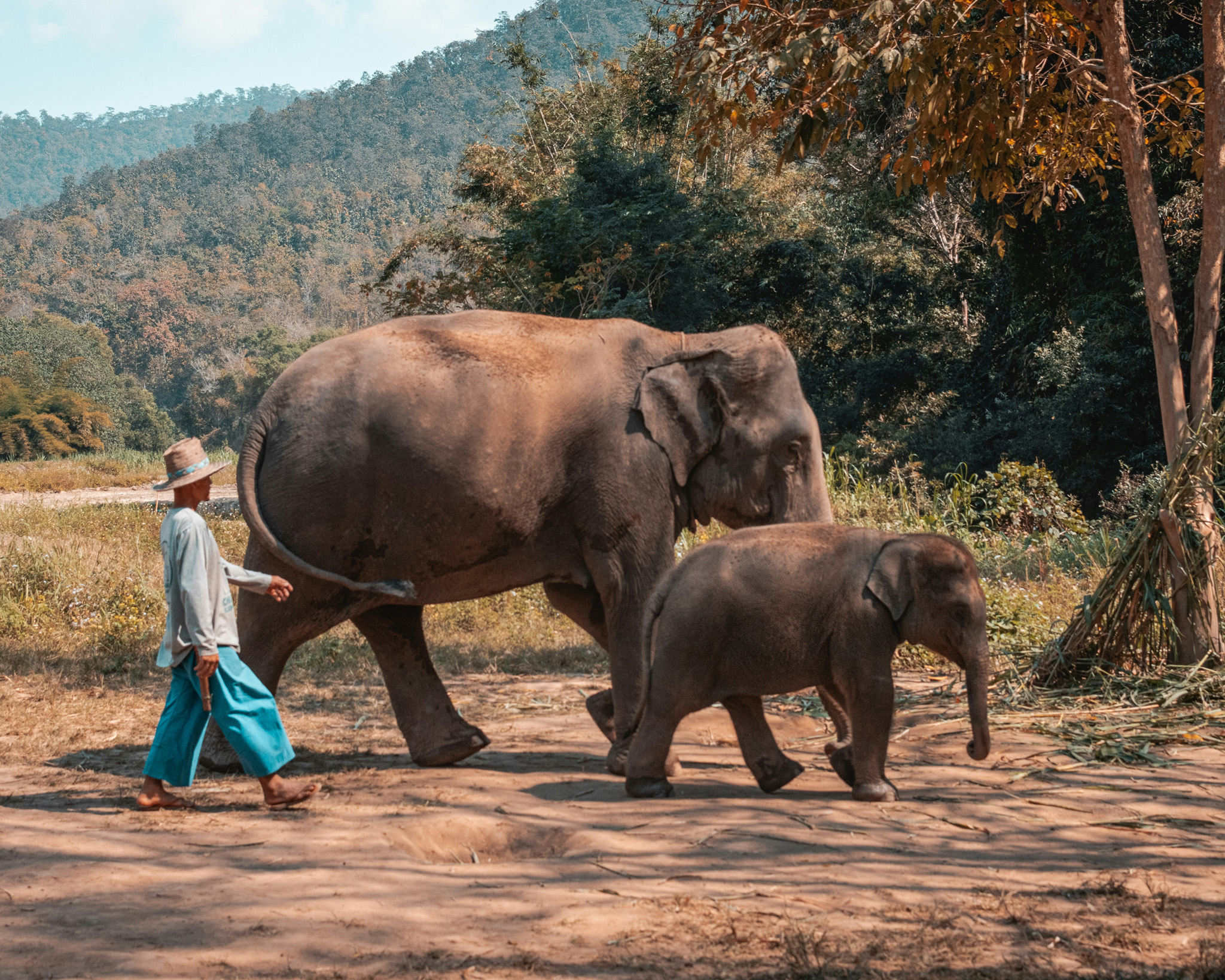
Thailand’s most dramatic coastline, fringed with limestone karsts, hidden lagoons, and world-class diving.
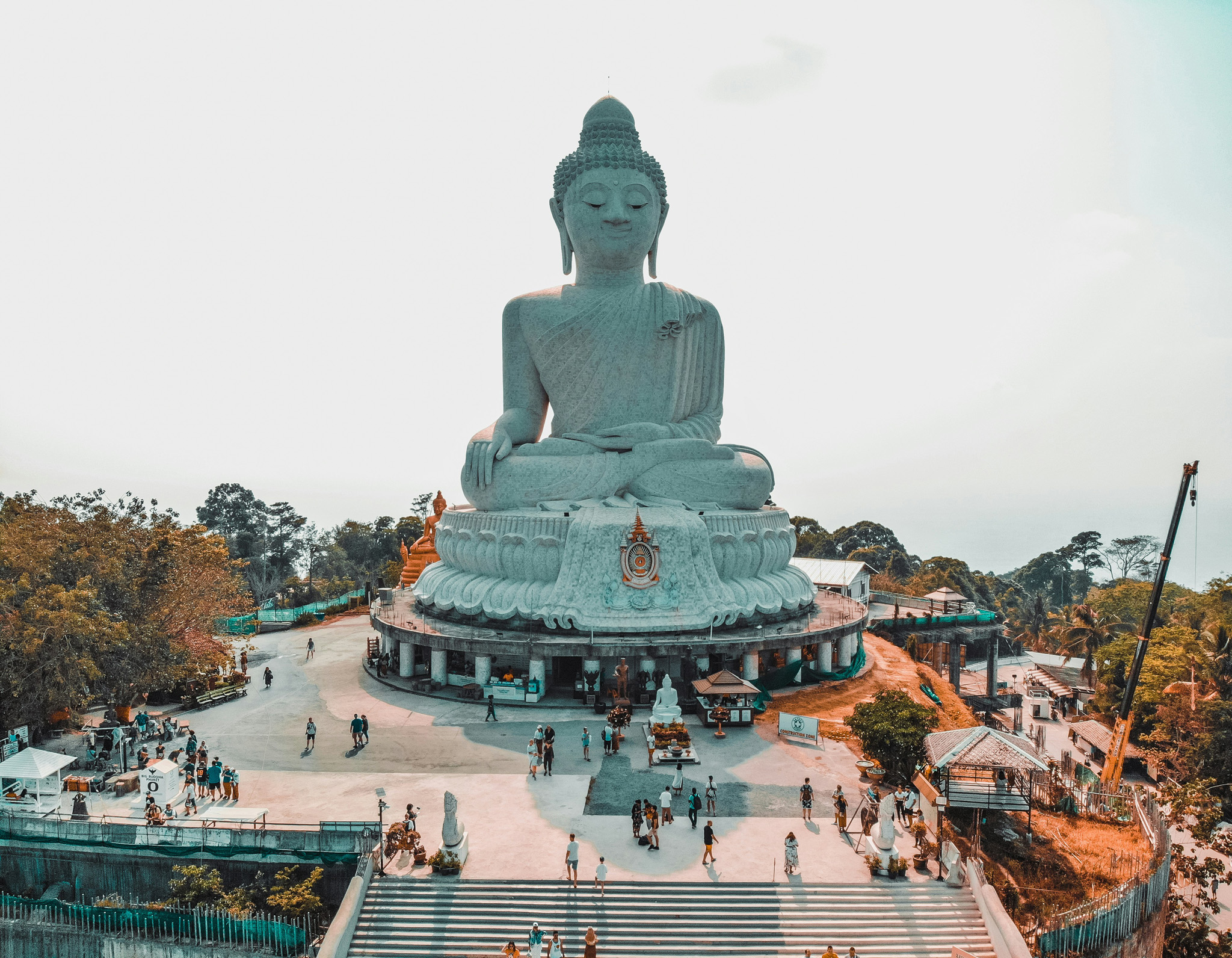
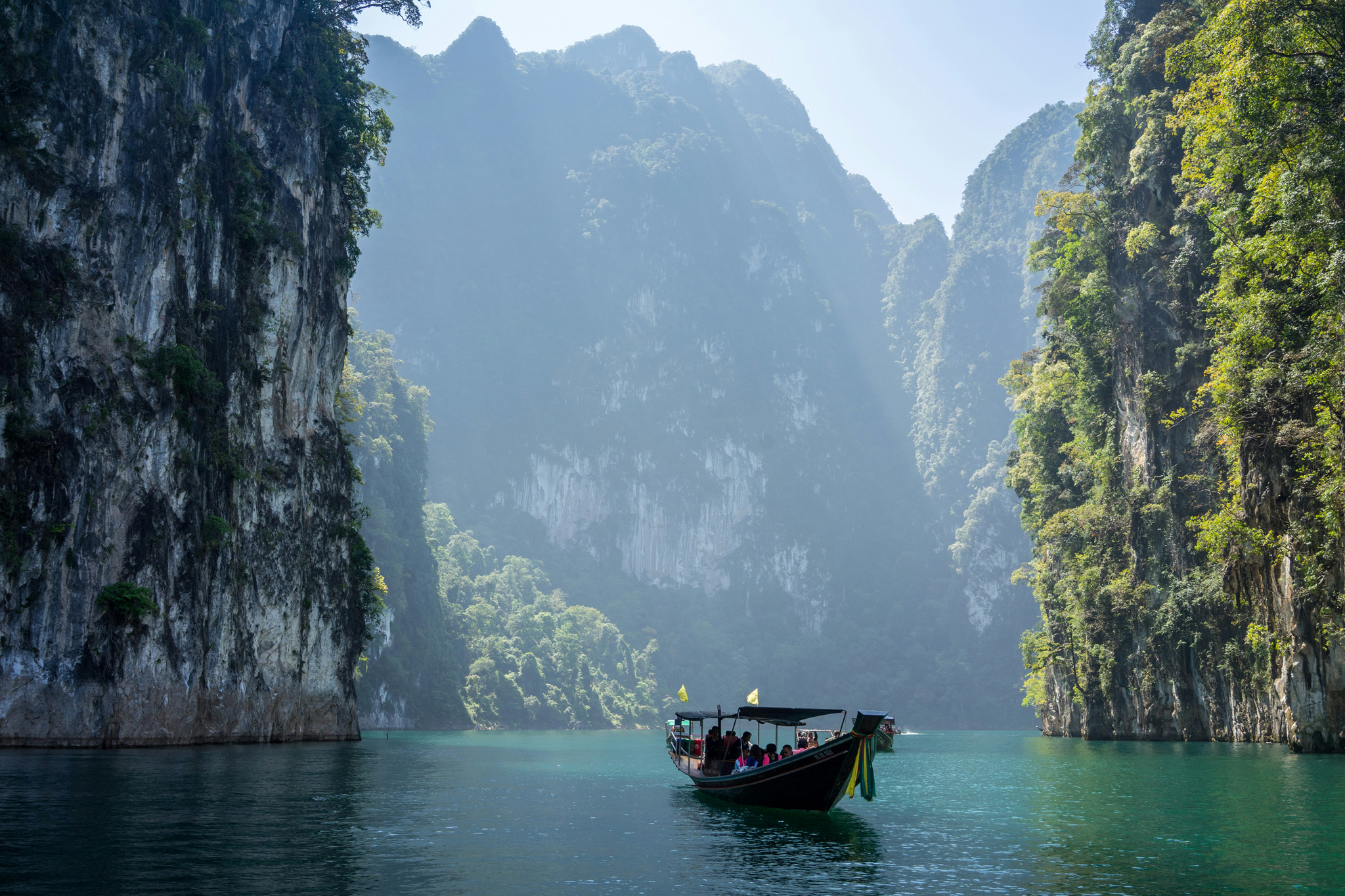
- Island hop around Phuket, Krabi, and Phi Phi
- Kayak the sea caves and hongs of Phang Nga Bay
- Dive or snorkel the Similan Islands
- Relax on the quieter beaches of Koh Lanta
- Watch the sunset from Railay Beach
The Gulf Coast and Islands
Calmer seas and a string of beloved islands, from party hubs to laid-back diving havens.
- Learn to dive on budget-friendly Koh Tao
- Soak up the beaches and nightlife of Koh Samui
- Find quiet coves on Koh Phangan beyond the Full Moon Party
- Explore the marine national park of Ang Thong
- Visit the historic seaside town of Hua Hin
Isan (Northeast Thailand)
The least-visited region, offering authentic rural life, distinctive cuisine, and ancient Khmer temples.
- Explore Khmer ruins at Phimai and Phanom Rung
- Sample fiery Isan dishes like som tam and laab
- Visit Khao Yai National Park for wildlife and waterfalls
- Experience local festivals and village markets
- Travel slowly along the Mekong River
🎒 Things To Do
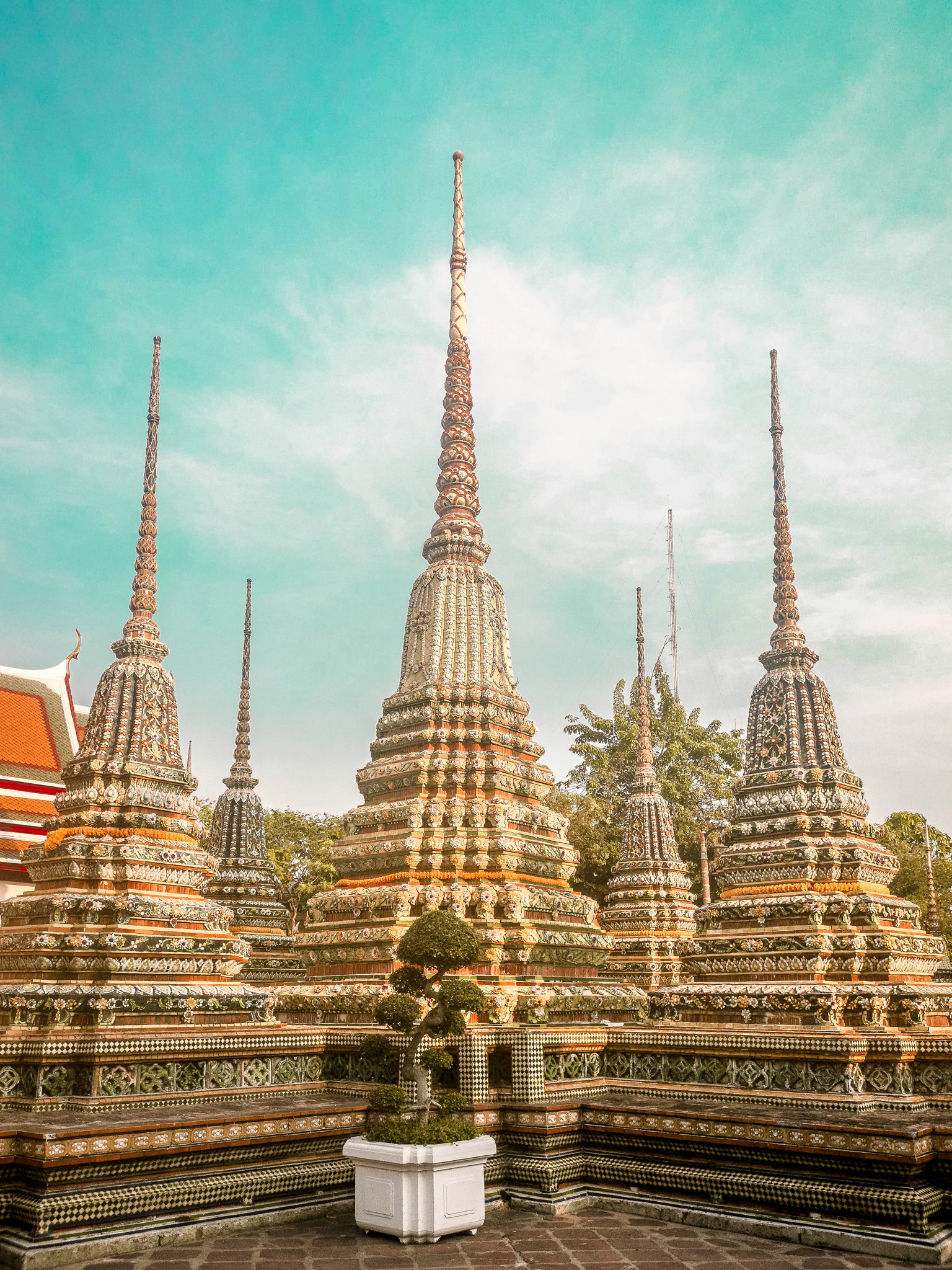
- Temple hop through Bangkok, Chiang Mai, and Ayutthaya
- Island hop and beach hop along the Andaman and Gulf coasts
- Learn to scuba dive or snorkel coral reefs
- Take a Thai cooking class and visit a local market
- Trek through northern jungle to hill tribe villages
- Visit an ethical elephant sanctuary
- Kayak the limestone lagoons of Phang Nga Bay
- Eat street food at night markets across the country
- Experience a traditional Thai massage or wellness retreat
- Time your trip around a festival like Songkran or Loy Krathong
🍽️ Food & Drink
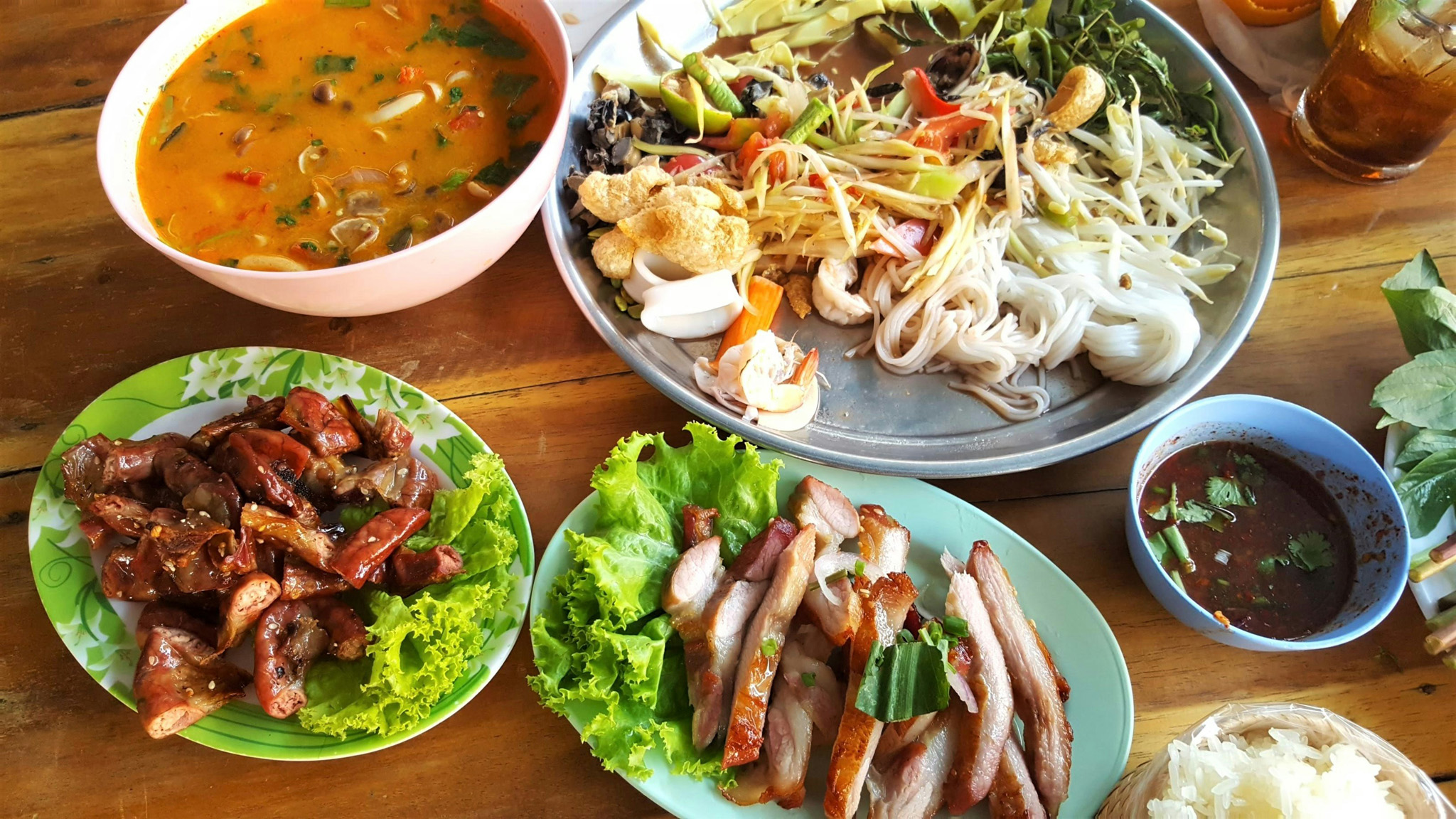
Thai cuisine is a balance of sweet, sour, salty, and spicy, built on fresh herbs, chilli, lime, and fish sauce. Eating is woven into the rhythm of the day, with street stalls, markets, and family-run restaurants serving some of the best food in the world at remarkably low prices.
- Pad thai, the famous stir-fried noodle dish
- Tom yum goong, a hot and sour prawn soup
- Green and massaman curries, rich with coconut milk
- Som tam, a spicy green papaya salad from Isan
- Mango sticky rice, the classic sweet treat
- Fresh fruit shakes and iced Thai tea
🌦️ Weather
Thailand has a tropical climate, warm and humid year-round, with temperatures rarely dropping far below comfortable beach weather. The year broadly splits into three seasons, with some variation between the north, the centre, and the two coasts.
- Hot and humid for most of the year, with average temperatures of 28-35°C
- Cool season from November to February brings drier, fresher air, especially in the north
- Hot season from March to May can push temperatures above 38°C
- Rainy season from June to October brings heavy but often short downpours
- The Andaman and Gulf coasts have slightly different rain patterns, so one coast is often drier than the other
- Northern mountains can feel genuinely cool at night in December and January
📅 Best Time To Visit
November – February (Cool Season)
- The most popular time, with comfortable temperatures and low humidity
- Clear skies and calm seas make it ideal for islands and diving
- Expect higher prices and busier beaches, so book accommodation early
March – May (Hot Season)
- Very hot, especially inland, but a good time for fewer crowds outside the major holidays
- Songkran, the Thai New Year water festival, falls in mid-April
- Beaches remain appealing thanks to the cooling sea breeze
June – October (Rainy Season)
- Lush green landscapes, lower prices, and far fewer tourists
- Rain often comes in short, heavy bursts rather than all-day downpours
- A good time for the Gulf islands, which see less rain than the Andaman coast in some months

🎒 Packing List
- Lightweight, breathable clothing for hot and humid conditions
- A light layer or jacket for cool northern evenings and air-conditioned transport
- Modest clothing that covers shoulders and knees for temple visits
- A compact rain jacket or travel umbrella
- Comfortable walking sandals and shoes
- Swimwear, a quick-dry towel, and a sarong
- High-SPF sunscreen, sunglasses, and a hat
- Insect repellent with DEET or picaridin
- A reusable water bottle and electrolyte sachets
- A basic medical kit with rehydration salts and any personal medication
- A universal power adapter and a portable charger
- A daypack for excursions and island trips
🛂 Visas & Entry Requirements
Entry rules for Thailand have shifted frequently in recent years, so verify the latest details before you travel.
- Many nationalities, including Australia, the UK, the EU, the US, and Canada, can enter visa-free for tourism, though the permitted stay length has been under review and may change between 30 and 60 days
- Indian passport holders currently enjoy visa-free entry for tourism, while some other nationalities use a Visa on Arrival
- All foreign visitors must complete the Thailand Digital Arrival Card (TDAC) online within 72 hours before arrival, and receive a QR code to show at immigration
- Passports should be valid for at least 6 months from the date of arrival
- Immigration may ask for proof of onward or return travel and proof of funds (around 10,000 THB per person or 20,000 THB per family)
- A 300 THB air traveller entry fee and a possible mandatory health insurance requirement have both been proposed but are not yet in force, so check the current status close to departure
- Official information: https://www.immigration.go.th
Mandatory Health Insurance (Proposed Only)
Thailand’s government is reviewing a proposal that would require all foreign visitors to hold valid health insurance before entering the country. Important: this is still a proposal under review, not an enforced rule. No regulations, coverage standards, or start date have been confirmed, and nothing changes for travellers until an official announcement is made. Comprehensive personal travel insurance is strongly recommended regardless, and travellers should confirm the current status before departure via the Tourism Authority of Thailand: https://www.tourismthailand.org
💰 Money
- The currency is the Thai baht (THB)
- Cash is essential for street food, markets, tuk-tuks, and small towns
- Cards are widely accepted in hotels, malls, and larger restaurants in cities and tourist areas
- ATMs are plentiful but charge a fixed foreign card withdrawal fee, so larger withdrawals are more economical
- Tipping is not obligatory but appreciated, with small change for taxis and around 10 percent in nicer restaurants
- Carry small notes, as vendors and drivers often cannot break large bills
💸 Hotel & Tourist Taxes
Thailand does not currently levy a nationwide hotel or tourist tax, though a small number of additional charges may apply.
- Higher-end hotels typically add a service charge and VAT, often shown as a “plus plus” on quoted rates
- A 300 THB tourism entry fee for air arrivals has been proposed but is not yet being collected
- Airport departure taxes are normally included in the price of your air ticket
- Some islands and national parks charge a separate entrance fee, payable in cash on arrival
🌈 LGBTQIA+ Travellers
Thailand is widely regarded as one of the most welcoming destinations in Asia for LGBTQIA+ travellers, with a visible and vibrant queer culture.
- Same-sex marriage is legally recognised in Thailand
- Major cities like Bangkok, Chiang Mai, and Phuket have active LGBTQIA+ scenes and venues
- Social attitudes are generally relaxed and tolerant, particularly in urban and tourist areas
- Rural and conservative areas tend to be more reserved, so discretion is sensible away from cities
- Public displays of affection are best kept modest by all couples, in line with general local custom
⚠️ Traveller Safety
Thailand is a generally safe destination for travellers, with most issues being petty rather than violent.
- Petty theft and scams occur in tourist hotspots, so watch your belongings and be wary of overly helpful strangers
- Motorbike accidents are a leading cause of injury, so ride only if experienced and always wear a helmet
- Use licensed taxis or ride-hailing apps, and agree on fares or use the meter
- Take care in the sea with rip currents and jellyfish, and heed warning flags on beaches
- Nightlife areas are lively but can attract drink spiking and overcharging, so stay aware
- Emergency number is 191
💉 Vaccinations & Health
No vaccinations are mandatory for most travellers entering Thailand, but several are recommended.
- A yellow fever certificate is required only if arriving from a country with a risk of transmission
- Routine vaccinations should be up to date, including measles, tetanus, and diphtheria
- Hepatitis A and typhoid are commonly recommended due to food and water exposure
- Malaria risk is low in most tourist areas but present in some border and rural regions, while dengue is a year-round risk nationwide
- Official information: https://wwwnc.cdc.gov/travel/destinations/traveler/none/thailand
🚗 Getting Around
- Domestic flights are cheap and fast, connecting Bangkok with the north and the southern islands
- Trains are scenic and comfortable, with overnight sleeper services on key routes
- Long-distance buses and minivans link almost every town, though comfort varies
- Ferries and speedboats connect the mainland with the islands
- In cities, use ride-hailing apps, metered taxis, tuk-tuks, and Bangkok’s BTS Skytrain and MRT metro
- Motorbike and scooter hire is popular on the islands but requires care, a valid licence, and a helmet
✈️ Airports
Suvarnabhumi Airport (BKK)
- Bangkok’s main international gateway and the country’s busiest hub for long-haul and regional flights
Don Mueang International Airport (DMK)
- Bangkok’s second airport, focused on low-cost carriers and many domestic routes
Phuket International Airport (HKT)
- The main gateway to the Andaman coast and southern islands, with international and domestic flights
Chiang Mai International Airport (CNX)
- The principal airport for northern Thailand, serving domestic and regional international routes
🗣️ Language
The official language is Thai, a tonal language written in its own distinctive script. Regional dialects are spoken across the country, including Isan in the northeast and the Northern Thai dialect around Chiang Mai. English is widely understood in Bangkok, major tourist areas, hotels, and among younger Thais, but far less common in rural villages and small towns, where a few words of Thai go a long way.
Common Phrases
- Hello – สวัสดี (sa-wat-dee)
- Goodbye – ลาก่อน (laa gohn)
- Please – กรุณา (ga-ru-naa)
- Thank you – ขอบคุณ (kop khun)
- Yes – ใช่ (chai)
- No – ไม่ (mai)
- Excuse me – ขอโทษ (kor toht)
- Sorry – ขอโทษ (kor toht)
- Do you speak English? – คุณพูดภาษาอังกฤษได้ไหม (khun phoot pasa angkrit dai mai)
- How much? – เท่าไหร่ (tao rai)
- Where is…? – …อยู่ที่ไหน (yoo tee nai)
- Help – ช่วยด้วย (chuay duay)
- Cheers – ชนแก้ว (chon gaew)
- Delicious – อร่อย (a-roi)
- No spice, please – ไม่เผ็ด (mai phet)
ℹ️ Practical Info
Electricity
- Plug types A, B, and C are used, with a standard voltage of 230V
Internet & WiFi
- WiFi is widely available in hotels, cafes, and restaurants, and mobile data coverage is strong in cities and tourist areas
Water
- Tap water is not safe to drink; stick to bottled or filtered water, which is cheap and widely available
Travel Insurance
- Comprehensive personal travel insurance is strongly recommended, with cover for medical treatment, evacuation, and adventure activities such as diving and motorbike use
Connectivity SIM / eSIM
- Local SIM cards are inexpensive and easy to buy at airports and convenience stores
- Using an eSIM is our recommended choice while travelling anywhere in the world, and our recommended provider is Holafly. For more information on eSIMs, check out this blog.

❤️ Why Visit Thailand
Thailand offers an incredible mix of culture, adventure, relaxation, and value for money. From bustling cities and ancient temples to tropical islands and lush mountains, the country delivers diverse experiences in one destination.
Add world class food, friendly locals, and a well developed tourism infrastructure, and Thailand becomes one of the easiest and most rewarding destinations to explore in the world.